How to Implement NIS2 Compliance Successfully?
NIS2 implementation requires organizations to combine strong cybersecurity frameworks, risk management, and incident response management with the right cybersecurity tools and enterprise cybersecurity solutions. Businesses should focus on continuous monitoring, governance, vendor security, and employee training while using a unified cybersecurity platform to improve cybersecurity compliance and strengthen operational resilience.
Introduction
Most companies doing business in Europe right now are somewhere between “we’ve heard of NIS 2” and “we think we’re compliant.” The gap between those two things is exactly where regulators are focusing their attention in 2025 and 2026.
The Network and Information Security Directive 2 went live in October 2024. Audits are already happening. And the penalty structure is not forgiving: up to 10 million euros or 2% of global turnover, plus personal liability for senior management in some cases. That last part is what tends to get a board’s attention.
This is a practical breakdown of how to actually implement the NIS 2 cybersecurity framework, not a glossy overview of what it says. There’s a difference.
Understanding NIS2 Applicability Requirements
This sounds obvious but a surprising number of organizations skip it and just assume they’re covered. NIS 2 applies to medium and large enterprises in specific sectors: energy, banking, healthcare, transport, digital infrastructure, public administration, manufacturing, and ICT services, among others. The general threshold is 50 or more employees and annual turnover above 10 million euros.
Once you’re in scope, you land in one of two buckets. Essential entities face stricter oversight. Important entities face slightly lighter-touch enforcement but still carry the same core obligations. Both categories need to demonstrate active, documented NIS2 compliance, not just awareness.
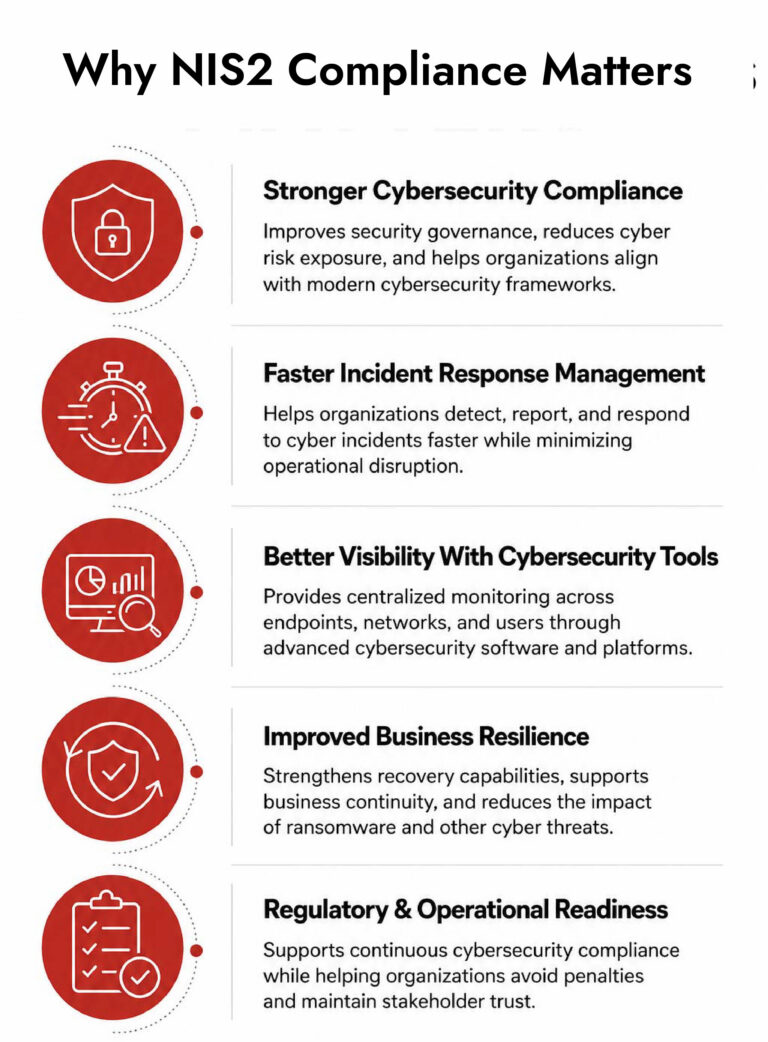
Phase 1: Assess Your Current NIS2 Compliance Posture (Months 1 to 3)
The instinct in most organizations is to start buying tools or writing policies immediately. Resist that. The first three months should be almost entirely about understanding where you actually stand.
Get executive ownership locked in before anything else.
NIS 2 puts legal accountability on senior management by design. This is not an IT project that happens to involve the board. Board members and executives need training, they need to approve risk decisions, and under some national transpositions, they can be personally sanctioned if the organization fails. That changes the conversation significantly.
Run a proper gap analysis against Article 21.
Article 21 is the meat of NIS 2. It sets out the security measures organizations must implement. Map your current state against each requirement and be honest about it. The areas to look at:
- Risk management practices and how well they’re actually documented
- Whether your incident response capabilities and reporting workflows meet the required timelines
- The state of your access controls, encryption, and identity management
- How much visibility you have into your vendors’ security posture
- Business continuity readiness, including whether recovery procedures have ever actually been tested
- Existing governance structures and security policies
Build an asset inventory that reflects reality.
A lot of organizations have an asset inventory that was accurate two years ago. NIS 2 needs a current, complete picture of critical systems, data flows, and third-party dependencies. This becomes the foundation for your risk work, so if it’s wrong, everything built on top of it is wrong too.
Phase 2: Build a Risk-Based NIS2 Compliance Roadmap (Months 3 to 4)
The gap analysis will produce a long list of things that need fixing. The mistake here is treating every item equally. NIS 2 uses an all-hazards approach, which means you need to think about both IT and operational technology environments. But within that, some gaps carry far more risk than others.
Write down your risk appetite and get management to sign off on it.
This is not a formality. Regulators want to see that leadership actively reviewed and approved decisions about which risks are being mitigated and which are being accepted. If you can’t show that, the documentation problem becomes a compliance problem.
Split your roadmap into quick wins and longer-term projects.
Quick wins worth doing immediately:
- Enable multi-factor authentication across all critical systems and remote access
- Patch known vulnerabilities on high-priority assets
- Formalize incident escalation paths and make sure the right people know them
Longer-term workstreams that take months to do properly:
- SIEM deployment and tuning
- Supply chain security program
- OT network segmentation
- Full vulnerability management lifecycle
Assign an owner and a realistic timeline to each. Without that, roadmaps become wish lists.
Phase 3: Implement Core NIS2 Security Controls (Months 4 to 8)
This is where most of the actual work happens. The cybersecurity tools you deploy, the processes you build, and the training you deliver in this phase determine whether your program functions or just reads well on paper.
On the governance side:
- Designate a senior executive with formal cybersecurity oversight responsibility
- Wire cybersecurity into your existing organizational risk management structure
- Train executives and board members specifically on NIS 2 obligations, not just general security awareness
- Document security decisions with enough detail to reconstruct your reasoning later
The core technical controls under Article 21:
- Formal, documented risk assessment processes that get reviewed on a set schedule
- Incident detection, response, and recovery procedures backed by an actual ticketing system
- Tested backup and disaster recovery plans with verified recovery time objectives
- Vendor assessment questionnaires and contractual security requirements for third parties
- Regular patching cycles, penetration testing, and a vulnerability disclosure process
- Role-based access control and MFA enforced on critical systems and privileged accounts
- Encryption for sensitive data at rest and in transit
- Background checks, role-specific training, and clean termination procedures for staff
On cybersecurity tools and platforms:
The right enterprise cybersecurity solutions close the gaps that policies alone cannot. A NIS 2-compliant tech stack typically needs:
- A SIEM for centralized log management and anomaly detection
- A vulnerability management platform for continuous scanning and prioritized fixes
- EDR tools for device-level visibility and post-incident forensics
- IAM tools that enforce least privilege across the environment
- Backup and recovery systems with tested, documented restoration procedures
A lot of organizations are now moving to a unified cybersecurity platform rather than running five separate tools that don’t talk to each other. That’s not just cleaner operationally, it gives you the kind of correlated visibility that makes meeting NIS 2’s detection and reporting requirements actually possible.
On training:
Everyone in the organization needs it, not just technical staff. Cover phishing, social engineering, secure data handling, and what to do when something looks wrong. Run phishing simulations. Track completion. Do role-specific deep-dives for administrators, finance teams, and anyone with elevated system access.
Phase 4: Strengthen Incident Response and Reporting Capabilities
Here’s where a lot of organizations find out how unprepared they actually are. NIS 2’s reporting timeline is:
- 24 hours: Early warning to the national authority once you become aware of a significant incident
- 72 hours: Initial notification with assessed impact and scope
- 1 month: Final report with root cause analysis and lessons learned
That 24-hour window is the one that causes the most problems. It means your monitoring needs to catch things fast, your internal escalation needs to work without confusion, and the right person needs to be ready to file a report at any hour.
What you need to build for this to work:
- Clear internal triggers that define when an incident is reportable
- Real-time monitoring and detection tools wired to alert the right people
- Pre-approved report templates formatted to your national authority’s requirements
- Regular simulation exercises where you actually run through the process, not just review it
Running a tabletop exercise once is not enough. These workflows need to become muscle memory for the people involved. Incident response management is an operational capability, and operational capabilities require practice.
Phase 5: Validate and Test Your NIS2 Compliance Program (Months 8 to 10)
Self-certifying compliance is not the same as having evidence of compliance. Regulators increasingly expect documentation of actual testing, not just policies that say testing will happen.
What this phase should cover:
- Internal audits of both technical controls and procedural compliance
- Penetration tests on high-risk systems and network segments
- Breach simulation exercises to verify that detection and response actually work
- Tested disaster recovery with documented results from real restoration attempts
- Formal audit reports with findings and remediation status
If your organization operates across multiple EU member states, sort out your cross-border reporting protocols here too. Each country’s NIS 2 cybersecurity framework transposition has subtle differences, and the regulatory contacts vary by jurisdiction.
Achieve NIS2 Compliance with Confidence
- Meet NIS2 requirements across IT and OT environments
- Detect and respond to threats in real time
- Streamline compliance reporting and audit readiness
- Reduce risk with continuous monitoring and analytics
Phase 6: Maintain Continuous Monitoring and Compliance
The organizations that treat NIS 2 cybersecurity framework as a one-time project tend to end up scrambling every time something changes. Threats evolve. Infrastructure changes. Vendor relationships shift. The regulatory interpretation gets refined. Your compliance posture needs to move with all of that.
Ongoing requirements:
- Automated vulnerability scanning, asset discovery, and security monitoring running continuously
- Regular updates to systems and security measures as new threats emerge
- Compliance dashboards and board reporting on a regular cadence
- Annual reassessments of your security program against both NIS 2 and current threat landscape
Keep these records current at all times:
- Risk assessments and treatment decisions
- Security policies and architecture review history
- Incident logs and post-incident reviews
- Training completion records
- Audit findings and remediation progress
- Supplier assessments and contract updates
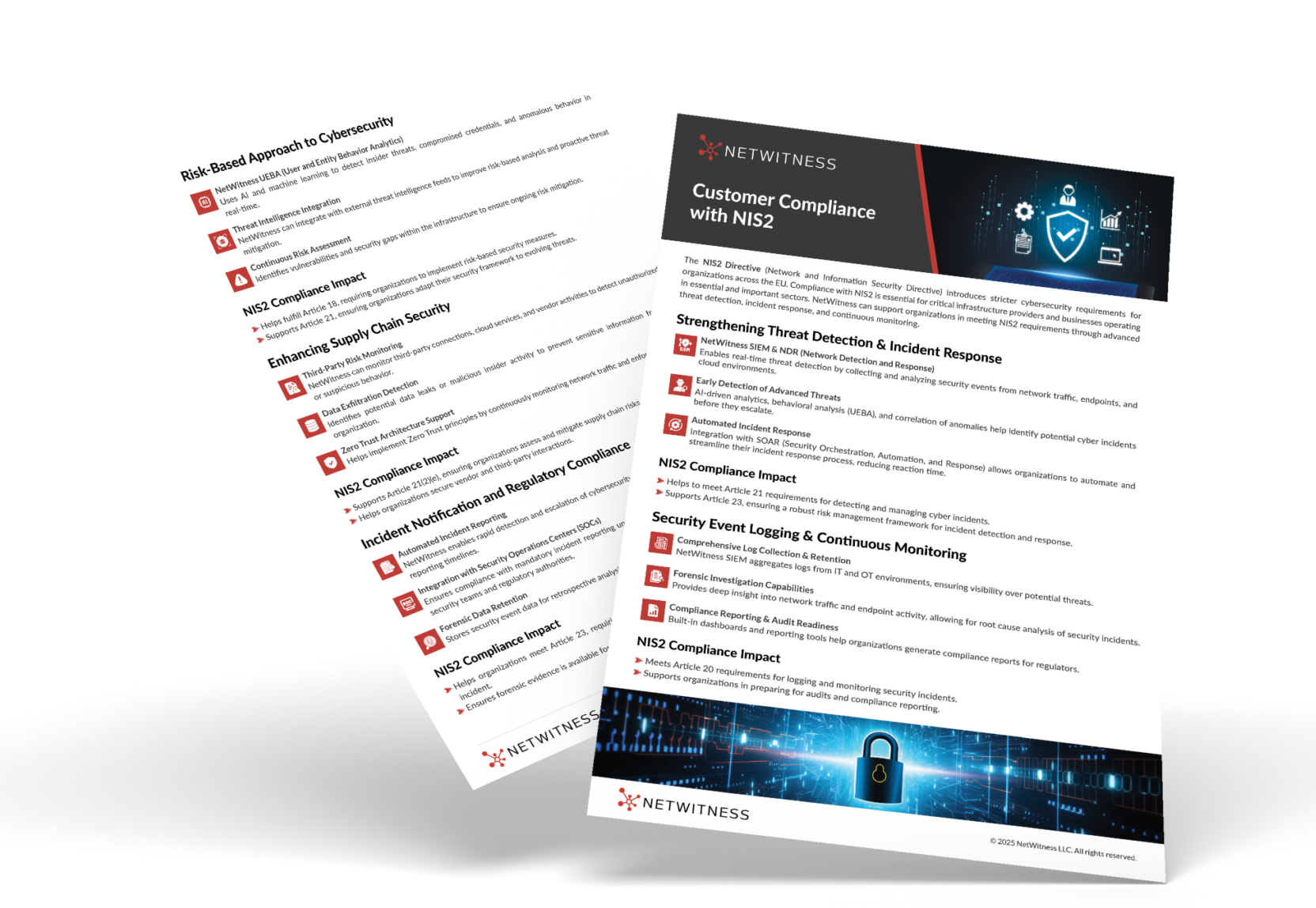
How NetWitness Supports NIS2 Compliance
Meeting NIS2 compliance requirements is difficult without complete visibility across networks, endpoints, logs, and user activity. This is where a unified cybersecurity platform becomes critical.
NetWitness helps organizations strengthen cybersecurity compliance by combining threat detection, incident response management, network visibility, and forensic investigation in a single platform. The platform supports NIS2 implementation through:
- Real-time threat detection and incident response management
- Centralized visibility across hybrid IT environments
- Log management and security analytics for faster investigations
- Network and endpoint monitoring for improved risk management
- Automated workflows that support regulatory reporting and audit readiness
For organizations navigating complex cybersecurity frameworks and enterprise cybersecurity solutions, NetWitness helps reduce detection gaps while improving operational resilience and compliance readiness.
NIS2 Compliance Best Practices and Considerations
Bring legal and procurement in early. They are critical for sorting out supplier contracts, reviewing legacy agreements, and finding third-party dependencies that IT didn’t know existed.
Connect threats to business impact. Build a matrix that links realistic threat scenarios, ransomware in an OT environment, a cloud provider breach, a compromised vendor, to actual business impact. That’s what justifies your control investments in any audit conversation.
Automate evidence collection. Manual documentation across spreadsheets becomes unmanageable fast. Use cybersecurity software and platforms that generate audit artifacts automatically. It saves enormous amounts of time and reduces the risk of gaps in your evidence trail.
Classify suppliers by actual risk. Not every vendor needs the same level of scrutiny. Apply dynamic tagging based on criticality, data access, and contractual terms. It keeps your third-party security review process proportionate and scalable.
Working with specialized cybersecurity firms can significantly accelerate the early phases, particularly gap analysis and incident response design. Look for firms with specific NIS 2 experience, not just general security consulting. The regulatory nuance matters.
The organizations that treat NIS 2 as a genuine security improvement rather than a compliance checkbox end up with better programs and fewer surprises. That outcome starts with an honest gap assessment and a realistic plan, not with buying tools before you know what you actually need.
Frequently Asked Questions
1. What is the role of risk management in NIS2?
Risk management is a core part of NIS2 compliance because it helps organizations identify, reduce, and respond to cyber threats before disruptions occur. Strong incident response management and aligned cybersecurity frameworks improve resilience and support effective NIS2 implementation.
2. Which cybersecurity software supports NIS2 compliance?
Cybersecurity software that supports NIS2 compliance typically includes SIEM, endpoint detection, monitoring, and compliance reporting tools. A unified cybersecurity platform helps organizations strengthen cybersecurity compliance and improve incident response management.
3. What types of cybersecurity solutions help achieve NIS2?
Enterprise cybersecurity solutions such as threat detection, endpoint security, network monitoring, and identity protection help organizations meet NIS2 requirements. These cybersecurity tools improve visibility, risk management, and incident response capabilities.
4. What are the top cybersecurity frameworks recommended?
Popular cybersecurity frameworks include the National Institute of Standards and Technology Cybersecurity Framework, ISO 27001, CIS Controls, and COBIT. These frameworks help organizations improve cybersecurity compliance, manage risk, and strengthen enterprise cybersecurity solutions.
5. Which cybersecurity frameworks are best suited for healthcare organizations?
Healthcare organizations commonly use the National Institute of Standards and Technology Cybersecurity Framework, ISO 27001, and HIPAA-aligned controls. These frameworks support cybersecurity compliance, protect patient data, and improve incident response management.
6. Can you compare popular cybersecurity frameworks used by financial institutions?
Financial institutions often use the National Institute of Standards and Technology Cybersecurity Framework, ISO 27001, PCI DSS, and COBIT. NIST focuses on risk management, ISO 27001 emphasizes governance, while PCI DSS supports payment security compliance.
Make Way for the Intelligent SOC with NetWitness®
-Turn data overload into actionable intelligence.
-Accelerate detection with AI-driven insights.
-Empower analysts with enriched, contextual decision-making.
-Build a smarter, faster, more resilient SOC.