Introduction
The term “network visibility” refers to being able to understand all activities taking place throughout your digital landscape. Users, devices, and their interactions with applications and data all comprise this digital operations environment; without proper context about these elements, determining the cause of performance problems and finding and preventing threats becomes an exercise in guesswork.
As organizations deploy enterprise-wide cloud infrastructure across multiple cloud platforms, obtaining and retaining visibility into their networks will be one of the most challenging, yet most important, aspects of cybersecurity moving forward.
Understanding network visibility in the proper context means understanding why network visibility is valuable, why network/enterprise visibility is difficult to achieve, and how to develop more effective strategies and tools for dealing with these challenges.
Why Network Visibility Matter?
Visibility tools and network visibility solutions provide more than just security monitoring; they help improve compliance with regulations, improve network performance and provide many other benefits.
The first area of focus is Security. Visibility into all the activities on the network allows the security team to quickly detect potential threats, track lateral movement through compromised systems, and take action before the attacker has had sufficient time to establish long-term access.
Performance is the second area of focus. Once it has been determined how much of the bandwidth each application or endpoint uses, all the available resources may be considered in order to diagnose performance issues. Another area of focus for network visibility solutions is compliance, as it is required by law. Some regulations, such as PCI-DSS and HIPAA, among others, demand that a log of all activities related to the securing of the sensitive data be kept. The third area of focus is troubleshooting, which could be caused by malicious attacks, configuration errors or any number of reasons. The ability to detect all events in the network allows for quick identification of the cause.
Lastly, Business Continuity. Network visibility allows a business to maintain consistent and reliable access to essential applications, even during emergencies, because of the ongoing view of network functionality.
In conclusion, network visibility moves an organization from reactive defense to proactive control.
Why is Network Visibility Important in Modern IT Environments?
The point is that visibility of a network infrastructure is not merely a security-related activity but rather a core component for enabling business operations.
As modern companies work with hybrid infrastructures where information continuously flows between various sources, such as on-prem systems, clouds, SaaS, remote workers, etc., they lose the ability to effectively achieve the following without robust network visibility tools:
- Detect emerging security incidents timely
- Align IT initiatives with business goals
- Provide continuous service performance across infrastructures
- Comply with relevant regulations efficiently
Ultimately, visibility plays an integral part when it comes to the company’s risks, expenses, and overall performance since low visibility causes delays in decision-making and creates opportunities for security threats.
The Core Challenges of Network Visibility
1. Encrypted and High-Volume Traffic:
However, encrypted network traffic is the norm today, which means that most attacks go unnoticed because the data cannot be inspected. However, while encryption ensures better privacy, it is a challenge for defenders because full-packet captures are used to save traffic information for later use without decrypting it.
The recommended strategy here would be to focus on encryption traffic analytics using flow metadata (such as the size of packets and session duration). This approach would allow detecting cyber threats without any decryption of traffic.
Another challenge to consider is high-volume traffic. With terabytes of data transmitted daily in organizations, there needs to be a scalable solution for capturing critical data.
Here is another benefit of a tool like NetWitness NDR because, along with traffic analytics using metadata, NetWitness integrates with endpoints, logs, and threat intelligence to perform analysis. As a result, even malicious activities in encrypted or hidden traffic can be detected with greater ease.
2. Remote Access and Cloud Visibility Gaps:
As remote work and multi-cloud architecture became permanent, visibility fragmented. Traffic flows no longer stay within a traditional perimeter. Data now moves between cloud services, SaaS platforms, and unmanaged devices – many of which traditional network visibility solutions were never designed to monitor.
The result is blind spots that attackers exploit to hide lateral movement or exfiltrate data undetected. Achieving full enterprise network visibility now requires unified monitoring across on-prem, virtual, and cloud workloads.
3. Tool Fragmentation and Limited Integration:
Many companies use various tools for monitoring purposes – a firewall log here, endpoint telemetry there, and cloud analytics somewhere else. It’s hard to build a unified view in such a situation. Analysts spend hours correlating data on different platforms and fail to detect the red flags at an early stage.
But by creating unified visibility with NDR, SIEM, and EDR telemetries, analysts can make their life easier. Network visibility becomes operational when everything comes together on one platform.
4. Network Complexity and Emerging Technologies
Networks are ever-evolving through the use of IoT devices, APIs, and virtualization. Each expansion adds layers of complexity and new blind spots.
Technological advancements such as SDN and NFV have increased the ability to adapt to changes but introduced problems due to changing paths.
Lack of adaptability means that organizations are analyzing yesterday’s network topology while their adversaries are exploiting today’s.
5. Operational Overload and Analyst Fatigue:
However, even with the necessary tools, many SOCs experience the issue of overload. The high volume of alerts, the repetitive nature of investigations, and a lack of automation prevent analysts from maintaining their attention. Visibility without prioritization becomes just noise.
The only way to address this problem is through automation.
Top Features to Look for in Network Visibility Software
1. Consolidate Visibility Through Integrated NDR and Monitoring Platforms:
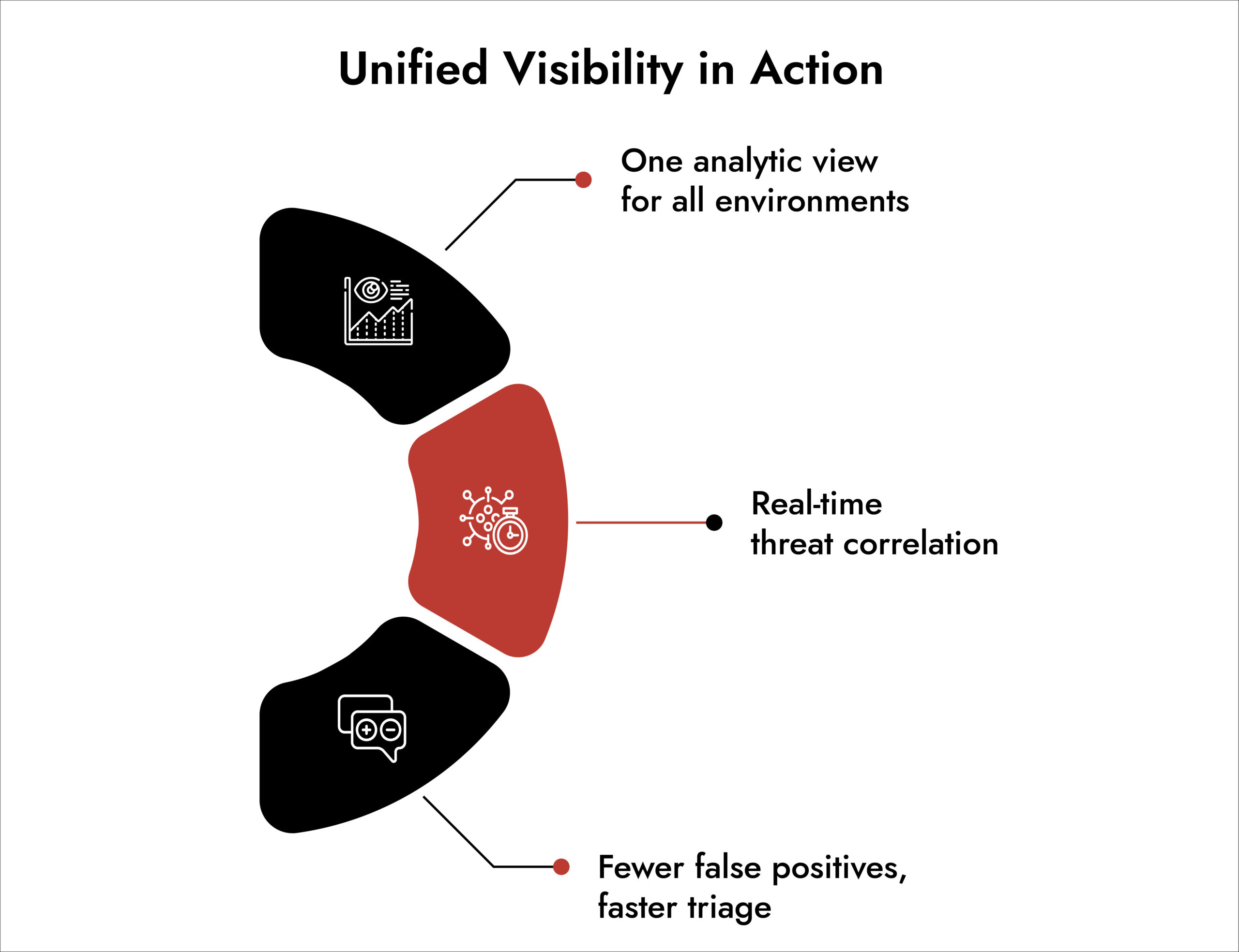
Fragmented tools create fragmented insight. The first step is consolidation – deploying NDR tools that capture network data, analyze behavior, and integrate directly with SIEM and EDR. This unified approach delivers deeper network visibility and reduces manual effort.
2. Use Metadata and Behavior to Monitor Encrypted Traffic:
Rather than decrypting traffic, analyze its metadata. Metrics like session length and TLS fingerprinting can reveal anomalies consistent with command-and-control or exfiltration.
Pair behavioral analytics with historical baselines to detect suspicious trends without violating privacy.
3. Extend Visibility to Cloud, SaaS, and Remote Environments:
Comprehensive network monitoring must now include cloud-native workloads and remote endpoint visibility. Choose network visibility solutions that support cloud traffic mirroring, virtual taps, and API-based telemetry collection.
By mapping traffic patterns across all environments, teams eliminate blind spots and ensure uniform security controls regardless of location.
4. Automate Alert Triage and Investigation Workflows:
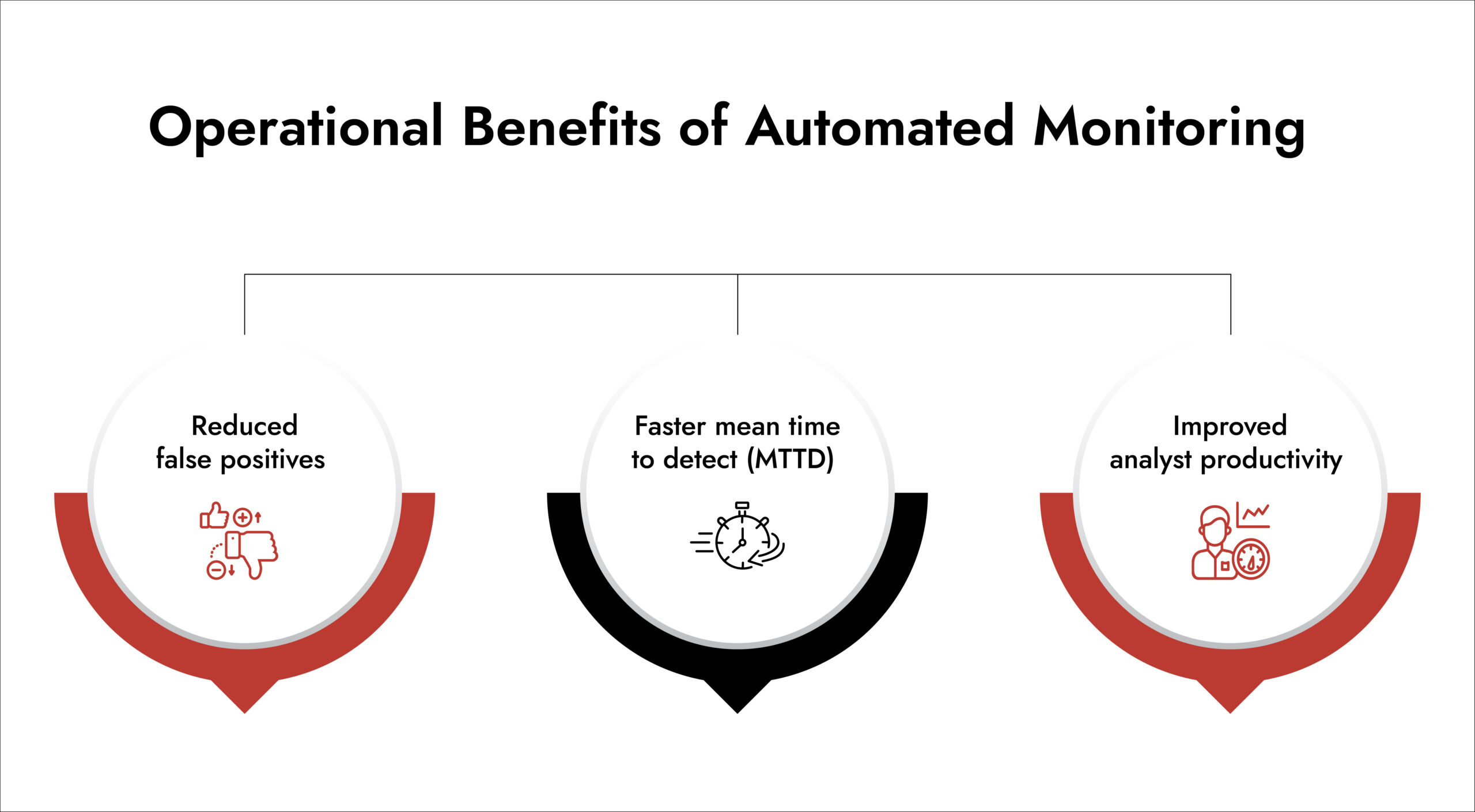
The sheer volume of alerts is one of the most cited pain points. Automation helps analysts focus on what matters most.
AI-assisted correlation groups related events and contextualizes them with user, endpoint, and network data. Dashboards should highlight the few high-impact alerts instead of the noise.
5. Foster Collaboration and Standardized Processes:
Visibility gaps often stem from human silos. Shared playbooks and communication channels between IT, network, and security teams ensure consistent investigation and escalation.
6. Continuously Audit and Refine Your Visibility Strategy:
Networks evolve daily; your visibility approach must be too. Conduct regular audits to identify coverage gaps, outdated detection rules, and under-monitored assets. Integrate new cyber threat intelligence feeds and adapt monitoring baselines as business operations change.
Continuous improvement keeps visibility aligned with your actual risk surface, not last year’s assumptions.
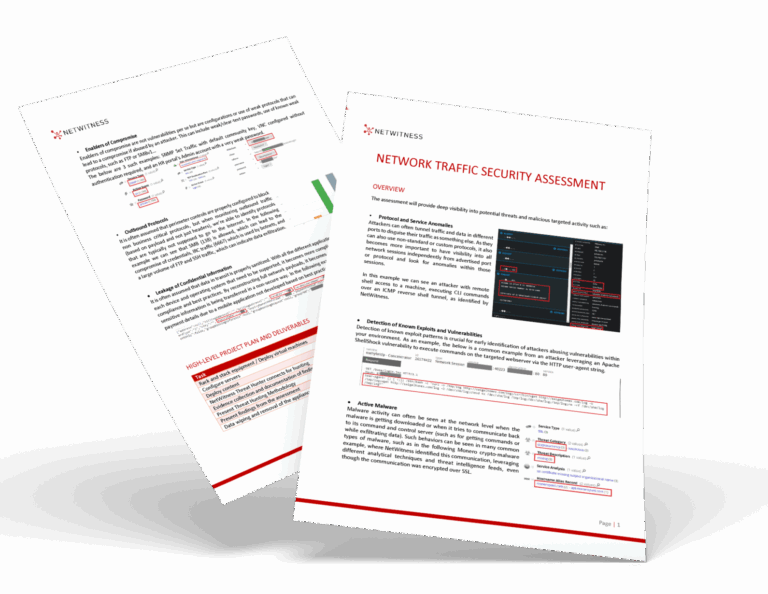
How NetWitness Delivers Complete Network Visibility
Network visibility is about seeing what truly matters and understanding it in context. NetWitness Network Detection and Response (NDR) delivers that depth by analyzing every packet, flow, and log across physical, virtual, and cloud environments.
NetWitness NDR at its core provides:
- Full Packet Capture and Metadata Analytics: NetWitness records every packet that is sent or received and extracts a wealth of metadata that provides an efficient means of quickly analyzing the network. Analysts are able to drill down into the full session data whenever necessary or jump instantly to the specific packets being referenced by versatile metadata.
- Behavioral Analytics and Machine Learning: With advanced analytics to detect anomalies, NetWitness applies machine learning algorithms to provide insight into potential threats that other legacy signature-based technology has likely missed (for example, during the analysis of encrypted traffic). The result is that security teams can gain visibility into malicious behaviours associated with threat actors without relying only on the decrypted network traffic.
- Threat Intelligence Correlation: Threat Intelligence and contextual indicators enrich network data; consequently, analysts have better access to identify lateral movement, data exfiltration, and command-and-control behaviours much sooner when correlating established contextual threats to that of the network traffic itself.
- End-to-End Integration with SIEM and SOAR: Repository of Security Data Management (RSDM: SIEM, SOAR, and other security repositories) that are based on a common data model and investigation interface. Analysts benefit from the ability to detect, correlate and automate responses from one single source of intelligence. The common data model also provides required support to integrate SIEM and SOAR tools into a unified work environment (as opposed to separate systems).
- Hybrid and Multi-Cloud Visibility: NetWitness technology provides consistent visibility across all sources of network traffic whether the source of the traffic was from customer-inflicted or cyber-attack. Lightweight sensors are placed and operate within the cloud environment. NetWitness’s scalable and high-performance architecture is designed to scale easily for distributed environments.
This single platform effectively converts from disparate to actionable intelligence, thereby allowing analysts to quickly detect emerging threats and respond to them effectively.

Conclusion
True network visibility goes beyond seeing packets, it’s about understanding what they mean in context. With its unified NDR platform, NetWitness helps security teams connect network data to broader threat intelligence, accelerating detection and response across every environment. Because in modern cybersecurity, you can’t defend what you can’t see.
Explore how NetWitness helps security teams gain clarity across the network, accelerate investigations, and strengthen defense against evolving threats.