What Strong Cybersecurity for Business Actually Looks Like in 2026
The modern approach to cybersecurity no longer relies only on firewalls and endpoint tools. It starts with visibility, accountability, and fast response. These steps help once an adversary starts moving laterally. This can happen across cloud, IT, OT, and identity systems. The most successful cybersecurity for business includes continuous monitoring, threat detection and response, zero trust approach, and an actual cybersecurity framework aligned with operational risks.
By developing a business strategy encompassing cyber security, an organization can minimize the negative impact of breaches, increase preparedness for cyber security compliance, and respond quicker to cyber threats. According to IBM’s recent data breach report, organizations using AI-based cyber security operations and automation have saved millions of dollars compared to organizations lacking visibility or manual processes. Still, CISA and NIST continue to stress the importance of identity security, asset visibility, and resilience as essential elements in an enterprise defense strategy.
Organizations need both when compliance requires long-term log retention and security teams must proactively detect and respond to advanced, multi-stage attacks.
Introduction
Many organizations possess sufficient amounts of cybersecurity tools and solutions, however, that isn’t the main issue. The key concern today is fragmentation. Security professionals always deal with several disjoined alerts, have blind spots in cloud and OT environments, do not have unified cybersecurity awareness in the organization, and deal with increasing regulatory pressure. Cybercriminals are aware of this fragmented landscape and exploit the gaps between different solutions and processes much faster than the organizations to investigate them.
As such, the need for modern cybersecurity for business requires a shift in strategy. Simply adding more products will generate additional noise unless they are part of a comprehensive approach, which links visibility, governance, threat detection & response capabilities and operational resilience in a single metric.
Top-performing organizations in cybersecurity today are not necessarily spending the most. They are relying on the ability to create a cybersecurity program based on context, priority and speed.
Why Cybersecurity for Business Has Become a Board-Level Priority
Cybersecurity issues are not confined to being only an IT issue anymore. Cybersecurity for business has become a major factor influencing various other aspects of business, including operational continuity, consumer trust, M&A activities, insurance costs, and regulatory risk, among others.
The growing number of ransomware operators are targeting operational disruption rather than just data theft. Supply chain exploitation is a trend that has put vendors at risk. Identity exploits remain prevalent when it comes to gaining initial access. In addition to that, hybrid infrastructures have further expanded attack vectors.
The most recent recommendations from NIST and CISA are consistent in their advice.
Here’s what modern cybersecurity for business risk now includes:
- Cloud workload exposure
- Insider threats
- Credential theft
- OT and IoT compromise
- Third-party access risks
- Regulatory penalties
- AI-assisted phishing and social engineering
- Lateral movement across hybrid environments
A cybersecurity strategy that only focuses on prevention fails the moment an attacker bypasses a control. Resilience matters more.
The Foundation of Cybersecurity for Business Starts with Visibility
You cannot defend systems you cannot see.
That may seem like common sense, but even today, numerous organizations have gaps in their visibility into endpoints, identities, cloud workloads, OT devices, and east-west traffic flows. This is something that security professionals realize when investigating security incidents.
Cybersecurity in business starts with three key things:
- Asset Visibility
Maintain a continuously updated inventory of:
- Endpoints
- Servers
- Cloud assets
- SaaS applications
- User identities
- IoT and OT devices
- Third-party integrations
This forms the backbone of every cybersecurity framework.
- Data Visibility
Understand:
- Where sensitive data lives
- Who accesses it
- How it moves
- Which systems interact with it
Without this, cybersecurity compliance becomes guesswork.
- Network Visibility
Attackers rarely stay where they enter. They move laterally.
Monitoring east-west traffic across IT and OT environments helps detect privilege escalation, credential misuse, and command-and-control activity earlier.
How to Build a Cybersecurity Framework That Supports Business Growth
A cybersecurity framework should simplify decision-making, not create paperwork.
Frameworks like the National Institute of Standards and Technology Cybersecurity Framework 2.0 help organizations align security investments with operational risk. The goal is not compliance theater. The goal is operational resilience.
An effective cybersecurity framework includes:
Governance
Define:
- Risk ownership
- Escalation paths
- Security policies
- Executive accountability
Security programs fail when nobody owns decisions during a crisis.
Risk Assessment
Run regular assessments against:
- Critical assets
- Vendor exposure
- Identity systems
- Remote access
- Cloud workloads
- OT environments
A mature cybersecurity playbook prioritizes risks based on operational impact, not just CVSS scores.
Security Operations
Your security operations capability should include:
- Threat intelligence
- Threat detection and response
- Log analysis
- Behavioral analytics
- Incident investigation
- Automated containment workflows
Recovery and Resilience
Backups alone are not resilience.
Organizations need:
- Tested recovery plans
- Segmented infrastructure
- Business continuity workflows
- Crisis communication plans
- Tabletop exercises
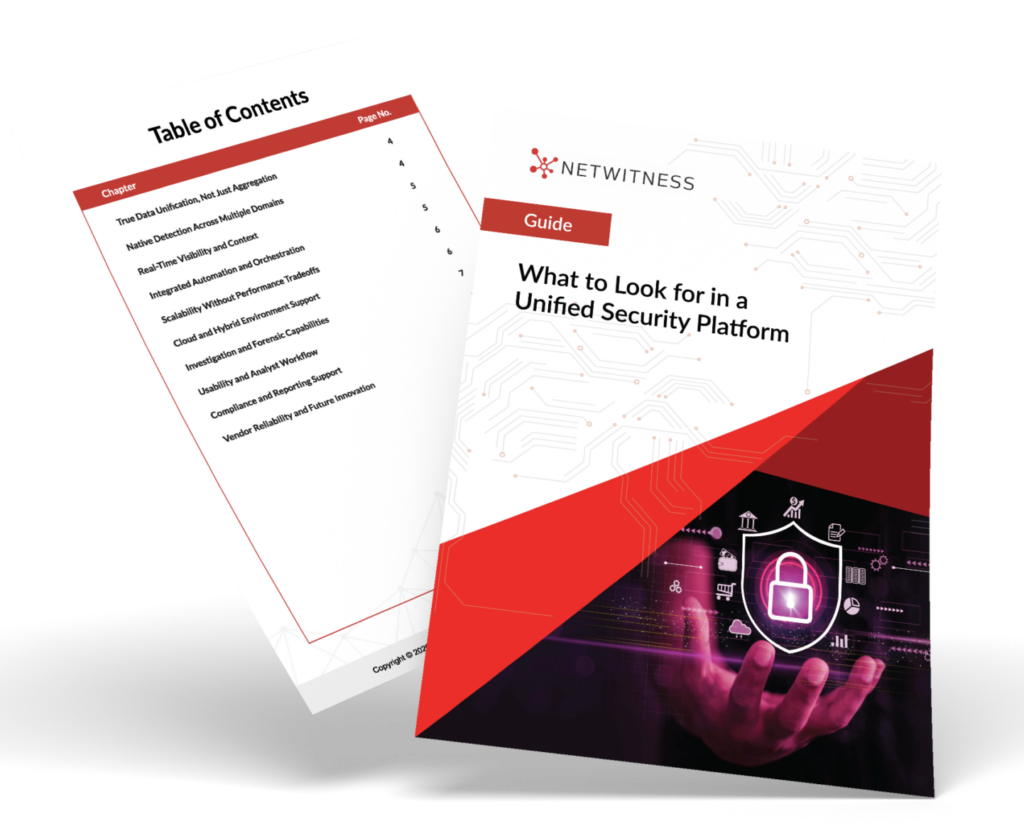
What to Look for in a Unified Security Platform
- Cut through tool sprawl with a practical evaluation framework.
- Compare platforms based on visibility, detection accuracy, and automation.
- Validate real-world performance across hybrid and cloud environments.
- Make confident, risk-aligned security decisions.
Cybersecurity Awareness Still Determines Breach Outcomes
Technology cannot compensate for poor decision-making under pressure.
Human error continues to drive credential compromise, phishing success, and unauthorized access incidents. Yet many cybersecurity awareness programs remain outdated and compliance-driven instead of behavior-driven.
Effective cybersecurity awareness focuses on:
- Real attack scenarios
- Role-specific training
- Executive simulations
- Phishing resilience
- Secure access practices
- Incident reporting culture
The strongest cybersecurity for business programs treat employees as operational defenders, not liabilities.
A finance executive approving wire transfers faces different risks than an OT engineer accessing industrial systems remotely. Training should reflect that reality.
Why Threat Detection and Response Defines Modern Cybersecurity for Business
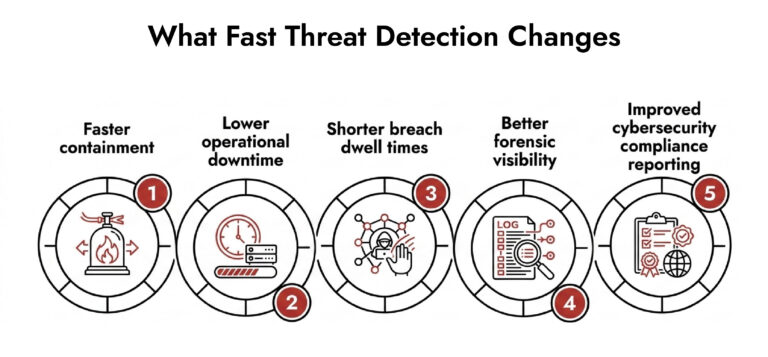
Prevention controls eventually fail. Detection speed determines damage.
According to numerous reports from 2024, organizations which detect the presence of attacks promptly minimize their operational downtime as well as recovery costs. However, what makes it difficult is that cyber criminals nowadays use legitimate credentials, encryption, and cloud-based attacks. That changes how enterprises must approach threat detection and response.
Security teams need:
- Unified telemetry
- High-fidelity analytics
- Behavioral detection
- Network visibility
- Threat hunting capabilities
- Automated investigation support
A modern cybersecurity platform should help analysts connect signals across:
- Endpoint activity
- User behavior
- Network traffic
- Cloud environments
- Identity infrastructure
- OT systems
Without correlation, analysts drown in alerts.
How Zero Trust Security Strengthens Cybersecurity Business Strategy
Zero trust security is not a product. It is an operating model.
The principle is simple: never assume trust based on network location or prior access.
Modern attackers exploit trusted accounts, VPN sessions, service accounts, and unmanaged devices. Zero trust security reduces the blast radius when compromise occurs.
Core zero trust practices include:
- Continuous identity verification
- Least-privilege access
- Micro-segmentation
- Device posture validation
- Conditional access policies
- Continuous monitoring
For organizations overseeing hybrid teams and decentralized infrastructure, zero trust security significantly decreases chances for lateral movement.
A major error that numerous organizations commit is applying zero trust in isolation. Identity, network insight, and security analysis need to collaborate effectively.
How Security Teams Gain Full Visibility Across IT and OT Environments
Organizations struggle to identify lateral movement promptly without integrated visibility across conventional IT systems and operational settings.
Contemporary assailants are increasingly focusing on OT, as interruptions generate a sense of urgency to quickly settle ransoms. Concurrently, numerous OT environments continue to function with restricted oversight and dispersed telemetry.
To improve visibility across IT and OT:
- Centralize telemetry collection
- Monitor east-west traffic continuously
- Correlate network, endpoint, and identity signals
- Apply behavioral analytics across environments
- Segment OT systems from corporate networks
- Use a cybersecurity platform capable of handling hybrid infrastructure visibility
This is where tools such as NetWitness come into play to enable enterprise security operations. These tools revolve around areas like unified visibility, network detection and response, logging management, and investigative processes for both IT and OT environments. This wider view allows security professionals to identify malicious behavior sooner rather than investigating individual events.
Choosing the Right Cybersecurity Services and Technology Stack
No single cybersecurity services company solves every problem.
Strong security programs combine:
- Internal governance
- Skilled analysts
- Mature processes
- External expertise
- Integrated technology
When evaluating cybersecurity for business or cybersecurity solutions, prioritize:
- Visibility capabilities
- Integration depth
- Detection quality
- Investigation workflows
- Scalability
- Compliance reporting support
- OT visibility if applicable
Avoid building a stack that forces analysts to pivot across ten disconnected consoles during an incident.
The best cybersecurity software reduces operational friction instead of adding complexity.
Conclusion
Successful cybersecurity for businesses is no longer focused on constructing taller barriers. The focus is on creating quicker visibility, enhanced resilience, and more intelligent response abilities in all environments accessible to attackers.
The organizations improving security outcomes right now share a few common traits:
- They prioritize visibility before tool sprawl
- They align cybersecurity compliance with operational risk
- They invest in threat detection and response maturity
- They operationalize zero trust security
- They treat cybersecurity awareness as part of resilience
- Attackers move fast. Security strategy cannot stay static.
The good news: organizations that build integrated, visibility-driven cybersecurity programs can spot threats earlier, respond faster, and lower long-term operational risk. They can do this without adding unnecessary complexity.
Frequently Asked Questions
1. What are the best cybersecurity solutions for small businesses?
The best cybersecurity solutions for small business environments typically include endpoint protection, identity security, email security, backup and recovery, multi-factor authentication, and managed threat detection and response. Small businesses should prioritize visibility and rapid response instead of buying excessive standalone cybersecurity software.
2. How do I choose a cybersecurity service provider for my company?
Seek cybersecurity service providers that provide comprehensive visibility, incident response knowledge, integration assistance, and familiarity with your sector. Assess the effectiveness of their cybersecurity platform in supporting hybrid settings, cloud infrastructure, and compliance with cybersecurity standards.
3. How do you conduct a cybersecurity risk assessment for business operations?
Identify assets, users, third parties, and data flows. Analyze vulnerabilities, access, probability of exploitation, and the impact on the business operations. Mature cybersecurity business programs perform cybersecurity risk assessments on an ongoing basis.
4. What are the top threat detection and response platforms for enterprises?
Leading enterprise threat detection and response platforms often combine network visibility, endpoint data, behavioral analytics, log management, and investigation workflows in one cybersecurity platform. Organizations should prioritize scalability, integration capabilities, and visibility across IT and OT systems.
5. What are the key components of an effective cybersecurity strategy?
An effective cybersecurity strategy involves:
- Asset visibility
- Risk management
- Threat detection and response
- Identity security
- Zero trust security
- Incident response
- Cybersecurity awareness
- Continuous monitoring
- Compliance and governance
6. How does zero trust improve cybersecurity strategy?
A zero trust security model minimizes the possibility of unauthorized lateral movements through continuous authentication of users, devices, and access requests. Zero trust improves cybersecurity for businesses because of its limited trust approach and improved visibility.
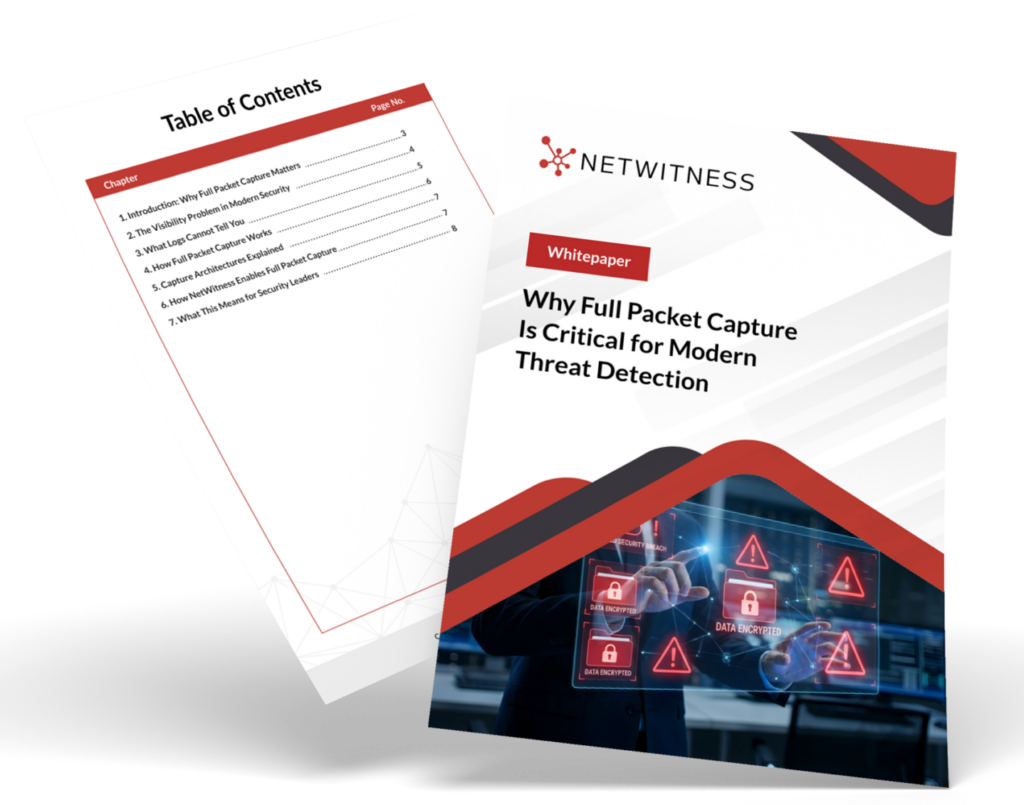
Learn why full packet capture is critical for modern threat detection and faster incident response.
Inside you’ll find:
- Clear guidance on where log-driven security falls short
- Ways to uncover threats hidden in network traffic
- How to reconstruct attacks from end to end
- Practical insight to investigate incidents with packet-level proof