What is Identity Security?
Identity Security is the practice of protecting digital identities, access privileges, credentials, and user activity across an organization’s systems, applications, cloud environments, and data. It ensures that every identity—whether human, machine, workforce, customer, privileged, or third-party—is verified, granted appropriate access, monitored continuously, and remediated quickly when risk is detected.
In modern cybersecurity, attackers often do not “break in” through the network perimeter. They log in using stolen credentials, compromised accounts, misused privileges, or weak access controls. Identity Security helps organizations prevent identity theft, reduce account takeover risk, enforce Least Privilege Access, and strengthen secure user access across hybrid, cloud, and enterprise environments.
Identity Security is a cybersecurity discipline focused on securing digital identities and the permissions connected to them. It combines identity and access management, IAM, privileged access management, Identity Governance, Identity Lifecycle Management, Identity Detection and Response (ITDR), Credential Protection, Identity Verification, and continuous risk monitoring.
A digital identity may represent a person, application, device, workload, API, service account, or automated process. Each identity has access rights that determine what it can see, use, modify, or administer. Identity Security ensures those rights are appropriate, verified, and continuously monitored.
Unlike traditional security models that relied heavily on network boundaries, Identity-Based Security treats identity as a core security control. This is especially important in cloud environments, remote workforces, SaaS applications, and distributed enterprise systems where users and workloads access resources from many locations and devices.
Identity Security helps answer key questions such as:
- Who is requesting access?
- Is the identity legitimate?
- Is the device trusted?
- What permissions does the identity have?
- Are those permissions excessive?
- Is the behavior normal or suspicious?
- Should access be allowed, limited, challenged, revoked, or investigated?
A strong Identity Security approach helps protect Workforce Identity, Customer Identity Security, enterprise identity, personal identity, privileged accounts, privileged credentials, service accounts, cloud identities, and machine identities from misuse.
Synonyms
- Identity Fabric
- Identity Defense
- Identity Protection
- Identity Intelligence
- Identity Orchestration
- Identity-Based Security
- Identity Risk Protection
- Digital Identity Security
- Identity-Centric Security
- Identity Threat Protection
- Identity Protection Platform
- Enterprise Identity Security
- Post-quantum Identity Security
- Converged Identity Security Platform
Why Identity Security Matters
Identity has become one of the most targeted attack surfaces in cyber security identity and access management. Attackers frequently use phishing, stolen passwords, session hijacking, social engineering, credential stuffing, and privilege escalation to gain access to sensitive systems.
This makes Identity Security critical for preventing identity theft, information theft, ransomware, data breaches, insider threats, and unauthorized access. When an attacker compromises an identity, they may be able to move laterally, escalate privileges, access confidential data, disable security controls, or deploy malware.
Identity Security matters because organizations now operate in complex environments that include:
- Cloud infrastructure.
- SaaS platforms.
- Remote and hybrid work.
- Contractors and third-party users.
- Privileged administrators.
- Customer portals.
- APIs and service accounts.
- Machine identities.
- DevOps pipelines.
- AI agents and automated workflows.
Without strong identity security management, organizations may lose visibility into who has access, why they have access, and whether that access is still appropriate. This can lead to privilege creep, orphaned accounts, excessive permissions, unmanaged credentials, weak authentication, and higher breach risk.
Identity Security also supports compliance, audit readiness, Zero Trust, endpoint identity security, network identity security, cloud identity security, and broader cyber security identity and access management programs.
How Identity Security Works
Identity Security works by combining prevention, governance, detection, and response across the full identity lifecycle. It is not a single tool or policy. It is a continuous security process that verifies identities, controls access, monitors behavior, and remediates risk.
1. Discover all identities:
The first step is identifying every digital identity across the environment. This includes employees, contractors, partners, administrators, service accounts, APIs, workloads, devices, customer accounts, and machine identities.
Discovery helps organizations understand where identities exist, what systems they can access, and which identities create the most risk.
2. Verify the identity:
Identity Verification confirms that the user or system requesting access is legitimate. Verification may include passwords, Multi-Factor Authentication (MFA), Adaptive MFA, Passwordless Authentication, biometrics, device checks, certificates, or contextual risk signals.
The goal is to reduce the chance that stolen credentials alone can be used to access sensitive systems.
3. Authorize access:
Authorization determines what the verified identity is allowed to access. This is where Access Management, User Access Management, Least Privilege Access, role-based access, attribute-based access, and policy-based access controls are applied.
The identity should receive only the access required to perform a specific role, task, or function.
4. Monitor behavior:
Identity Security continuously monitors identity activity to detect suspicious behavior. This may include unusual login locations, impossible travel, repeated failed logins, abnormal data access, privilege escalation, new device usage, suspicious session activity, and unexpected changes to permissions.
Monitoring helps identify compromised accounts before they cause major damage.
5. Govern the identity lifecycle:
Identity Governance and Administration ensures that identities are properly created, modified, reviewed, and removed. Identity Lifecycle Management covers onboarding, role changes, access reviews, certification, and offboarding.
This reduces stale access, orphaned accounts, and privilege creep.
6. Detect and respond to threats:
Identity Detection and Response (ITDR) identifies and responds to identity-based threats. Response actions may include revoking sessions, disabling accounts, rotating credentials, forcing reauthentication, removing permissions, triggering alerts, or launching Identity Security remediation workflows.
7. Improve identity posture:
Identity security posture management continuously evaluates identity risks, misconfigurations, weak controls, and excessive permissions. It helps organizations improve their Identity Security Strategy over time.
Types of Identities That Need Security
Identity Security must protect more than employee usernames and passwords. Modern organizations rely on many types of identities, each with different risks.
- Workforce identities: Workforce Identity includes employees, remote workers, business users, executives, IT teams, and security teams. Workforce Identity Security ensures that internal users can access the systems they need without creating unnecessary risk.
- Privileged identities: Privileged identities include administrators, database managers, cloud admins, DevOps engineers, and security operators. These identities require stronger controls because they can make high-impact changes to systems, data, and security settings.
- Third-party identities: Vendors, contractors, partners, consultants, and support providers often need access to internal systems. Identity Security helps limit third-party access, enforce expiration dates, monitor activity, and remove access when it is no longer needed.
- Customer identities: Customer Identity Security protects external users who access customer portals, ecommerce platforms, financial accounts, healthcare apps, or other digital services. It supports secure authentication while maintaining a smooth user experience.
- Machine identities: Machine identities represent non-human entities such as applications, APIs, servers, containers, workloads, bots, services, and automation tools. These identities often use certificates, tokens, secrets, API keys, or privileged credentials.
- Cloud identities: Cloud identity security protects identities and permissions across cloud platforms, SaaS tools, cloud workloads, and multicloud environments. It helps reduce excessive cloud permissions and unmanaged cloud access.
- Endpoint identities: Endpoint identity security connects user identity, device trust, endpoint posture, and access decisions. It ensures that access is not granted based on identity alone, but also on the security state of the device.
- Network identities: Network identity security helps verify and control identities accessing internal networks, private applications, VPN alternatives, cloud networks, and segmented environments.
Identity Security vs. IAM
Identity Security and Identity and Access Management are closely related, but they are not the same.
IAM, or identity and access management, focuses on managing users, authentication, authorization, and access to systems. Identity Security builds on IAM by adding risk visibility, threat detection, identity governance, privileged access controls, posture management, and remediation.
| Area | Identity and Access Management (IAM) | Identity Security |
| Primary Focus | Managing identities and access rights | Protecting identities, credentials, privileges, sessions, and identity infrastructure |
| Core Functions | Authentication, authorization, provisioning, SSO, MFA, and access policies | IAM, IGA, PAM, ITDR, identity security posture management, threat response, and remediation |
| Main Question | Who can access what? | Is this identity, access, and behavior safe? |
| Security Role | Establishes baseline identity and access controls | Reduces identity risk and stops identity-based attacks |
In short, IAM manages access. Identity Security protects access from misuse.
This distinction is important in identity and access management in cyber security because access control alone is no longer enough. Organizations also need visibility into identity risk, privileged accounts, credential exposure, abnormal behavior, and active threats.
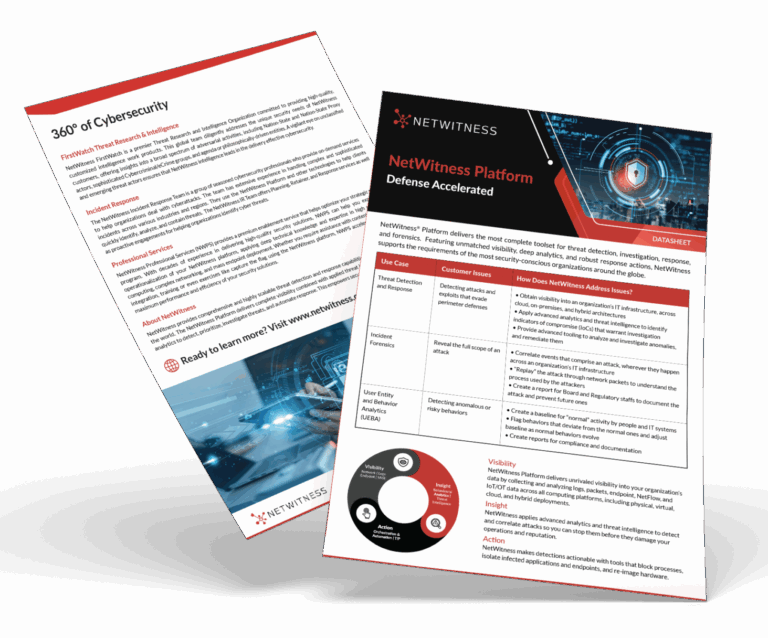
360° Cybersecurity with NetWitness Platform
– Unrivaled visibility into your organization’s data
– Advanced behavioral analytics and threat intelligence
– Threat detections and response actionable with the most complete toolset
Identity Security vs. IGA vs. PAM vs. ITDR
| Capability | Meaning | Role in Identity Security |
| IAM | Identity and Access Management | Manages authentication, authorization, users, and access policies |
| IGA | Identity Governance and Administration | Governs access reviews, certifications, lifecycle workflows, and compliance |
| PAM | Privileged Access Management | Protects privileged accounts, privileged credentials, and administrative sessions |
| ITDR | Identity Detection and Response | Detects and responds to identity-based threats |
| ISPM | Identity Security Posture Management | Assesses identity risks, misconfigurations, excessive permissions, and control gaps |
| CIEM | Cloud Infrastructure Entitlement Management | Manages risky or excessive permissions in cloud environments |
| CIAM | Customer Identity and Access Management | Secures authentication and access for external customer identities |
Core Components of Identity Security
A strong Identity Security program includes multiple controls that work together to protect identities and access.
- Identity inventory: An identity inventory provides visibility into all human and non-human identities across the organization. It helps security teams identify active users, privileged accounts, stale accounts, service accounts, cloud identities, and unmanaged identities.
- Authentication: Authentication verifies that an identity is legitimate. Common authentication methods include passwords, MFA, Adaptive MFA, Single Sign-On (SSO), Passwordless Authentication, biometrics, security keys, and device-based verification.
- Authorization: Authorization determines what an authenticated identity can access. It should be based on Least Privilege Access, business role, risk level, device posture, and contextual signals.
- Access Management: Access Management controls how users and systems gain access to applications, infrastructure, data, and services. It helps enforce secure user access across cloud, SaaS, endpoint, and network environments.
- Identity Management: Identity Management handles the creation, maintenance, and removal of identities. It supports onboarding, role updates, account changes, and deprovisioning.
- User Access Management: User Access Management ensures that users receive appropriate access based on job responsibilities, risk level, and business need.
- Identity Governance: Identity Governance helps organizations review, approve, certify, and audit access. It is critical for compliance, access control, and reducing privilege creep.
- Identity Lifecycle Management: Identity Lifecycle Management manages identities from creation to deactivation. It ensures that access changes when users join, move roles, or leave the organization.
- Privileged Access Management: Privileged access management protects high-risk accounts and credentials. It may include credential vaulting, session monitoring, approval workflows, Just-In-Time Access, and privileged session recording.
- Credential Protection: Credential Protection secures passwords, API keys, tokens, certificates, secrets, and privileged credentials from theft or misuse.
- Identity threat detection: Identity threat protection identifies suspicious identity behavior such as impossible travel, unusual login patterns, privilege escalation, credential misuse, token theft, and abnormal access attempts.
- Identity Security remediation: Identity Security remediation includes actions such as disabling accounts, revoking sessions, rotating credentials, removing excessive privileges, forcing MFA, or escalating incidents to security operations.
Common Identity Security Threats
Identity Security threats often begin with compromised credentials, weak access controls, or excessive permissions. Common threats include:
- Identity theft: Identity theft occurs when an attacker steals or misuses someone’s personal identity, digital identity, credentials, or account information to commit fraud or gain unauthorized access.
- Credential theft: Credential theft involves stealing usernames, passwords, tokens, API keys, certificates, or privileged credentials. It is one of the most common entry points for cyberattacks.
- Phishing: Phishing tricks users into revealing credentials, approving MFA requests, or clicking malicious links. Advanced phishing attacks can also target SSO sessions and authentication tokens.
- MFA fatigue attacks: MFA fatigue attacks overwhelm users with repeated MFA prompts until they approve one by mistake.
- Credential stuffing: Credential stuffing uses stolen username and password combinations from previous breaches to attempt access across multiple services.
- Account takeover: Account takeover occurs when an attacker gains control of a legitimate account and uses it to access systems, steal data, or escalate privileges.
- Privilege escalation: Privilege escalation happens when an attacker gains higher levels of access than originally granted.
- Orphaned accounts: Orphaned accounts are inactive or unmanaged accounts that remain available after a user leaves or changes roles. They create unnecessary risk.
- Service account abuse: Attackers may exploit service accounts because they often have broad permissions, weak monitoring, and long-lived credentials.
- Token theft and session hijacking: Attackers may steal authentication tokens or session cookies to bypass login controls and access systems as a legitimate user.
- Insider threats: Insider threats involve employees, contractors, or trusted users misusing access intentionally or accidentally.
- Excessive cloud permissions: Excessive cloud permissions allow identities to access more resources than needed, increasing the impact of compromise.
- Identity Security and Zero Trust: Zero Trust and Identity Security are closely connected. A Zero Trust model assumes that no user, device, application, or network location should be trusted automatically. Every access request must be verified, authorized, and continuously evaluated.
Identity Security supports Zero Trust by enforcing:
- Strong Identity Verification
- Multi-Factor Authentication (MFA)
- Adaptive MFA
- Least Privilege Access
- Just-In-Time Access
- Continuous monitoring
- Identity threat protection
- Context-aware access decisions
- Secure user access
- Privileged access controls
- Identity Governance
In a Zero Trust architecture, identity becomes a primary control point. Access decisions are based on who the user is, what device they use, where the request comes from, what resource they need, and whether their behavior appears risky.
A mature Identity Security Strategy helps organizations move from static access control to dynamic, risk-based access enforcement.
Identity Security and Cloud Environments
Cloud identity security is essential because cloud environments create large numbers of identities, permissions, roles, service accounts, workloads, and API connections. In the cloud, a misconfigured identity can expose sensitive data, enable privilege escalation, or give attackers access to critical infrastructure.
Common cloud identity security risks include:
- Excessive permissions.
- Unused cloud roles.
- Misconfigured IAM policies.
- Overprivileged service accounts.
- Exposed secrets.
- Hardcoded credentials.
- Weak API key management.
- Lack of visibility across multicloud environments.
- Inconsistent access controls.
- Unmonitored workload identities.
An identity security cloud or identity security platform can help organizations monitor cloud identities, evaluate permissions, detect risky behavior, and enforce least privilege across cloud services.
Cloud Identity Security should also integrate with cyber security identity and access management programs, identity security posture management, privileged access management, and identity threat detection.
Identity Security and AI
AI is changing Identity Security in two ways. First, attackers can use AI to create more convincing phishing messages, automate credential attacks, impersonate users, or generate social engineering campaigns. Second, defenders can use AI and machine learning to detect unusual identity behavior, prioritize risk, and automate response.
AI also creates new identity challenges. AI agents, bots, and automated workflows may need access to systems, data, and APIs. These non-human identities must be governed like other identities.
Organizations should apply Identity Security controls to AI identities by:
- Assigning unique identities to AI agents.
- Limiting access using Least Privilege Access.
- Monitoring AI agent behavior.
- Rotating credentials and secrets.
- Reviewing permissions regularly.
- Logging AI-driven actions.
- Revoking access when workflows are no longer needed.
Post-quantum identity security is also emerging as organizations prepare for future cryptographic risks that could affect certificates, authentication, and digital identity security.
Benefits of Identity Security
Identity Security provides business and security benefits across the enterprise.
- Reduces identity theft risk: Identity Security helps prevent identity theft by strengthening authentication, protecting credentials, monitoring suspicious behavior, and responding quickly to compromised accounts.
- Strengthens access control: It ensures that identities have only the access they need, reducing excessive permissions and privilege creep.
- Improves ransomware defense: Identity Security helps stop ransomware by limiting privilege escalation, detecting compromised accounts, protecting privileged credentials, and reducing lateral movement.
- Supports Zero Trust: Identity Security provides the identity verification, access control, and continuous monitoring required for Zero Trust.
- Improves compliance: Identity Governance, access reviews, audit trails, and Identity Lifecycle Management help organizations meet regulatory and internal compliance requirements.
- Protects privileged accounts: Privileged access management reduces the risk that attackers can use admin accounts or privileged credentials to control critical systems.
- Improves visibility: Identity Security gives security teams better visibility into users, service accounts, machine identities, cloud permissions, and risky access patterns.
- Accelerates threat response: Identity Detection and Response helps teams identify and remediate identity threats before they become major incidents.
- Enhances user experience: Single Sign-On, Passwordless Authentication, Adaptive MFA, and risk-based access can improve security without creating unnecessary friction for users.
Identity Security Use Cases
Identity Security supports many practical cybersecurity use cases.
- Securing remote workforce access: Organizations can verify remote users with MFA, device posture checks, and adaptive policies before granting access to corporate applications.
- Protecting privileged accounts: Privileged access management helps secure administrator accounts, privileged credentials, and high-risk sessions.
- Reducing cloud permission risk: Cloud identity security helps identify overprivileged roles, unused access, and risky cloud entitlements.
- Preventing identity theft: Identity Protection tools help detect suspicious logins, compromised credentials, and account takeover attempts.
- Securing customer access: Customer Identity Security protects customer accounts while supporting secure and convenient login experiences.
- Managing employee onboarding and offboarding: Identity Lifecycle Management ensures that access is granted when users join and removed when they leave.
- Detecting compromised accounts: Identity threat protection can detect unusual behavior such as impossible travel, abnormal login times, and unexpected access to sensitive systems.
- Supporting identity security assessment: An identity security assessment helps organizations evaluate current controls, discover identity risks, and prioritize remediation.
- Improving identity security evaluation: Identity security evaluation helps compare identity security solutions, identity security software, and identity security platforms based on coverage, integrations, automation, and risk reduction.
How to Implement Identity Security
Identity security implementation should follow a structured process that improves visibility, reduces risk, and strengthens access control over time.
- Step 1: Create an identity inventory: Identify all users, privileged accounts, service accounts, machine identities, cloud identities, customer identities, and third-party accounts.
- Step 2: Assess identity risk: Run an identity security assessment to identify excessive permissions, stale accounts, weak authentication, risky roles, unmanaged identities, and privileged credential exposure.
- Step 3: Strengthen authentication: Adopt Multi-Factor Authentication (MFA), Adaptive MFA, Passwordless Authentication, and Single Sign-On where appropriate.
- Step 4: Enforce least privilege: Review access permissions and remove unnecessary privileges. Apply Least Privilege Access across applications, cloud platforms, endpoints, and networks.
- Step 5: Secure privileged access: Use privileged access management to protect admin accounts, privileged credentials, session activity, and high-risk access.
- Step 6: Automate identity lifecycle management: Connect identity systems with HR, IT service management, directories, and access workflows to automate provisioning, role changes, and deprovisioning.
- Step 7: Deploy identity threat detection: Use Identity Detection and Response (ITDR) to detect suspicious identity behavior, credential misuse, privilege abuse, and account compromise.
- Step 8: Integrate with security operations: Send identity risk signals to SIEM, SOAR, EDR, XDR, ticketing, and incident response tools so security teams can investigate and act quickly.
- Step 9: Remediate identity risks: Use Identity Security remediation to disable risky accounts, revoke sessions, rotate credentials, remove excessive permissions, and enforce reauthentication.
- Step 10: Measure and improve: Track identity hygiene, MFA coverage, privileged account protection, time to revoke access, orphaned accounts, and identity risk reduction over time.
Identity Security Best Practices
Organizations can strengthen Identity Security by following these best practices:
- Enforce Multi-Factor Authentication (MFA) for all users.
- Use Adaptive MFA for risk-based authentication.
- Move toward Passwordless Authentication where possible.
- Centralize identity and access management security.
- Apply Least Privilege Access across all systems.
- Use Just-In-Time Access for privileged tasks.
- Monitor privileged accounts and privileged credentials.
- Remove orphaned and stale accounts.
- Automate onboarding and offboarding.
- Review access regularly through Identity Governance.
- Protect service accounts, secrets, API keys, and certificates.
- Monitor cloud identities and excessive cloud permissions.
- Integrate Identity Detection and Response with security operations.
- Use identity security posture management to find control gaps.
- Apply Zero Trust policies to users, devices, workloads, and applications.
- Continuously evaluate identity risk.
- Maintain clear Identity Security Strategy ownership.
Identity Security Metrics and KPIs
Measuring Identity Security helps organizations understand whether their controls are working. Useful metrics include:
- MFA adoption rate.
- Percentage of users covered by Adaptive MFA.
- Number of privileged accounts.
- Percentage of privileged accounts protected by PAM.
- Number of orphaned accounts.
- Number of stale accounts.
- Number of overprivileged identities.
- Number of unmanaged service accounts.
- Percentage of cloud identities with excessive permissions.
- Time to revoke access after termination.
- Time to detect identity-based threats.
- Time to remediate identity risks.
- Access review completion rate.
- Number of failed login anomalies.
- Number of risky sign-ins.
- Secrets rotation frequency.
- Identity hygiene score.
- Identity security posture score.
These metrics help guide Identity Security evaluation, executive reporting, compliance programs, and continuous improvement.
What to Look for in an Identity Security Solution
Identity security solutions should help organizations manage, govern, protect, detect, and respond to identity risk. The right identity security software or identity security platform should support both preventive controls and active threat defense.
Look for capabilities such as:
- Unified visibility into human and non-human identities.
- Identity and access management integration.
- IAM and identity and access management security controls.
- Identity Governance and Administration.
- Privileged access management.
- Identity Detection and Response (ITDR).
- Identity security posture management.
- Cloud identity security.
- Workforce Identity Security.
- Customer Identity Security.
- Machine identity and secrets management.
- Credential Protection.
- Adaptive MFA.
- Passwordless Authentication.
- Single Sign-On (SSO).
- Least Privilege Access enforcement.
- Just-In-Time Access.
- Session monitoring.
- Risk-based access policies.
- Automated Identity Security remediation.
- SIEM, SOAR, EDR, XDR, HRIS, and ITSM integrations.
- Compliance and audit reporting.
- Support for Zero Trust architecture.
A strong identity security platform should also help teams perform identity security assessment, identity security evaluation, risk prioritization, and ongoing identity security management.
Identity Security Challenges
Identity Security Challenges often come from complexity, scale, and lack of visibility.
Common challenges include:
- Identity sprawl: Organizations may have identities spread across directories, cloud platforms, SaaS tools, endpoints, networks, and legacy applications.
- Excessive permissions: Users, service accounts, and cloud roles often accumulate more access than they need.
- Privilege creep: Privilege creep occurs when users gain new permissions over time but old permissions are not removed.
- Weak authentication: Passwords alone are vulnerable to phishing, credential stuffing, brute-force attacks, and theft.
- Orphaned accounts: Accounts that remain active after users leave or change roles can become easy targets.
- Poor visibility into machine identities: Service accounts, APIs, certificates, and workload identities are often harder to monitor than human users.
- Fragmented tools: Separate IAM, PAM, IGA, ITDR, cloud, and endpoint tools can create gaps in visibility and response.
- Cloud complexity: Cloud environments often have complex roles, permissions, policies, and temporary identities that are difficult to govern manually.
- User experience friction: Security controls must be strong without making legitimate access unnecessarily difficult.
- Delayed remediation: Identity risks become more dangerous when organizations cannot quickly revoke access, rotate credentials, or disable compromised accounts.
Identity Security Examples
- Example 1: Compromised employee account: An attacker steals an employee’s password through phishing. Because the organization uses Adaptive MFA and identity threat protection, the login is flagged as risky due to an unusual location and unknown device. The session is blocked, and the user is required to complete additional verification.
- Example 2: Overprivileged cloud account: A developer account has admin-level permissions in a cloud environment even though the user only needs access to a specific workload. Identity security posture management identifies the excessive access, and the organization remediates the risk by applying Least Privilege Access.
- Example 3: Orphaned contractor identity: A contractor completes a project, but their account remains active. Identity Lifecycle Management detects that the contract end date has passed and automatically disables the account.
- Example 4: Privileged administrator access: An administrator needs temporary access to a production database. Instead of granting standing privilege, the organization uses Just-In-Time Access. The admin receives temporary access for an approved time window, and the session is monitored.
- Example 5: Ransomware attempt using stolen credentials: An attacker uses stolen credentials to access a user account and attempts to escalate privileges. Identity Detection and Response detects abnormal behavior, revokes the session, disables the account, and alerts security operations before ransomware can spread.
Related Terms & Synonyms
- Identity fabric: Identity fabric is an integrated identity architecture that connects identity tools, policies, data, and workflows across users, applications, cloud environments, and security systems.
- Identity Defense: Identity Defense is the practice of protecting identities from compromise, misuse, privilege abuse, and identity-based attacks.
- Identity Protection: Identity Protection refers to controls that prevent, detect, and respond to identity theft, account takeover, credential misuse, and unauthorized access.
- Identity intelligence: Identity intelligence is the use of identity data, behavior, access patterns, and risk signals to improve security decisions.
- Identity orchestration: Identity orchestration coordinates identity workflows, authentication, access policies, governance, and remediation across multiple systems.
- Identity-Based Security: Identity-Based Security uses verified identity, access rights, context, and behavior as primary controls for protecting systems and data.
- Identity Risk Protection: Identity Risk Protection focuses on identifying and reducing risks tied to users, credentials, privileges, sessions, and access permissions.
- Digital Identity Security: Digital Identity Security protects online identities, credentials, authentication methods, and access privileges from theft or misuse.
- Identity-Centric Security: Identity-Centric Security is a security model that places identity at the center of access control, threat detection, and risk management.
- Identity Threat Protection: Identity Threat Protection detects and responds to threats such as credential theft, account takeover, privilege escalation, and suspicious identity behavior.
- Identity Protection Platform: An Identity Protection Platform is a security solution that helps protect identities, credentials, access, and identity activity across enterprise environments.
- Enterprise Identity Security: Enterprise Identity Security protects workforce, customer, privileged, third-party, machine, and cloud identities across an organization.
- Post-quantum identity security: Post-quantum identity security prepares identity systems, authentication, certificates, and cryptographic controls for future quantum-related risks.
- Converged identity security platform: A converged identity security platform unifies IAM, IGA, PAM, ITDR, posture management, and remediation into a single identity security approach.
People Also Ask
1. What is identity security?
Identity Security is the practice of protecting digital identities, credentials, access privileges, and identity activity from misuse, theft, or compromise. It verifies users and systems, enforces appropriate access, monitors behavior, detects threats, and remediates identity risks.
2. What is identity security posture management?
Identity security posture management is the continuous process of assessing identity risks, permissions, misconfigurations, weak controls, and excessive access across an organization. It helps security teams identify identity gaps, prioritize risk, and improve identity hygiene.
3. How to integrate identity risk detection into security operations?
To integrate identity risk detection into security operations, organizations should connect IAM, Identity Governance, privileged access management, cloud identity tools, and ITDR systems with SIEM, SOAR, EDR, XDR, and incident response workflows. This allows identity risk signals to trigger alerts, investigations, automated remediation, and security playbooks.
4. What is converged identity security?
Converged identity security brings multiple identity security capabilities into a unified approach or platform. It may combine IAM, IGA, PAM, ITDR, identity security posture management, access governance, and remediation so teams can manage identity risk from one coordinated system.
5. How to prevent identity theft?
To prevent identity theft, use strong passwords, Multi-Factor Authentication (MFA), Passwordless Authentication where possible, phishing-resistant authentication, secure devices, credit and account monitoring, and careful handling of personal information. Organizations should also protect credentials, monitor suspicious activity, enforce Least Privilege Access, and respond quickly to compromised accounts.
6. What is information theft?
Information theft is the unauthorized stealing, copying, or exposure of sensitive data. This may include personal identity information, financial data, intellectual property, login credentials, customer records, business documents, or confidential enterprise data.
7. Why is it important to have identity theft protection?
Identity theft protection is important because stolen personal identity information can be used for fraud, account takeover, financial theft, unauthorized access, and social engineering. For organizations, identity theft protection helps reduce credential misuse, data breach risk, compliance exposure, and reputational damage.
8. What is the difference between Identity Security and Identity and Access Management (IAM)?
Identity and Access Management, or IAM, manages identities, authentication, authorization, and access policies. Identity Security is broader because it protects identities, credentials, privileges, sessions, and identity infrastructure through governance, threat detection, posture management, privileged access management, and remediation.
9. Is identity fabric a complete identity security?
Authentication in Identity Security is the process of verifying that a user, device, application, or system is who or what it claims to be. Authentication may use passwords, MFA, Adaptive MFA, biometrics, certificates, security keys, or Passwordless Authentication.
10. What is authentication in Identity Security?
Ensure hybrid and multi-cloud security through unified CSPM platforms providing cross-cloud visibility, consistent security policies, centralized monitoring, and compliance assessment across heterogeneous cloud environments.
11. What is Just-In-Time (JIT) access?
Just-In-Time Access is an access control method that grants temporary permissions only when needed and removes them after a specific task or time period. JIT access reduces standing privileges and limits the damage that compromised accounts can cause.
12. How does Identity Security help stop ransomware?
Identity Security helps stop ransomware by protecting credentials, enforcing MFA, limiting privileges, detecting compromised accounts, blocking privilege escalation, and reducing lateral movement. If an attacker uses stolen credentials, Identity Detection and Response can detect suspicious behavior, revoke sessions, disable accounts, and trigger remediation before ransomware spreads.