What Security Leaders Need to Know About Alert Fatigue Reduction?
Organizations have an abundance of security alerts, but they also have an excess of alerts without context; many alerts need to be prioritised; and many alerts do not provide analyst actionable intelligence.
A good security platform can help a security team filter out excess noise, correlate actions in multiple environments, automate repetitive investigations, and enable analysts to concentrate on the most significant threats. Today’s platforms integrate threat detection and response, automated cybersecurity, security analytics, and threat intelligence in order to increase the efficiency of the SOC while reducing burnout and missing threats.
Introduction
Most security teams have the same problem: they are drowning in alerts.
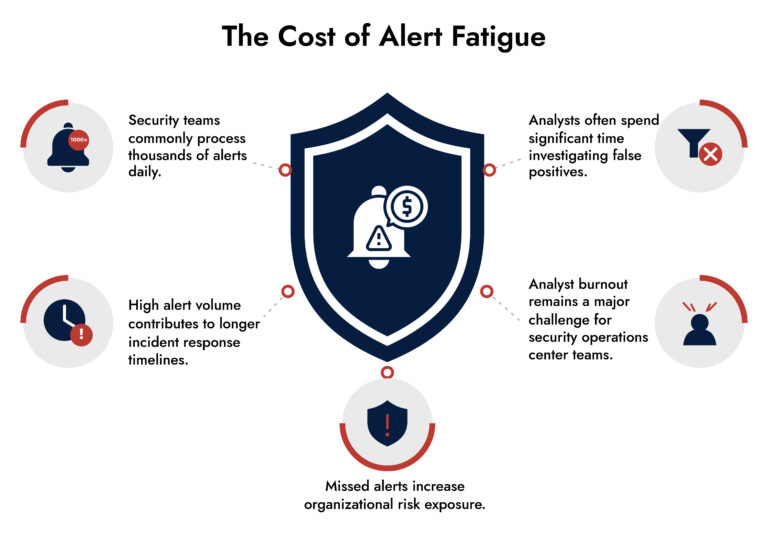
A typical enterprise environment generates thousands of security events every day. Endpoint tools, cloud controls, identity systems, network monitoring solutions, email gateways, and applications continuously produce data. While visibility has improved, analyst workload has increased alongside it.
The result is alert fatigue.
When analysts spend their day reviewing low-priority notifications, real threats become harder to identify. Investigations take longer. Incident response slows down. Team morale declines. According to recent industry research, organizations continue to cite alert overload as one of the primary barriers to effective security operations and threat detection and response.
Here is where the modern cybersecurity platform comes into its own, providing tangible benefits. Instead of being just another system that generates alerts, the platform acts as a force multiplier by combining telemetry, automation of processes, enrichment, and allowing people to concentrate on prioritizing threats.
This paper explores five types of technologies used within cybersecurity platforms that can help organizations overcome alert fatigue and improve their results.
Why Alert Fatigue Has Become a Security Operations Problem
Alert fatigue occurs when analysts receive more alerts than they can reasonably investigate.
The challenge isn’t simply volume. It’s the quality of alerts.
Security teams often deal with:
- Duplicate notifications across multiple tools
- False positives
- Lack of threat context
- Manual investigation processes
- Siloed security data
- Inconsistent prioritization methods
As enterprise environments expand across cloud, hybrid, remote, and operational technology environments, the number of security monitoring tools continues to grow. Each tool contributes valuable visibility but often increases operational complexity.
The most effective cybersecurity platform strategies focus on reducing noise while increasing confidence in detection accuracy.
Top Security Operations Platforms for Alert Reduction
1. SIEM Platform Solutions That Correlate and Prioritize Alerts
An SIEM system continues to be one of the best tools to combat alert fatigue issues.
Instead of burdening security experts with analyzing singular alerts, SIEM systems analyze information from multiple sources and generate alerts based on that analysis.
Strong SIEM platforms help organizations:
- Aggregate security telemetry
- Correlate events across environments
- Eliminate duplicate alerts
- Prioritize high-risk incidents
- Support faster investigations
For example, a failed login alert may appear insignificant in isolation. When correlated with unusual network activity, privilege escalation attempts, and suspicious endpoint behavior, it becomes a high-priority investigation.
This context-driven approach significantly improves SOC efficiency.
Key capabilities include:
- Behavioral analytics
- Event correlation
- Risk scoring
- Threat hunting support
- Centralized visibility
Organizations seeking a cybersecurity platform that reduces analyst workload should evaluate SIEM capabilities as a foundational requirement.
2. Security Analytics Platform Technologies That Improve Detection Accuracy
Security analytics tools assist security professionals in detecting trends that rule-based detections often miss out on.
Unlike rule-based detections that depend on predefined signatures, security analytics involve the examination of behavioral trends in all users and devices.
Benefits include:
- Reduced false positives
- Faster anomaly detection
- Improved threat prioritization
- Better visibility into advanced attacks
Security analytics become particularly valuable when detecting:
- Insider threats
- Credential abuse
- Lateral movement
- Data exfiltration
- Long-dwell adversaries
By identifying meaningful anomalies rather than generating alerts for every event, a security analytics platform helps analysts spend more time investigating actual risks.
3. Threat Intelligence Platform Capabilities That Add Context
Not every alert deserves immediate attention. A threat intelligence platform helps determine which alerts correspond to known adversary activity and which can be deprioritized.
Threat intelligence enriches alerts with external context such as:
- Known malicious IP addresses
- Threat actor infrastructure
- Malware indicators
- Attack campaigns
- Tactics, techniques, and procedures (TTPs)
When integrated into a cybersecurity platform, intelligence enrichment helps analysts answer critical questions faster:
- Is this activity associated with a known threat actor?
- Has this indicator been observed elsewhere?
- Does this behavior align with active attack campaigns?
Context reduces uncertainty, which directly reduces alert fatigue.
4. Cybersecurity Automation and SOC Automation Tools
Many alerts require repetitive investigative steps.
Analysts often perform the same enrichment activities hundreds of times each month:
- Checking threat intelligence feeds
- Validating indicators
- Gathering endpoint data
- Reviewing user activity
- Collecting forensic evidence
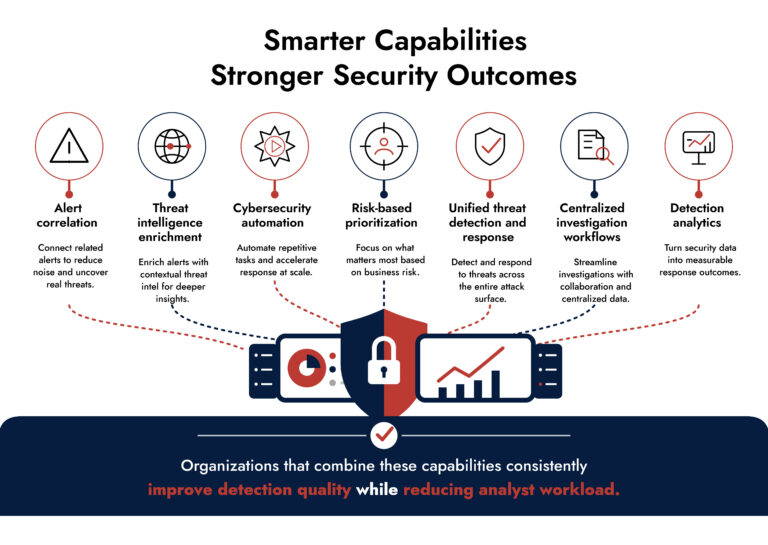
Cybersecurity automation eliminates much of this manual work.
Modern SOC automation tools enable:
- Automated alert triage
- Case creation
- Evidence collection
- Workflow orchestration
- Response execution
As another example, in cases where there are suspicious activities, automation could help add context to the alert even before any analysis is conducted. It helps with improving consistency and greatly improves SOC efficiencies.
As per the latest advice provided by cyber security agencies within the government, automation remains central to enhancing the effectiveness of detection and response.
5. Unified Threat Detection and Response Platforms
Security teams often struggle because critical data exists across separate tools.
A unified cybersecurity platform brings together:
- Network telemetry
- Endpoint activity
- Log data
- Cloud visibility
- Threat intelligence
- Investigation workflows
This consolidation enables faster threat detection and response while reducing the need to switch between multiple consoles.
Benefits include:
- Better visibility across attack chains
- Faster root cause analysis
- Reduced investigation time
- More accurate prioritization
- Improved collaboration
Instead of reviewing dozens of disconnected alerts, analysts see a complete attack story.
That shift alone can significantly reduce alert fatigue.
How NetWitness Helps Reduce Alert Fatigue
Reducing alert fatigue requires more than automation. It requires visibility, context, and investigation depth.
NetWitness approaches this challenge through a unified security operations platform that combines network visibility, logs, endpoint telemetry, threat intelligence integration, and advanced analytics.
Key capabilities include:
- Comprehensive threat detection and response
- High-fidelity security analytics
- Deep packet and network visibility
- Automated investigation workflows
- Centralized incident response capabilities
NetWitness solution assists in determining how threats traverse the environment, rather than forcing the analyst to work based on disparate alerts, by correlating activities across multiple feeds.
In turn, this makes it possible for teams within the security operations center to focus on real threats.
What to Look for in a Cybersecurity Platform That Reduces Alert Fatigue
Not every cybersecurity platform delivers measurable operational improvements.
Prioritize platforms that provide:
- Unified visibility across environments
- Advanced threat detection and response
- Built-in cybersecurity automation
- Threat intelligence integration
- Strong security analytics platform capabilities
- Flexible investigation workflows
- Scalable security monitoring tools
The goal isn’t simply reducing alerts. The goal is reducing unnecessary alerts while improving detection quality.
Conclusion
Alert fatigue is among the key challenges that plague security operations today.
Throwing additional tools at the problem doesn’t solve it either. Visibility, advanced analytics, automation, and contextual detection are what work.
The best cyber security platform integrates security analytics, threat intelligence, automation, and investigative techniques in one seamless operation. By removing noise and focusing on priority, teams will be able to concentrate their efforts on finding and preventing actual threats.
When looking to optimize security operations and improve threat detection and response, the best place to start is by assessing existing capabilities in terms of alert prioritization, automation, and visibility within your cybersecurity platform.
Frequently Asked Questions
1. How to choose a cybersecurity platform for enterprise use?
Select a cybersecurity platform which offers unified visibility, threat detection and response functions, cybersecurity automation, threat intelligence, scalable analytics, and incident response processes. It is important for organizations to balance efficiency with effective detection.
2. Why is alert fatigue a challenge for SOC teams?
Alert fatigue happens when analysts have too many alerts to work with. A large number of alerts means more work and increases the chances of overlooking a threat.
3. How do cybersecurity platforms help reduce alert fatigue?
A cybersecurity platform reduces alert fatigue by linking related events and ranking risks. It adds threat intelligence to alerts, automates investigations, and unifies security data in one view.
4. What features should organizations look for in cybersecurity platforms to reduce alert fatigue?
Key features include cybersecurity automation, SIEM platform capabilities, security analytics, threat intelligence platform integration, automated incident response workflows, risk-based alerting, and centralized visibility.
5. What metrics can organizations use to measure alert fatigue reduction?
Organizations often track:
- Mean Time to Detect (MTTD)
- Mean Time to Respond (MTTR)
- False-positive rates
- Alert-to-incident conversion rates
- Analyst workload
- Incident investigation time
- SOC efficiency improvements
6. How do security operations platforms improve threat detection and response?
Features provided by a security operations platform include telemetry data consolidation, alert correlation, automatic investigation, and context intelligence.
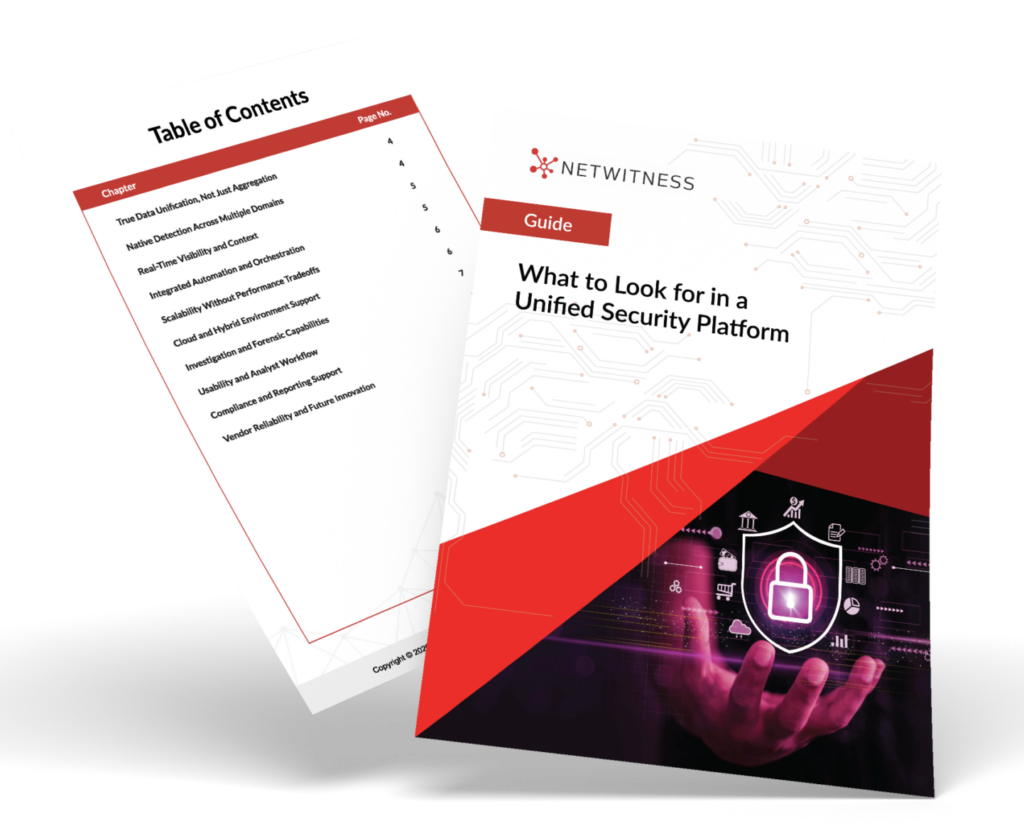
What to Look for in a Unified Security Platform
- Cut through tool sprawl with a practical evaluation framework.
- Compare platforms based on visibility, detection accuracy, and automation.
- Validate real-world performance across hybrid and cloud environments.
- Make confident, risk-aligned security decisions.