What Is Network Threat Detection?
Network threat detection is the process of continuously monitoring and analyzing network traffic to identify malicious activity, suspicious behavior, and potential cyberattacks before they cause damage. Using network traffic analysis, network security monitoring, and Network Detection and Response (NDR) technologies, organizations gain greater network visibility, accelerate threat hunting, and improve incident response across their enterprise networks.
Introduction
Here’s an uncomfortable number. 88% of breaches are attributed to human error overall. Not sophisticated zero-days. Not nation-state tooling. Someone clicked, someone misconfigured, someone missed a signal that was sitting right there in the traffic.
That last part is the one security teams can actually fix. You can’t eliminate human error entirely, but you can build a system that catches what people miss, and that system starts with what your network threat detection software records before anything goes wrong. Most tools only start paying attention once an alert fires. By then, the attacker has usually been inside for weeks, moving quietly, and whatever happened before that alert is gone if nobody bothered to capture it.
Real network threat detection software isn’t about reacting faster. It’s about having a complete record already sitting there so that when something looks off, you’re not starting from zero. You’re starting from evidence.
Here’s what that actually requires.
Why Does Pre-Incident Capture Matter More Than Post-Incident Response?
Think about it this way. You can’t investigate what you didn’t record. If your network security monitoring only kicks into gear after an alert fires, you’re missing everything that happened before the alert, which is usually where the real story is.
Attackers don’t announce themselves. They probe slowly, test defenses, and often sit inside a network for weeks before doing anything that trips a signature. One widely cited industry figure puts the average dwell time for a breach at well over 200 days before it’s even discovered. That’s not a detection failure at the moment of attack. That’s a visibility failure that started long before.
This is why network detection and response has shifted from “watch for bad things” to “record everything relevant, then look for bad things.” The recording part has to happen continuously, not reactively.
What Should Threat Detection Software Actually Capture?
A strong network threat detection tool isn’t just watching for malware signatures. It’s building a complete, searchable record of network behavior. That includes:
- Full packet capture across critical segments, not just metadata or flow summaries
- Session and connection metadata including source, destination, protocol, duration, and volume
- DNS queries and resolutions, since so much command-and-control traffic hides in DNS
- Encrypted traffic patterns, even without decrypting content, because behavior and timing still reveal a lot
- East-west traffic, meaning movement between internal systems, not just traffic crossing the perimeter
- Application-layer data where feasible, so you understand not just that traffic moved, but what it was doing
Without this depth, you end up with alerts that raise questions nobody can answer. Something looked suspicious, but what actually happened? Full packet capture is what turns a vague alert into an actual investigation.

Why Is Complete Network Visibility Is Critical for Effective Threat Detection?
You can’t detect what you can’t see. That sounds obvious, but a shocking number of enterprise network security programs have massive blind spots, especially in cloud environments, IoT segments, and internal traffic that never touches a perimeter firewall.
Network visibility means knowing what’s connected, what’s talking to what, and what normal looks like across every segment, not just the ones that are easy to monitor. Threat detection tools that only watch north-south traffic miss a huge category of attacks, because once an attacker is inside, most of their activity happens laterally.
Good visibility isn’t a one-time setup either. Networks change constantly. New devices join, cloud workloads spin up and down, and remote access patterns shift. Detection software has to keep pace with that, continuously mapping the environment rather than relying on a static inventory from six months ago.
How Does Network Traffic Analysis Turn Raw Data Into Real Detection?
Capturing data is only half the job. The other half is making sense of it, and that’s where network traffic analysis comes in.
Raw packet capture and flow data are useless on their own if nobody’s analyzing the patterns. Effective analysis looks at things like:
- Behavioral baselines, established through the native UEBA module, help identify deviations from normal activity, allowing NDR to prioritize suspicious behavior over routine network events.
- Protocol anomalies, like traffic that claims to be one protocol but behaves like another
- Beaconing patterns, which often indicate command-and-control communication
- Data volume spikes, especially outbound, which can signal exfiltration in progress
This is also where cyber threat detection stops being purely reactive. Instead of waiting for a known signature to match, traffic analysis can identify unusual network activity, even if nobody’s seen that specific attack before. That matters a lot given how fast attackers rotate tools and tactics.
What Role Does Threat Hunting Play If Detection Already Works?
If detection software is doing its job, why do you still need threat hunting? Because automated detection, no matter how good, is built to catch patterns it already understands. Threat hunting is the human layer that goes looking for what the automation might have missed.
Skilled analysts use captured network data to ask questions the system wasn’t specifically built to answer. Did this internal server ever talk to this external IP before last Tuesday? Is this authentication pattern normal for this user, or new? Hunting depends entirely on having rich historical data to search through, which loops right back to why full packet capture and long retention windows matter so much.
Without solid network forensics capabilities behind it, threat hunting turns into guesswork. With them, it turns into an actual investigation you can trust.
Why Does Network Forensics Matter Even After an Incident Is Contained?
Once an incident is handled, the temptation is to move on. But network forensics after the fact is where organizations learn how an attacker actually got in, what they touched, and what to fix so it doesn’t happen again.
This is only possible if the underlying capture was thorough in the first place. Forensics teams working with incomplete logs end up filling gaps with assumptions, and assumptions don’t hold up in a post-incident report, let alone in front of regulators or auditors. Detailed packet-level records let teams reconstruct the actual timeline instead of guessing at one.
What Should Enterprise Teams Look For in NDR Solutions?
When evaluating NDR solutions, it’s easy to get distracted by dashboards and alert volume. The better questions to ask are quieter but more important:
- Does it capture full packets, or only summarized flow data?
- How far back does retention go, and is that enough for a real investigation?
- Can it see encrypted and internal traffic, not just perimeter traffic?
- Does it support both automated detection and manual threat hunting?
- How easily can analysts pivot from an alert to the raw underlying data?
This last point matters more than it sounds. A platform that generates alerts but makes it hard to dig into the actual traffic behind them just creates more work, not less.
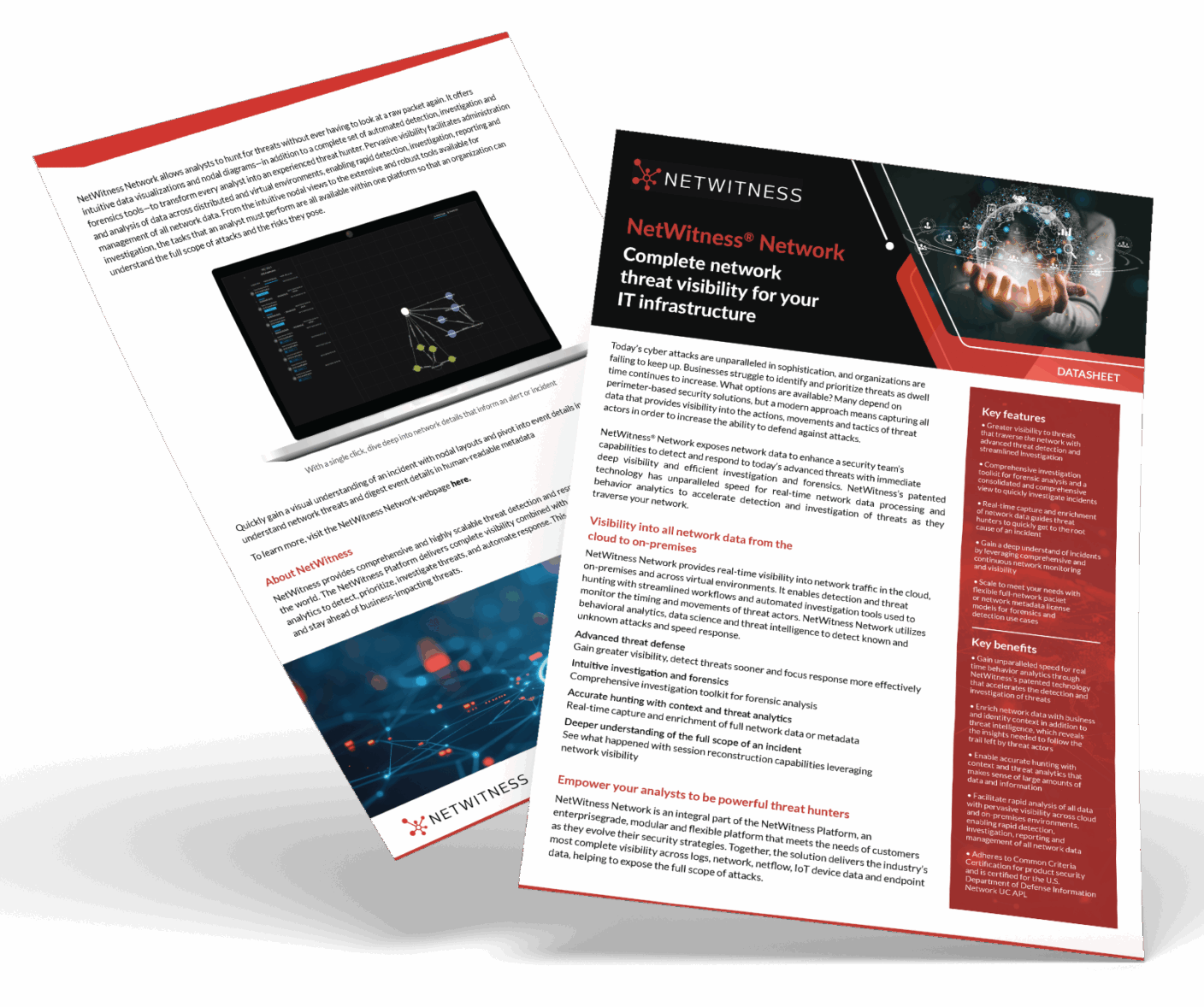
NetWitness approaches this by combining full packet capture, log data, and endpoint visibility into a single view, so analysts aren’t stitching together separate tools mid-investigation. That kind of unified visibility is what makes network security monitoring practical at enterprise scale, rather than something that only works in a demo environment.
The Bottom Line
Detection software is only as good as what it captures before something goes wrong. Alerts matter, but they’re the easy part. The hard part, and the part that actually determines whether an incident gets caught early or discovered 200 days too late, is whether your network threat detection tools were quietly recording everything all along.
If your current setup can’t answer “what happened here” with real packet-level detail, that’s worth fixing before you need it, not after.
Frequently Asked Questions
1. What data should network threat detection software capture before an incident?
Network threat detection software should capture logs, metadata, session data, and full packet capture before an incident occurs. This provides complete network visibility, supports network forensics, and enables security teams to investigate attacks, reconstruct timelines, and identify the root cause long after malicious activity has taken place.
2. What features should organizations look for in network threat detection software?
Look for network threat detection software that offers real-time network security monitoring, network traffic analysis, behavioral analytics, full packet capture, AI-driven detections, threat hunting, and seamless SIEM and SOAR integration. These capabilities strengthen enterprise network security and improve detection, investigation, and response.
3. How does network threat detection software integrate with a SOC?
Network threat detection software integrates with SIEM, SOAR, EDR, and threat intelligence platforms to provide enriched alerts and evidence. This improves cyber threat detection, speeds investigations, enhances network security monitoring, and enables SOC teams to automate response and reduce incident resolution time.
4. How does NetWitness improve network threat detection?
NetWitness enhances network threat detection through, network traffic analysis, full packet capture, and advanced network forensics. Its unified Network Detection and Response platform delivers complete network visibility, helping security teams detect sophisticated threats, accelerate investigations, and respond with greater confidence.
5. How does encrypted traffic affect network threat detection?
Encrypted traffic can hide malicious activity from traditional inspection tools. Modern NDR solutions use metadata, integrates with behavioral analytics engine, and network traffic analysis to identify suspicious patterns without decrypting traffic, improving network threat detection and strengthening overall enterprise network security.
6. How does network threat detection support compliance requirements?
Continuous network threat detection supports compliance by providing network packet capture, audit trails, and historical evidence for investigations. Combined with network visibility and network forensics, it helps organizations meet regulatory requirements, validate security controls, and simplify compliance reporting.
7. What types of cyberattacks can network threat detection software identify?
Advanced network threat detection software identifies ransomware, malware, insider threats, lateral movement, phishing-related activity, data exfiltration, command-and-control traffic, and advanced persistent threats. Combining network traffic analysis, threat hunting, and cyber threat detection enables faster identification and response to evolving attacks.
Proactive Network Threat Detection with NetWitness® NDR
- Full Packet Visibility
- Advanced Threat Detection
- Network Forensics at Scale
- Faster Incident Response