When should an enterprise engage external cyber incident response experts?
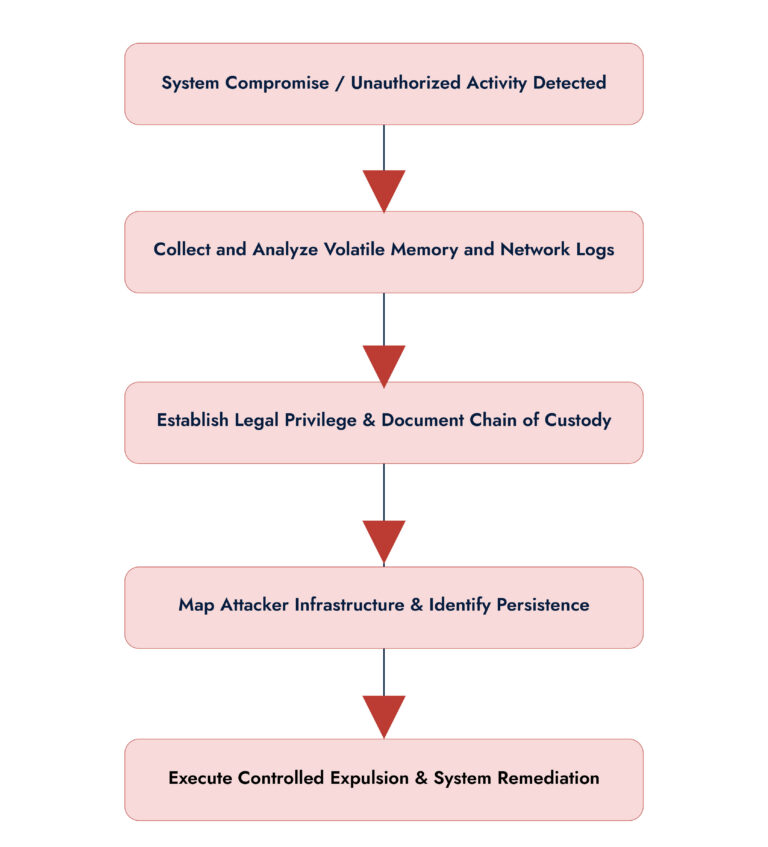
Organizations should bring in external cyber incident response teams if the incident demonstrates characteristics consistent with advanced persistent threat (APT) techniques such as abuse of native tools (Living off the Land), advanced lateral movement, or credential compromise of administration-level access that evades automated EDR and SIEM barriers. While SOCs inside organizations handle everyday alerting processes effectively, advanced attacks demand specific expertise in digital forensics, network metadata reassembly, and malware analysis. Bringing in an external team right from the detection of persistence ensures volatility evidence preservation, does not trigger alerts to the active threat actors, and drastically cuts down the dwell time of the attackers before data exfiltration or ransomware delivery.
Introduction
Organizations today operate in a threat environment where the distinction between “prepared” and “compromised” is often measured in hours, not quarters. Advanced adversaries continue to evolve their tactics, leveraging stealth, persistence, and operational discipline that can rival mature enterprise security teams. In this environment, one of the most consequential decisions a security leader will make is not whether to engage outside cyber incident response experts, but when.
Organizations should bring in external cyber incident response teams if an incident demonstrates characteristics consistent with advanced persistent threat (APT) techniques, such as abuse of native tools (Living off the Land), advanced lateral movement, or credential compromise of administration-level access that evades automated EDR and SIEM barriers. While Internal Security Operations Centers (SOCs) handle everyday alerting processes effectively, advanced attacks demand specific expertise in digital forensics, network metadata reassembly, and malware analysis.
Bringing in an external team right from the detection of persistence ensures volatility evidence preservation, does not trigger alerts to active threat actors, and drastically cuts down the dwell time of attackers before data exfiltration or ransomware delivery.
The Reality of Modern Enterprise Breaches
SOCs frequently face challenges not from a lack of tools, but because they are overwhelmed by complexity in telemetry data. Current enterprise-level networks are incredibly complex, making it increasingly difficult to distinguish between legitimate administrative scripts and targeted corporate espionage attacks.
Purely relying on automated alert systems is a recipe for disaster. Cybercrime syndicates do not just unleash destructive malware; they hide within normal traffic, exploit zero-day vulnerabilities, and set up persistent access using alternate communication channels. When an in-house security team realizes an active intrusion is happening, the next step concerns determining whether the team can provide the necessary forensic expertise to investigate and thoroughly trace all aspects of the attack.
Rushed decisions like removing and resetting infected hosts without first running a full analysis of their state, will alert intruders, pushing them further into the depths of the infrastructure or prematurely initiating ransomware delivery. Hiring outside cyber incident response consultants represents both an optimal technical solution and a calculated decision by management to protect internal personnel and avoid severe operational disruptions.
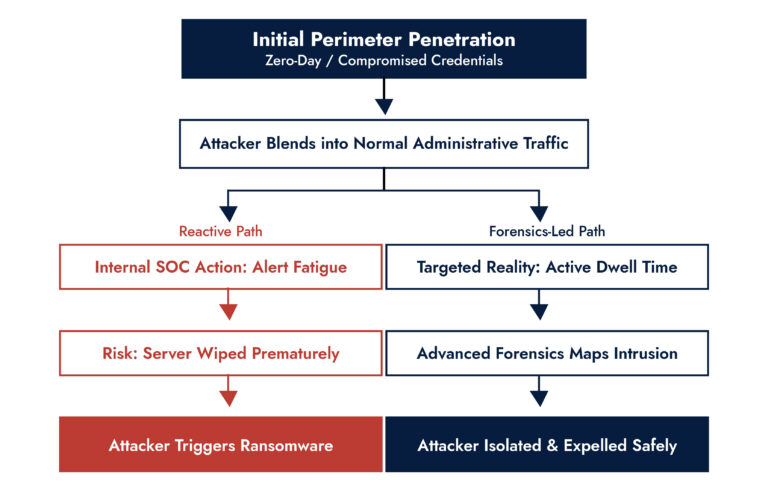
The Cyber Resilience Lifecycle: Proactive vs. Reactive Engagement
The most effective security teams do not view proactive readiness and reactive incident response as separate activities; instead, they treat them as parts of a continuous lifecycle. Proactive readiness reduces the likelihood and impact of incidents, while reactive expertise ensures that active attacks are handled with speed, precision, and confidence.
Pillar 1: Proactive Engagement to Strengthen Readiness
High-performing security organizations recognize that cyber incident response begins long before an incident occurs. The goal is to reduce uncertainty, compress response timelines, and improve confidence across people, process, and technology.
- Establishing Actionable Visibility: A common challenge is the gap between deployed security technologies and actionable visibility. Organizations often have SIEM platforms, endpoint tools, and network telemetry in place but lack the integration required to detect advanced adversary behaviors. Proactive engagement transforms visibility from a passive repository of data into an active detection capability.
- Simulated Attacks and Technical Red Teaming: To create a robust defense, operational capabilities must be measured against frameworks like NIST and MITRE ATT&CK. Modern Red Team attacks simulate real-world adversaries in a controlled environment to validate the performance of detection technologies and test the security team’s playbooks.
- Operationalizing Threat Intelligence: Engaging IR experts proactively allows organizations to translate raw threat intelligence feeds into actionable detection logic, tuning analytics to reduce noise and aligning monitoring to the industry-specific threat landscape.
- Building Muscle Memory Through Threat Hunting: Proactive threat hunting elevates a program from reactive to anticipatory. External IR teams bring structured hunting methodologies that over time build internal muscle memory, making security teams more confident in identifying anomalies and escalating issues with clarity.
Pillar 2: Reactive Engagement Technical Scenarios
When preventive measures falter and sophisticated threat groups bypass existing defenses, immediate, specialized intervention becomes critical.
- Advanced Persistent Threats (APT): State-backed hackers and criminal syndicates conduct elaborate operations. External incident response teams provide instant access to threat intelligence frameworks and advanced analytical techniques, looking beyond virus signatures to trace past network activity and malicious code hidden to facilitate lateral movement.
- Ransomware Attacks and Complex Extortion Campaigns: A ransomware incident is a complex operational, technical, and legal crisis. Modern response requires simultaneous mastery over forensic data preservation, regulatory reporting obligations, and complex system restoration strategies.
- The Dangers of Self-Mitigation: Trying to handle ransomware internally without professionals introduces severe risks, including compromising vital forensic evidence, failing to detect secondary persistence backdoors, and accidentally violating mandatory data theft disclosure laws.
- Mergers, Acquisitions, and Environmental Diligence: Corporate growth introduces unexpected security risks. Incorporating new business divisions or infrastructure into a company’s structure can expose unknown attack vectors. Incident response services during corporate transitions serve as essential technical due diligence, performing environment discovery to ensure the newly acquired asset does not spread an undetected intrusion across the main corporate structure.
Evaluating Internal SOC Performance and Detection Gaps
Many organizations maintain a functional internal SOC capable of managing daily security alerts, handling phishing reports, and remediating standard malware infections. However, during a targeted network intrusion, internal security teams are frequently forced to step outside their primary areas of expertise.
Managing a major security breach requires deep experience across complex technical disciplines, and when internal teams are forced to focus entirely on managing an active crisis, standard daily security monitoring suffers, creating dangerous opportunities for secondary threat actors to exploit the distraction.
Enterprise security leaders must objectively assess whether their internal teams possess the specialized skills required to manage a high-impact incident:
| Internal SOC Capabilities | Specialized IR Expert Capabilities |
• Daily security alert triage
• Phishing report remediation
• Standard malware remediation
• Basic log monitoring | • Advanced host memory forensics
• Deep network protocol analysis
• Ransomware extortion management
• Specialized malware reverse engineering |
Quantitative Reality: The Cost of Incident Delay
To justify the allocation of capital toward external incident response services, security leaders must look at empirical industry data. Sophisticated adversaries rely heavily on the execution gap – the critical hours or days between initial penetration and absolute containment:
External cyber incident response experts eliminate this delay by immediately applying advanced protocol analysis and target threat hunting to catch lateral movement before it leads to widespread encryption or massive data theft.
Unified Technical Defense: The NetWitness Approach
True security resilience requires combining experienced human intelligence with robust technical platforms. The NetWitness Incident Response Team delivers advanced host forensics, deep network forensics, malware analysis, and global threat intelligence to help enterprise organizations quickly identify and eliminate complex threats.
With an average of over 10 years of experience in digital forensics and incident response, NetWitness analysts bring specialized skills certified by leading industry bodies, including GCIA, GCIH, GCFE, and GCFA. The team has a proven track record of successfully countering highly sophisticated cyber threats globally, including advanced threat actors like Sandworm (NotPetya), FIN13 (Elephant Beetle), APT28, and major global software supply chain exploits.
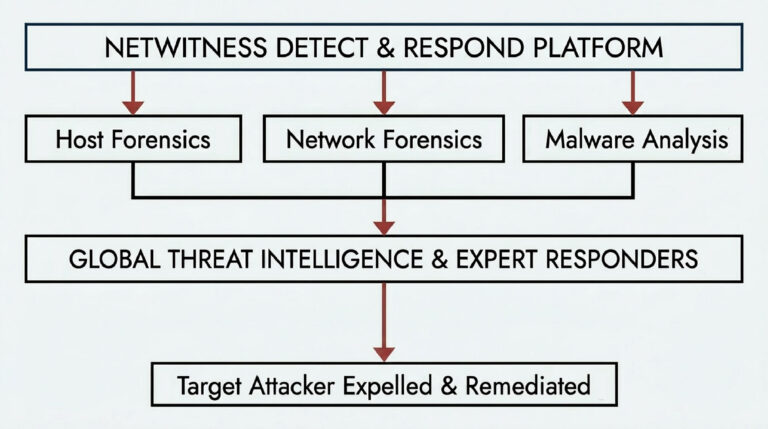
NetWitness provides a comprehensive suite of incident response solutions tailored to specific operational needs across the entire readiness lifecycle:
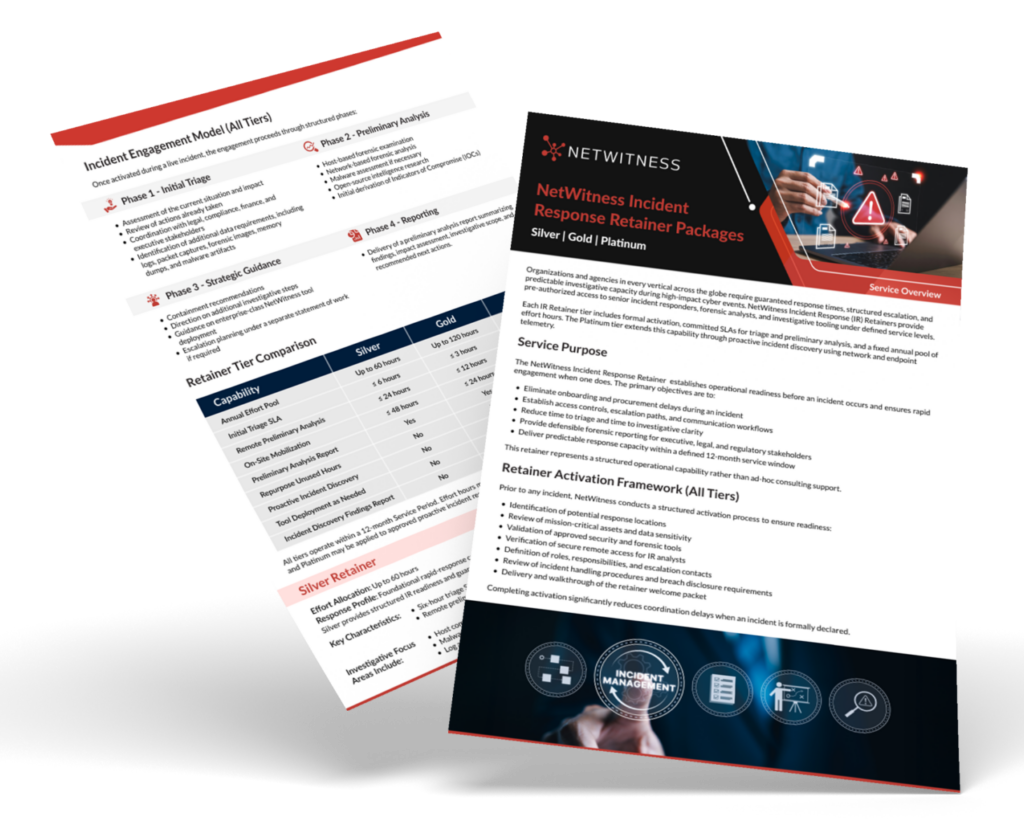
- NetWitness IR Retainer Services: Provides guaranteed availability of expert security professionals during critical emergencies, with flexible hours that can also be applied toward proactive readiness planning, technical drills, and program reviews.
- IRRAP (Rapid Deploy Service): Delivers immediate, high-intensity containment support to isolate, analyze, and safely expel complex network threats.
- PreACT (Program Assessment & Gap Analysis): Provides deep visibility into your overall security posture, pinpointing infrastructure weaknesses using recognized maturity frameworks like NIST and MITRE ATT&CK.
- CARE (Red Team Service): Conducts realistic, controlled threat simulations to validate internal detection capabilities and build hands-on experience across security teams.
- IR Discovery Service: Utilizes the NetWitness Platform to perform advanced threat hunting, identifying persistent zero-day threats and hidden system compromises that traditional monitoring tools overlook.
Conclusion
In order to secure a network environment in today’s world, organizations must go beyond simplistic assumptions about security. Automated detection systems are extremely useful, but responding to a targeted cyber attack requires advanced forensic skills and a well-coordinated approach. Engaging outside incident response experts at the right time provides organizations with a decisive advantage: in a proactive context, it strengthens the foundation of the security program, and in a reactive context, it enables a disciplined, informed response under pressure.
For further assessment of your network environment and better preparation for incidents, reach out to an expert from NetWitness Incident Response Services.
Frequently Asked Questions
1. What are best incident response experts for cybersecurity breaches?
The most effective incident response partners combine decades of hands-on forensic experience with deep visibility platforms. Organizations should look for teams with proven experience investigating advanced persistent threats (APTs) and managing complex corporate extortion cases. Elite teams feature certified practitioners holding advanced technical credentials like GCFA and GCIH, backed by an active global threat intelligence network.
2. How to choose a cybersecurity incident response firm?
When selecting an incident response partner, prioritize firms that offer comprehensive visibility across your entire network, endpoint, and cloud architecture. Evaluate the team’s practical experience with complex threats, their average response timelines, and whether their retention models allow you to use unused hours for proactive security assessments and technical validation drills.
3. When should organizations engage incident response experts?
Organizations should call on external experts as soon as any indication of a targeted network attack, unknown administrator credential misuse, or possible lateral movement that extends beyond normal malware attack becomes evident. Reaching out to experts immediately prevents any unintentional alteration or loss of vital forensic data by an organization’s own personnel as they try to contain the problem initially.
4. Why are incident response experts important during cyberattacks?
External specialists bring deep forensic insight, specialized analytical tools, and objective guidance to organizations facing a severe technical crisis. They help accurately identify the full scope of a network compromise, trace how attackers entered the system, and execute controlled, permanent remediation strategies that protect organizations from secondary attacks.
5. How do incident response experts handle ransomware attacks?
Incident response professionals deal with ransomware through an approach that consists of several stages. These include immediate isolation of affected systems, gathering forensic evidence from volatile memory to establish the root cause, determining what data was accessed, and creating a clean baseline before restoration work starts to prevent attackers from re-infecting the network.
6. How does digital forensics contribute to incident response activities?
Digital forensics offers necessary technical evidence about the nature and extent of an attack, including an analysis of the movement of an attacker throughout an environment based on system memory analysis, master file table checks, and traffic logs analysis.
Strengthen incident response readiness with on-demand expert support and rapid response capabilities.
- Gain immediate access to incident response experts
- Accelerate investigation, containment, and recovery
- Conduct proactive assessments and tabletop exercises
- Improve resilience against ransomware and advanced threats