Digital Forensics and Incident Response Guide

8 minutes read
Overview Icon

What is digital forensics and incident response (DFIR)?

DFIR combines two disciplines that work better together than apart. 

Digital forensics examines system data, user activity, and digital evidence to determine if an attack is happening and who’s behind it. Think of it as detective work for the digital age investigating crime scenes that exist across hard drives, memory dumps, and network traffic. The importance of digital forensics lies in its ability to uncover how, when, and why an attack occurred, turning raw evidence into actionable insight. 

Incident response is the process organizations follow to prepare for, detect, contain, and recover from data breaches. It’s about managing the chaos of security incidents with structure and speed.

Here’s the key insight: these disciplines feed each other. Forensics provides the evidence response teams need to make decisions. Good incident response process preserves the forensic evidence that reveals what attackers did. Treating them separately creates gaps that cost you. 

When your systems get breached, every second counts. How you handle those first critical hours make the difference between containing damage and watching everything spiral out of control. Digital forensics and incident response (DFIR) isn’t optional anymore, it is your defense strategy when attacks happen. 


Why Organizations Need DFIR? 

The threat landscape has changed. More endpoints, more cloud infrastructure, more remote work, all of it expands your attack surface. Cyberattacks have escalated in frequency and sophistication, making DFIR a central capability in modern security strategies. As cyber risks evolve, threat detection and incident response services for businesses now rely heavily on DFIR practices to stay resilient and respond faster to attacks. 

Traditionally, DFIR was reactive; you used it after attacks happened. But advances in APT tooling, the explosion of malware, and even AI have shifted that.Organizations now use DFIR insights to inform preventative measures, making it part of proactive security strategies too. 

The benefits break down into four areas. First, you reduce attacker dwell time (the amount of time the attacker goes undetected in your environment). Second, you minimize data loss, theft, and reputational damage from attacks by containing and ultimately expelling the attacker quickly. Third, you speed recovery and reduce disruption to business operations. Fourth, you strengthen security protocols by understanding the threat landscape and your actual risks. 

Why DFIR Matter 

How Digital Forensics Powers Incident Response? 

Digital forensics gives your Incident Response team (CERT / CSIRT) the information they need to respond effectively.  

Network forensics reviews network activity at the packet level for anomalous behaviors to identify attacker command and control (c2) and other techniques to gauge incident scope and severity.  

Memory forensics analyzes RAM for attack indicators that never appear in file systems. Some malware only exists in memory, making this analysis your only detection method.  

File system forensics analyzes endpoints for compromise indicators. You’re examining file structures, looking for unauthorized changes, malicious files, or signs of tampering across your entire organization. 

Log analysis reviews activity records to identify suspicious behavior or anomalous events. Logs can provide a timeline that ties everything together. 

Beyond immediate response, forensics supports the remediation process. It provides evidence for litigation, documentation for auditors, and insights that shape preventative measures. This reduces overall risk and speeds future response times. 


The Incident Response Lifecycle 

Most organizations follow a structured approach with six phases: 

Preparation builds your foundation before attacks occur. Develop incident response plans and playbooks for common scenarios like ransomware. Establish your CSIRT with clear roles. Setting up secure communications, preparing forensic workstations, deploying monitoring tools, and creating baselines for normal behavior are all good foundations for your Incident Response capabiliy. 

Identification detects and validates incidents. NDR and threat hunting give you advanced notice that something is wrong… Security information and event management (SIEM) systems throw alerts; users report suspicious activity, or threat intelligence warns about active campaigns. Your job is separating real threats from false positives,  then defining scope and understanding the initial attack vector. 

Containment stops the bleeding without destroying evidence, and if possible don’t let the attacker know you’re on to them. Implement short term containment by isolating affected systems through network segmentation. Plan long term containment that might involve rebuilding systems. The critical step is acquiring volatile and nonvolatile data for forensics before eradication once you clean systems, that evidence disappears. 

Eradication removes root causes and all attacker access. Delete malware, patch vulnerabilities, reset compromised credentials, and harden affected systems. This phase demands thorough forensics. Miss one backdoor and attackers return, likely in a bad mood. 

Recovery restores normal operations from clean backups. Validate systems are clean, monitor network, log and endpoint activity closely for reinfection, and gradually bring services online. Business pressure to restore operations will naturally conflict with the need to eliminate threats completely, you want to avoid this trap if you can. 

Lessons Learned transforms incidents into improvements. Run postmortems, document what happened, analyze response effectiveness, and update plans based on findings. Organizations that skip this phase repeat the same mistakes. 

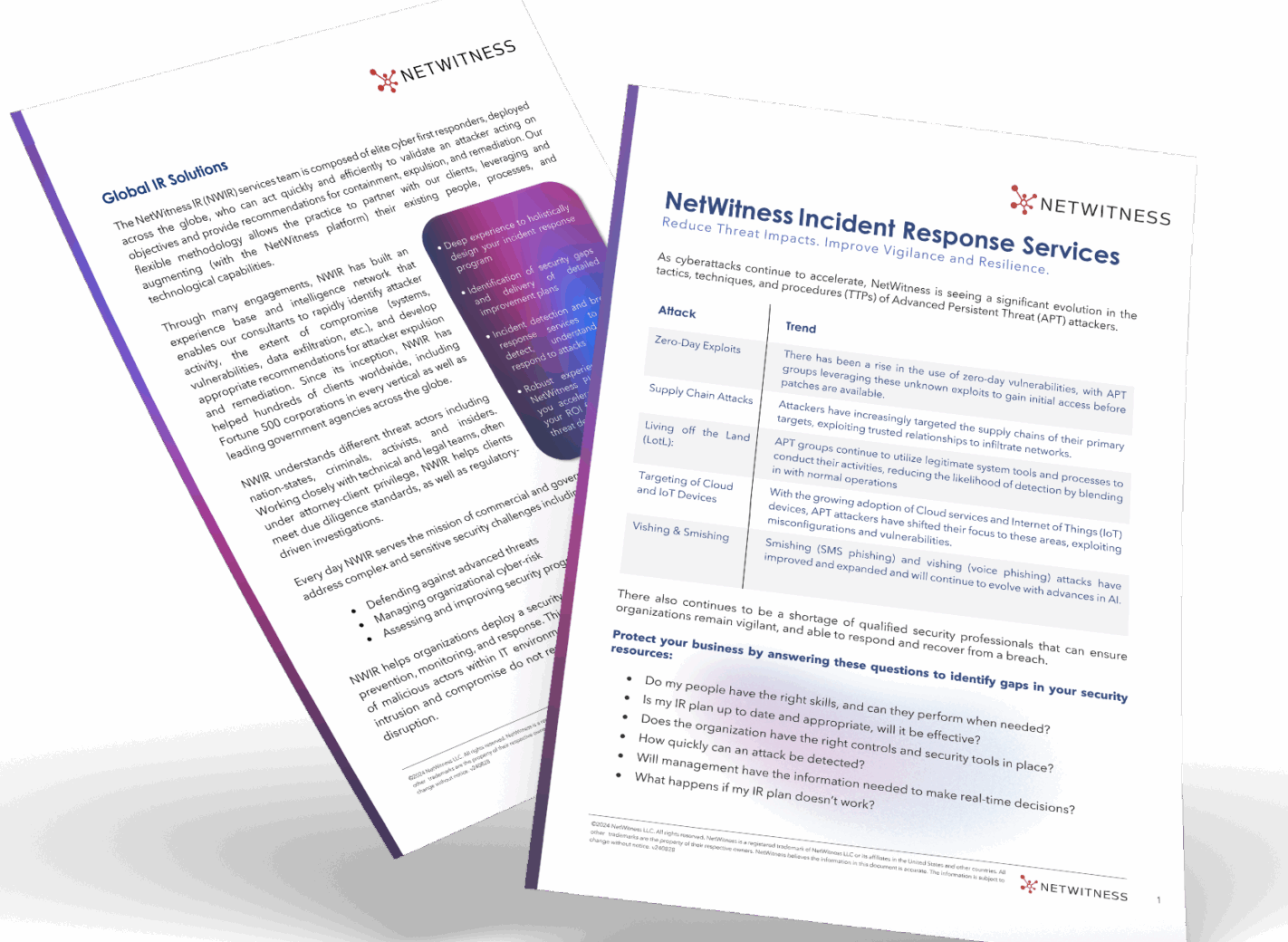
Rapid, Expert Response with NetWitness® Incident Response Services

-Accelerate threat containment with experienced IR specialists.

-Investigate effectively using advanced forensics and analytics.

-Minimize business impact with fast, guided remediation.

Lead Magnet Mockup IR


Why Integrating Digital Forensics and Incident Response Matters?

Taking an integrated approach to DFIR delivers several advantages. You respond to incidents with speed and precision by following consistent investigation processes. You minimize data loss and reputational harm through faster, more complete responses. You strengthen security protocols by understanding the threat landscape better. You recover from incidents more quickly with limited disruption. And you can assist in prosecuting threat actors through proper evidence collection and documentation. 


How to Develop an Effective DFIR Strategy? 

Many organizations lack in-house skills to develop effective DFIR plans. To close that gap, many incident response companies offer DFIR expertise, playbook development, and retainer-based services that accelerate investigations and reduce recovery time. If they have dedicated teams, those teams are often overwhelmed by false positives from automated detection systems or too busy with existing tasks to keep up with evolving threats. 

Start by standardizing and streamlining your DFIR process. Analyze your existing plans and capabilities. Develop standard operating procedure playbooks to guide activities during incident response. Battle tests those playbooks through red team exercises, and adversary emulation scenarios like tabletop exercises.  

Trends Shaping the Future of DFIR 

Threat hunting flips traditional detection by actively searching for unknown threats using forensic techniques instead of waiting for alerts. Compromise assessments check whether attackers already lurk in your environment. 

Automation through security orchestration, automation, and response (SOAR) platforms speeds evidence collection and containment. Machine learning detects anomalies that signal compromise. But technology augments human judgment rather than replacing it, experienced analysts still make critical decisions. 

The Bottom Line 

Security incidents aren’t hypothetical scenarios anymore. They’re business realities that organizations face repeatedly. What separates companies that survive and recover from those that suffer catastrophic losses is DFIR preparation and capability. 

This goes beyond having the right tools. You’re building institutional knowledge, so teams know what to do when your organization is under attack, and sensitive data may be exposed, with executives demanding answers. With a solid DFIR program you preserve evidence while containing threats. You understand what happened while preventing recurrence. You learn from each incident to strengthen defenses. 

DFIR investment pays dividends beyond incident response.  The visibility gained, processes built, and expertise developed strengthen your entire security program. You detect threats earlier, respond faster, and recover more completely. Partnering with NetWitness IR, leveraging its proven methodology, discipline, and experience, ensures independent, expert-led support that accelerates detection, containment, and recovery when every second counts.

Start where you are. Build incrementally. Master fundamentals before chasing advanced capabilities. When incidents happen and they will, you’ll have the foundation to respond effectively, minimize damage, and emerge stronger on the other side. 


Frequently Asked Questions

1. What is the role of digital forensics in incident response?

It collects and analyzes evidence to determine the scope and impact of an incident. This helps teams respond effectively and preserve critical data. 

2. What are the latest trends in digital forensics and incident response?

AI-driven analysis, cloud and IoT forensics, automation, and proactive threat hunting are shaping modern DFIR strategies.

3. How do digital forensics and incident response work together in cybersecurity?

Forensics provides evidence; incident response uses it to contain, remediate, and prevent future attacks. Together, they ensure faster and more precise response.

4. What are the best tools for digital forensics and incident response?

Popular tools include EnCase, FTK, Autopsy, Sleuth Kit, and Binalyze AIR for analyzing endpoints, memory, and networks.

5. Can you recommend a platform for managing digital forensics and incident response?

Platforms like NetWitness helps teams streamline DFIR processes and automate response workflows.

6. What is the digital forensics and incident response framework?

DFIR frameworks, like NIST’s, follow structured phases: preparation, detection, containment, eradication, recovery, and lessons learned for repeatable, effective response. 

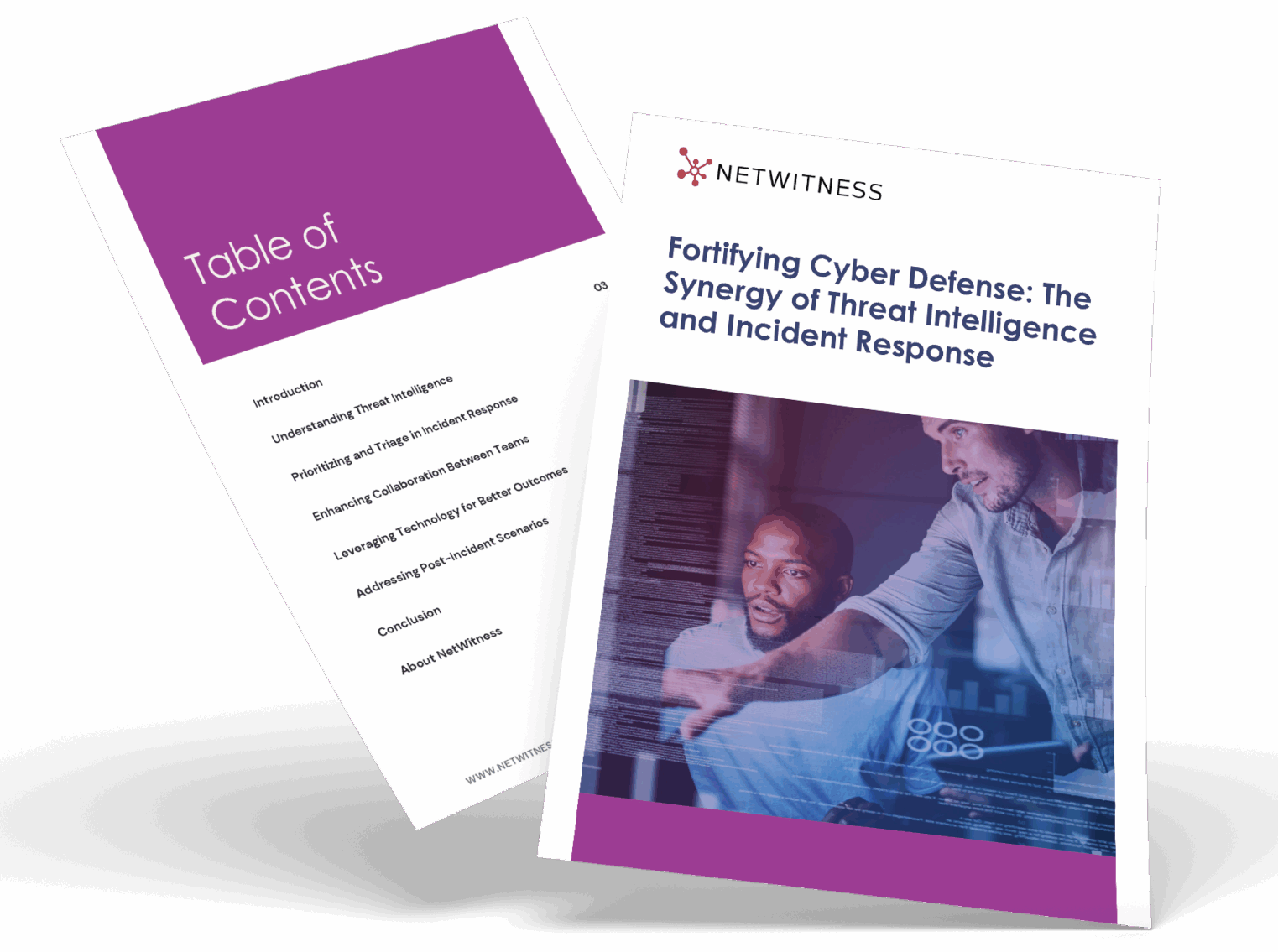
Unified Defense Through Threat Intelligence and Incident Response

-Strengthen your cyber resilience with integrated intelligence and response.
-Detect, analyze, and mitigate threats faster with real-time insights.
-Transform reactive response into proactive defense.
-Leverage actionable threat intelligence to outpace evolving adversaries.

Lead Magnet Mockup IR

Related Resources

Accelerate Your Threat Detection and Response Today!