What Is Cybersecurity for Law Firms?
Cybersecurity for law firms refers to the strategies, technologies, and processes used to protect sensitive client information, legal documents, and business operations from cyber threats. Modern cybersecurity solutions combine a cybersecurity platform, advanced threat detection, and a threat detection and response platform to identify and stop attacks before they cause damage. Effective law firm cybersecurity also includes continuous monitoring, access controls, data protection, and incident response for law firms. By leveraging a centralized security operations platform and specialized law firm threat detection capabilities, legal practices can strengthen security, maintain client trust, and meet compliance requirements while reducing cyber risk.
Introduction
One in five law firms hit by cyberattacks over the past 12 months. Successfully breached. The average cost of a data breach in 2025 is $4.44 million. For law firms, it’s often higher because client financial records, medical histories, trade secrets, and litigation strategies are worth more to attackers. When information leaks, the liability extends beyond IT problems into legal malpractice territory.
A law firm’s core asset is confidential client information. A breach doesn’t just steal data. It exploits client trust, disrupts active cases, and creates regulatory exposure that generic security tools don’t prevent.
Most cybersecurity solutions treat law firms like any other business. They don’t understand that a successful attack on a law firm requires specific threat detection and response platform built for legal industry vulnerabilities. Without that specialized focus, you’re running a generic security operations platform that misses attacks specifically designed to exploit law firm workflows.
Why Generic Cybersecurity Solutions Miss the Mark for Law Firms
Most cybersecurity solutions are built for companies selling products or services. They protect intellectual property and customer databases. Law firms operate differently.
A law firm’s core asset is confidential client information. When a breach happens, it’s not just a data theft. It exploits client trust, disrupts active cases, and creates legal liability that generic tools never address.
Generic threat detection and response platforms treat law firms like any other business. They miss what makes legal practices unique targets. They don’t understand that attackers specifically research law firm cases, identify key players, and craft targeted messages. They don’t see that law firms handle data more sensitive than most industries.
A true cybersecurity platform for law firms needs to understand the specific attack patterns targeting legal practices. The threat actors who specialize in law firm breaches. The methodologies they use. The vulnerabilities they exploit.
Top Cybersecurity Threats Facing Law Firms Today
Phishing: The Entry Point for Most Attacks
36% of all data breaches involve phishing. Attackers research cases, identify key players, and craft messages from fake client addresses referencing real matters.
AI tools make these attacks harder to detect. Creating convincing emails used to require research and skill. Now attackers generate perfectly tailored messages at scale.
Your threat detection must catch unusual email patterns, suspicious attachments, and links to newly registered domains mimicking legitimate ones. This requires behavioral analysis that understands what normal looks like in your firm.
Ransomware: From Encryption to Data Extortion
Ransomware targeting law firms has accelerated. Allen & Overy faced a ransom demand between $51.5 million and $76 million in November 2023. In just five months of 2024, 21 law firms filed breach reports compared to 28 for the entire previous year.
Modern ransomware follows a pattern: gain access through phishing, establish persistence, move laterally to find valuable data, steal everything, then deploy encryption. This two-stage approach is devastating because even with backups, the data is already stolen. Attackers threaten public exposure of confidential attorney-client communications. The average ransom demand is $2.47 million.
Advanced threat detection must catch this before encryption by identifying unusual login activity, mass file copying, and unexpected data leaving your network.
Advanced Persistent Threats: Attackers Living in Your Network
APTs target high-value information: mergers and acquisitions not yet public, billion-dollar litigation strategies, intellectual property, trade secrets. Attackers hide among normal traffic using legitimate credentials.
An incident response for law firms requires sophisticated threat hunting. Your security team needs tools to search for subtle indicators of compromise. Unusual administrative access. Communication with external IP addresses that don’t match business purposes.
Business Email Compromise and Wire Fraud
Business Email Compromise requests urgent wire transfers from addresses nearly identical to trusted contacts. Attackers gain access to accounts or spoof them perfectly. Because legal work involves urgent financial transactions, recipients often act quickly.
For law firms handling client funds, this creates fiduciary liability and potential disciplinary action from the state bar.
Insider Threats and Human Error
Insider threats include departing employees copying files and accidental disclosures. The challenge is distinguishing legitimate activity from suspicious behavior.
A good threat detection platform uses baseline behavior analysis. It understands what normal looks like for each user type. When something deviates from that baseline, the system flags it. It detects impossible travel: a user in San Francisco at 3 PM, then London at 4 PM.
Third-Party Vendor and Supply Chain Attacks
Law firms rely on third-party vendors for case management, document sharing, transcription, and countless other functions. Each relationship creates potential exposure.
The MOVEit file transfer vulnerability impacted Kirkland & Ellis and Proskauer Rose, disrupting conveyancing practices and delaying property transactions. A single vulnerability in a vendor’s system becomes a direct path into your firm’s data.
Your cybersecurity platform needs visibility into vendor access. What data are they accessing? When and from where? Are they accessing significantly more than normal?
What a True Threat Detection and Response Platform Delivers
Real-Time Visibility Across All Systems
Real-time means continuous monitoring, not periodic scans. Immediate alerts when suspicious activity occurs, not batch reports reviewed days later.
This visibility spans remote workers connecting from home networks, staff in cloud systems, vendors exchanging documents, traveling attorneys, physical offices, and cloud infrastructure. The platform must correlate data across systems to connect suspicious patterns automatically.
A single unusual login looks benign. But combined with unusual file access and data downloads, it becomes a clear attack pattern.
Threat Hunting, Not Just Alert Response
Alert-based detection is reactive. Threat hunting is proactive. Your security team searches for threats hiding in systems, looking for indicators of compromise that automated detection misses.
Your advanced threat detection platform should include query tools letting analysts search network and endpoint data. Build custom queries for attack patterns specific to your firm. Access threat intelligence about attacks targeting legal industry.
Incident Response Workflows
When a breach is suspected, the next hours determine how much damage attackers can do. Incident response for law firms involves technical containment, evidence collection, client notification, law enforcement engagement, and legal review simultaneously.
Your cybersecurity platform should include incident response workflows guiding your team through detection, containment, and recovery. Automated workflows execute immediately. Compromised accounts are disabled. Affected systems are isolated. Forensic data is collected. Legal counsel, IT, and leadership receive automated notifications.
Behavioral Analysis and Machine Learning
Machine learning and behavioral analysis help separate signal from noise. The platform builds baselines of normal behavior for different user types. When baselines are established, deviations trigger investigation. A user accessing 50 times normal data volumes. Unusual network traffic. Employees accessing confidential files outside their normal work area.
Integration With Your Existing Systems
Law firms run specific software: case management, email, cloud storage, document collaboration. Adding a new platform shouldn’t mean replacing everything.
Email integration lets the platform identify phishing and quarantine suspicious messages. Identity system integration shows who’s authenticated from where. Cloud integration provides visibility into data access and exfiltration.
When threats are detected, integration enables automated response: disable accounts, block IP addresses, quarantine files.
Compliance and Audit Capabilities
Law firms operate under ABA Rule 1.6, HIPAA, GDPR, CCPA, and state privacy laws. Your platform needs immutable audit logs showing who accessed what, when, from where. Detailed reporting generates evidence regulators and courts expect. Forensic tools support litigation and breach response.
Forensic Investigation Tools
When a breach happens, law enforcement investigates. Your insurer requires investigation. Clients demand answers. The state bar may investigate.
Your platform needs to preserve evidence without contaminating it. Document what happened with precision. Create timelines of attacker activity. Identify all systems that may have been compromised.
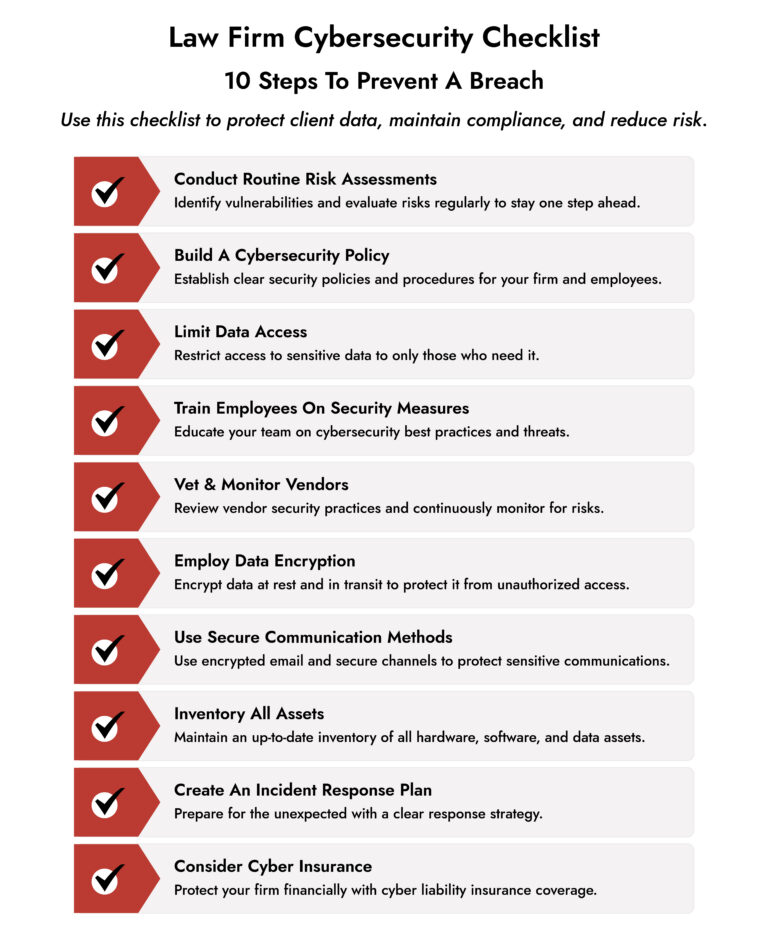
Advanced Threat Detection Features for Law Firms
Data Loss Prevention
Your case management system contains confidential files. Your email carries sensitive communications. Your cloud storage holds client data. Data loss prevention monitors for suspicious movement. Flags unusual copying, emailing, or uploading to external locations.
The platform should understand data sensitivity. Classify files based on sensitivity level. Work-product documents, attorney-client communications, and financial information warrant higher protection.
Email Security
Email is the primary attack vector. Your platform should in
clude advanced email security. Scanning messages and attachments for malware. Analyzing sender reputation to detect spoofing. Detonating suspicious attachments in sandbox environments.
Advanced email security includes URL rewriting so the platform monitors where users click. If a user clicks a malicious link, the platform blocks access and alerts them.
Endpoint Detection and Response
Endpoints are the most common initial compromise point. Endpoint detection and response technology deploys agents monitoring for suspicious activity. Unusual processes. File system changes. Network connections. Anything matching malware or attack patterns.
EDR goes beyond traditional antivirus. It looks for behaviors matching attack patterns. Legitimate tools being used suspiciously. Processes trying to escalate privileges. When EDR detects threats, it can isolate the endpoint, kill processes, and capture forensic data.
Network Segmentation and Zero Trust
Network segmentation divides your network into smaller segments. Each segment is protected separately. If attackers compromise one segment, they can’t automatically move to others.
For law firms, this means segregating client data, case management systems, financial systems, and vendor access. Zero Trust requires explicit verification for every user, device, and system before granting access. No implicit trust based on being on the corporate network.
Security Orchestration and Automation
When threats are detected, response shouldn’t wait for human action. Security Orchestration, Automation, and Response (SOAR) platforms integrate with security tools and automate response workflows.
A threat is detected. Automated workflows execute immediately. An account is disabled. Files are quarantined. Logs are preserved. Management is notified. Automated response happens in seconds while human investigation happens in parallel.
NetWitness Threat Detection and Response Platform
NetWitness provides a comprehensive threat detection and response platform purpose-built for law firms. The platform combines real-time visibility, advanced threat hunting, and automated incident response in a single integrated solution.
NetWitness detects phishing with behavioral email analysis that learns what normal communication looks like in your firm. It catches ransomware before encryption by identifying unusual data movement and system access patterns. It includes threat hunting tools letting analysts search for subtle indicators of compromise that automated detection misses.
The incident response workflows are designed for law firm realities. Automated containment. Evidence preservation. Forensic investigation support. Integration with compliance and audit capabilities. NetWitness helps demonstrate adherence to ABA, HIPAA, GDPR, and CCPA requirements.
For distributed law firms with remote workers and cloud-based systems, NetWitness scales effectively with unified visibility across on-premises and remote environments. Its SASE integration capabilities extend monitoring to remote users, helping security teams detect suspicious activity regardless of location. NetWitness also integrates with your case management, email, identity management, and cloud storage. When threats are detected, it automatically disables accounts, blocks IP addresses, and isolates affected systems.
How to Choose the Right Threat Detection Platform for Your Law Firm
Deployment Architecture
Agent-based solutions on endpoints provide visibility into individual systems. Network sensors provide traffic visibility. Cloud integrations monitor cloud activity. The best platforms combine multiple approaches for comprehensive coverage.
Scalability
Your firm needs the platform to grow with you. Distributed architectures handle large data volumes efficiently. Verify the vendor has law firm customers and references.
Integration with Existing Tools
Verify the platform integrates with your case management, email, identity management, and cloud storage systems. Deep integration enables end-to-end security without siloed tools.
Training and Change Management
Your security analysts need to understand the platform. Your IT team needs integration knowledge. Your end users need to understand alerts and when to report suspicious activity.
Cost and ROI
Threat detection and response platforms require investment in licensing, deployment, integration, and training. Compare that to the average $4.44 million breach cost. A platform that prevents one significant breach pays for itself many times over.
The Bottom Line
One in five law firms hit by cyberattacks in the past 12 months. Generic endpoint protection won’t stop attacks designed specifically for law firms.
A true threat detection and response platform understands law firm workflows and how attackers exploit them. It detects sophisticated threats that generic tools miss. It supports effective incident response. It helps maintain compliance.
Your clients trust you with information they’ve told nobody else. A comprehensive cybersecurity platform is how you fulfill that promise. It’s the difference between managing an incident and experiencing a catastrophic breach.
The cost of the right platform is negligible compared to the cost of the wrong incident.
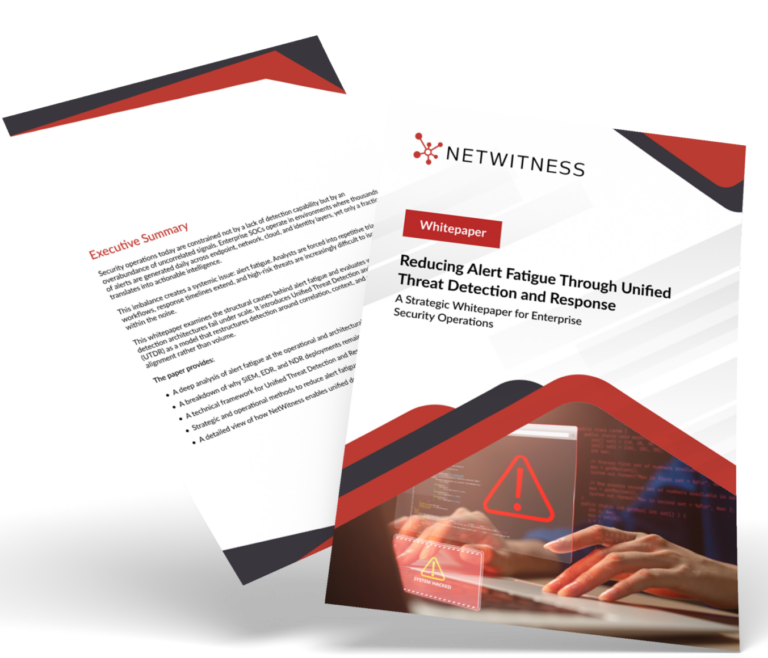
Explore how to reduce alert fatigue without compromising detection accuracy or SOC performance.
Inside you’ll find:
- Why traditional detection models create excessive alert noise
- How alert fatigue impacts SOC efficiency and analyst performance
- Practical strategies to reduce alert volume and improve accuracy
- Ways to align detection and response for faster outcomes
Frequently Asked Questions
1. What Is the Best Cybersecurity Solution for Law Firms?
The best cybersecurity for law firms combines a unified cybersecurity platform, advanced threat detection, and a threat detection and response platform. These solutions help protect sensitive legal data, improve visibility, and strengthen overall law firm cybersecurity.
2. How to Protect Sensitive Client Data in Law Firms Using Cybersecurity Tools?
Law firms can safeguard confidential information by using cybersecurity solutions that include encryption, access controls, continuous monitoring, and threat detection for law firms. A modern security operations platform helps identify and stop threats before client data is exposed.
3. How to Choose a Cybersecurity Vendor for Legal Compliance?
When evaluating vendors, look for proven cybersecurity solutions that support legal and regulatory requirements, offer incident response for law firms, and provide a scalable cybersecurity platform. Strong compliance reporting and advanced threat detection capabilities are also essential.
4. What Are the Leading Managed Security Services for Legal Practices?
Top managed security providers offer 24/7 monitoring, law firm threat detection, threat hunting, and incident response for law firms. These services are often powered by a centralized security operations platform that helps legal teams manage cyber risks more effectively.
5. Why Do Law Firms Need a Threat Detection and Response Platform?
A threat detection and response platform helps law firms quickly identify, investigate, and contain cyber threats targeting sensitive legal data. It strengthens law firm cybersecurity by reducing response times and minimizing the impact of security incidents.
6. How Can Threat Detection Platforms Help Protect Confidential Client Data?
Threat detection for law firms uses real-time monitoring, analytics, and advanced threat detection to uncover suspicious activity before data is compromised. Integrated with a security operations platform, these tools help secure confidential client information and support rapid incident response.