What is cybersecurity for critical infrastructure?
It is the discipline of protecting the systems that keep essential services running, including energy, water, manufacturing, transportation, healthcare, communications, and government services. In practice, cybersecurity for critical infrastructure means securing enterprise IT, OT systems, remote access, cloud services, industrial networks, and third-party connections without losing sight of availability, safety, and operational continuity.
At NetWitness, our view is simple: cybersecurity for critical infrastructure does not fail only because attackers are getting better. It fails when defenders cannot connect what they see in IT with what matters in OT.
CISOs know this as risk, SOC leaders know it as investigation drag, and analysts know it as the painful moment when the alert is real, the clock is running, and the evidence is split across a SIEM, an endpoint console, a VPN log, a packet capture tool, an OT monitoring platform, and three teams that do not share the same operating picture.
That is the daily reality across critical infrastructure industries. The plant floor is no longer isolated. Engineering workstations talk to enterprise systems. Historian servers feed analytics platforms. Vendors connect through VPNs and jump servers. Cloud workloads support operational reporting. Remote access has become part of normal operations.
That connectivity has made industrial environments more efficient but has also given attackers more ways to move.
The uncomfortable part is that many critical infrastructure organizations already have plenty of tools. What they do not always have is connected evidence.
Critical Infrastructure is Facing More Sophisticated Cyber Threats
Critical infrastructure is not just another vertical market for attackers. It is where cyber risk becomes operational risk.
Ransomware can stop production. A compromised remote access path can put an attacker one hop away from operational assets. A nation-state actor with long-term access to IT systems can spend months learning about the environment before attempting to pivot closer to OT. A poorly segmented engineering workstation can become a bridge into systems that were never designed for hostile networks.
The numbers support what security teams are already seeing. The FBI’s 2025 IC3 report states that ransomware is among the highest reported cyber threats targeting critical infrastructure organizations. IC3 received more than 3,600 ransomware complaints in 2025, with reported losses exceeding $32 million. The FBI also notes that reported ransomware losses often do not include lost business, downtime, wages, files, equipment, or third-party remediation costs, which means the operational impact is usually larger than the reported number suggests.
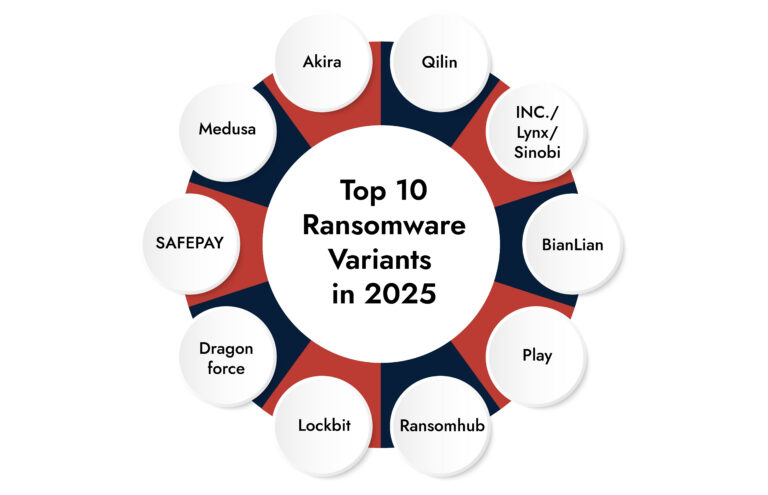
The same FBI report says the below-listed top 10 reported ransomware variants most impacted Critical Manufacturing, Healthcare and Public Health, and Government Facilities. That’s because these environments are where cyber incidents often collide with production continuity, safety, service delivery, and regulatory obligations.
The threat is not only criminal. CISA, NSA, FBI, and international partners warned that Volt Typhoon had been pre-positioning on U.S. critical infrastructure networks to enable disruption or destruction of critical services in the event of geopolitical conflict. The same advisory calls out Communications, Energy, Transportation Systems, and Water and Wastewater Systems as sectors where activity had been observed.
Then there is the exposure problem. Researchers analyzing publicly accessible OT found nearly 70,000 exposed OT devices globally, including systems using ModbusTCP, EtherNet/IP, and S7. Their analysis also found exposed HMI and SCADA interfaces, which should make any OT security team uncomfortable.
For CISOs, these statistics point to a familiar pattern: attackers are using the seams between enterprise IT, OT, remote access, and third-party ecosystems. The attack path is rarely clean. It crosses domains, teams, and tools.
That is why cybersecurity for critical infrastructure has to be evaluated through investigation coverage, not just control coverage.
Why Blind Spots Still Survive Mature Security Programs
Most critical infrastructure organizations have made real investments in security.
And still, during incidents, analysts run into the same problem. They can see pieces of the attack, but not the whole thing.
This is the blind spot that matters most. Not “we have no data.” Most SOCs have too much data. The issue is that evidence is disconnected when it needs to be operationally useful.

“In critical infrastructure, the most dangerous gap is not always a missing control. It is the space between what IT can detect and what OT can validate. When a vendor credential, jump server session, engineering workstation, and PLC communication live in separate tools, the SOC is not investigating an attack. It is assembling one under pressure. The organizations that respond fastest are the ones that can connect those signals before operational impact. “
—Ibrahim, Sales Engineer, NetWitness
Blind Spot 1: Assuming Enterprise Security Covers OT
A mature enterprise security stack does not automatically equal mature OT security.
Most CISOs understand that now. The harder problem is operationalizing it across real environments with legacy systems, constrained maintenance windows, vendor dependencies, and process uptime requirements.
PLCs, HMIs, SCADA systems, historian servers, distributed control systems, safety systems, and engineering workstations do not behave like standard enterprise assets. Many cannot run agents. Many cannot be patched on the same cadence as IT systems. Some speak protocols that are normal in one zone and deeply suspicious in another. Some have been in service long enough to outlast multiple generations of security architecture.
That creates a practical SOC problem.
If the SOC only sees enterprise alerts, it may detect the first phase of an intrusion but miss the OT-relevant movement. A compromised engineer’s credentials may look like an identity event. RDP into a jump server may look routine. Access to an engineering workstation during a maintenance window may not stand out. The risk only becomes obvious when those signals are correlated with unusual PLC communication or industrial protocol activity crossing an unexpected boundary.
Effective industrial cybersecurity depends on that correlation.
This does not mean every SOC analyst needs to become a controls engineer. It does mean SOC and OT security teams need shared evidence, shared timelines, and enough network context to understand when IT activity starts to matter to operations.
Blind Spot 2: Knowing Your Assets but Not Their Behavior
Asset inventory is not the same thing as attack surface management.
Most critical infrastructure teams can produce an asset list. It may not be perfect, but they usually know the major servers, HMIs, PLCs, engineering workstations, network devices, and remote access points. The SOC also needs to know how those assets normally communicate.
For instance: A vendor laptop connecting during an approved maintenance window may be legitimate. The same vendor credential authenticating from a new geography, moving through a jump server, and touching multiple OT-adjacent systems is a different story.
Behavior is where asset context becomes operationally useful. For analysts, the problem is not just “unknown devices.” It is unknown relationships, unexpected flows, and changes in communications that do not match the process environment. Without network visibility and baseline context, those changes can look like noise until the incident has already moved downstream.
Blind Spot 3: Chasing Alerts Instead of Following the Attack
SOC analysts investigate evidence. That evidence might start with an alert, but an alert is not the incident.
This is where many security stacks quietly fail analysts. They generate alerts, but they do not make it easy to follow the attack path. Analysts end up moving indicator by indicator, copying values between tools, rebuilding timelines manually, and guessing which events belong together.
That approach does not scale in a critical infrastructure SOC.
Threat detection should not be separated from investigation. Once something fires, the analyst should be able to move quickly from suspicion to evidence.
What else did this account do? What systems did this endpoint touch? What traffic moved across zone boundaries? Was there packet-level evidence? Did any activity involve an engineering workstation, historian, HMI, or PLC?
Blind Spot 4: Missing What Happens Inside the Network
Perimeter monitoring still matters, but it is not where most of the interesting activity ends. In critical infrastructure, internal movement is often more important than the initial access vector.
For example: a phishing email may be the beginning. The real risk appears later, when the attacker finds a path from enterprise systems toward operational networks.
This is why network monitoring has to include east-west traffic, not just north-south inspection. Abnormal SMB sessions, unexpected RDP, new administrative connections, unusual DNS behavior, industrial protocols crossing boundaries, and strange traffic between IT and OT segments can all be early indicators of a bigger problem.
For analysts, packet data and network metadata are often the difference between “we think this happened” and “we can prove this happened.”
Blind Spot 5: Remote Access Has Become Part of the Control Plane
Remote access is now baked into critical infrastructure operations.
Vendors troubleshoot equipment remotely. System integrators support multiple sites. Engineers connect through jump servers. Third-party maintenance teams use VPNs to perform scheduled updates. Cloud administrators manage services that support operational reporting and analytics.
Attackers do not need a novel exploit if they can authenticate with valid credentials. A compromised vendor VPN account can look legitimate at the perimeter and still create serious downstream risk. The session may land on an approved jump server, move to an engineering workstation, interact with a historian, and then generate traffic toward OT assets.
The investigation depends on connecting evidence from identity, VPN, endpoint, network, log, and OT sources.
If those sources stay disconnected, the SOC may see the login but miss the movement. Or the OT team may see abnormal communication but lack authentication context. Or the analyst may know something is wrong but lack enough evidence to escalate confidently.
For critical infrastructure CISOs, it should be treated as a cyber risk management priority because remote access often sits directly on the path between enterprise compromise and operational consequence.
Blind Spot 6: Every Team Has Part of the Story
Critical infrastructure security is a multi-team environment where:
- SOC handles alerts
- Network teams own routing, segmentation, and packet paths
- OT engineers understand the process and know what “normal” looks like on the plant floor
- Identity teams see authentication patterns
- Cloud teams understand workload behavior
- GRC teams care about auditability, reporting, and evidence retention
The issue is not that these teams lack expertise. The issue is that each team often holds a different slice of the incident. Attackers benefit when the evidence stays fragmented. They do not need every control to fail. They only need the investigation to move more slowly than they do.
Blind Spot 7: More Data Does Not Mean Better Investigations
Most SOC teams need faster access to defensible evidence. Because, during a serious incident, analysts are not trying to admire data volume. They are trying to answer direct questions under pressure.
- Did the attacker reach OT?
- Which accounts were used?
- Which systems were touched?
- Was data staged or moved?
- Did traffic cross a segmentation boundary?
- Did the activity involve PLCs, HMIs, engineering workstations, historian servers, or jump hosts?
- Can we prove containment?
This is where disconnected tooling becomes expensive. Because all the tools generate useful data, but it is not enough if analysts have to stitch it together manually.
A mature SOC operating in critical infrastructure needs investigation workflows that connect evidence across domains. The platform should help analysts move from alert to timeline, from timeline to affected assets, from affected assets to packet or session evidence, and from there into response.
That is a different standard than simply collecting more logs.
Supporting Cybersecurity for Critical Infrastructure with NetWitness
Critical infrastructure organizations do not need another disconnected security tool that produces another queue of alerts. They need a platform that helps analysts connect evidence across complex environments and move faster from detection to investigation to response.
NetWitness brings together network visibility, log management, endpoint telemetry, behavioral analytics, threat detection, network monitoring, and investigation workflows in a unified platform. For critical infrastructure SOCs, that matters because the attack rarely stays neatly inside one domain.
NetWitness is built around connected investigation. Analysts can work across network, endpoint, identity, cloud, log, and OT-relevant evidence instead of chasing isolated signals. Network metadata and packet-level context help teams validate what actually moved across the wire. Log and endpoint telemetry help connect user activity, process behavior, and system events. Behavioral analytics help surface activity that does not match expected patterns. Investigation workflows help analysts preserve findings and move through the case with a defensible trail.
Frequently Asked Questions
1. How does the Framework for Improving Critical Infrastructure Cybersecurity help organizations?
The Framework for Improving Critical Infrastructure Cybersecurity gives leaders a practical way to organize cyber risk management around outcomes such as Identify, Protect, Detect, Respond, and Recover. For mature critical infrastructure teams, the value is not in treating the framework like a checklist. The value is using it to expose where the program is weak, especially around detection coverage, response readiness, evidence retention, and cross-team coordination.
2. Why is unified visibility important for critical infrastructure security?
Because today’s attackers do not respect team boundaries. A single incident can involve VPN access, identity abuse, endpoint activity, cloud services, abnormal east-west traffic, and OT communications. Unified visibility helps SOC and OT teams connect those signals into one investigation instead of debating separate tool outputs while the incident is still moving.
3. What are the biggest cybersecurity threats to critical infrastructure?
The biggest threats include
- Ransomware
- nation-state activity
- compromised remote access credentials
- supply chain compromise
- exposed industrial devices
- Insider risk
- IT-to-OT lateral movement
- abuse of legitimate administration tools
4. What role does OT security play in critical infrastructure?
OT security protects the systems that control or support physical operations, including PLCs, SCADA systems, HMIs, engineering workstations, historian servers, and distributed control systems. It also helps the SOC understand which cyber events matter operationally.
5. How does network visibility improve critical infrastructure security?
Network visibility gives analysts the context they often cannot get from logs or endpoint telemetry alone. It helps identify abnormal east-west traffic, unexpected industrial protocol usage, lateral movement, suspicious remote access behavior, and communications between IT and OT environments. In incident response, that context helps teams reconstruct what happened and determine whether operational assets were touched.
Reduce alert fatigue with smarter detection strategies that help analysts focus on real threats.