What is continuous threat modeling in cybersecurity?
Continuous threat modeling in cybersecurity is an ongoing process of identifying, analyzing, and updating risks as systems, applications, and infrastructure evolve. Unlike traditional threat modeling in cybersecurity, which is done at a single point in time, this approach continuously integrates attack surface management, real-time threat intelligence, and cybersecurity threat analysis to reflect current exposures.
By combining techniques like machine learning threat detection and behavioral threat detection, continuous threat modeling enables proactive threat detection, helping organizations identify and mitigate active attack paths before they are exploited.
Platforms like NetWitness deliver real-time intelligence, improving speed and accuracy in detecting, investigating, and responding to threats.
Introduction
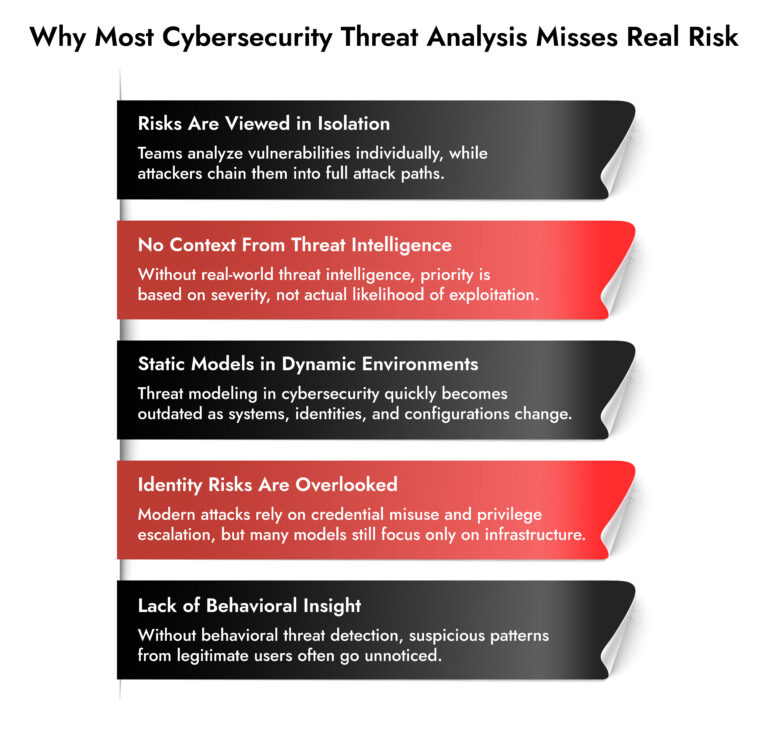
Most threat models don’t fail because they’re wrong. They fail because they expire. A team sits down, maps the system, identifies risks, applies a threat modeling methodology, documents everything neatly… and then ships the application.
From that point on, the model starts drifting away from reality. Not dramatically at first. A new API here. A permissions change there. A quick cloud configuration tweak to meet a deadline.
Individually, none of these changes seem important. Collectively, they reshape your entire attack surface. And yet, the original threat modeling in cybersecurity output still gets treated as if it reflects the current system. That disconnect is where attackers operate.
What Is Threat Modeling in Cyber Security (And Where It Breaks Down in Practice)
At a basic level, what is threat modeling in cybersecurity? It’s the process of figuring out what you’re trying to protect, how it can be attacked, and where controls might fail.
In theory, that sounds complete. In practice, it’s incomplete for one reason: time.
Traditional threat modeling in cybersecurity assumes that once you’ve identified threats, you can act on them over a stable system. That assumption held up when infrastructure changed slowly. It does not hold up anymore.
Today, systems evolve continuously. Infrastructure is provisioned dynamically. Identities are created and modified constantly. Third-party services extend your environment in ways you don’t fully control.
So even if your cybersecurity threat analysis was accurate on day one, it becomes partially irrelevant within weeks, sometimes days. That’s the real problem. Not lack of modeling, but lack of continuity.
Continuous Threat Modeling in Cybersecurity: A Shift From Documents to Systems
Continuous threat modeling changes the nature of the exercise entirely.
Instead of producing a document, you build a system that keeps asking the same question:
What does risk look like right now?
This version of threat modeling cybersecurity doesn’t rely on periodic reviews. It relies on continuous inputs. Asset changes, identity behavior, vulnerability updates, and threat intelligence all feed into the model.
The output also changes. You’re no longer looking at a list of possible threats. You’re looking at current attack paths, shaped by what is exposed, reachable, and exploitable in your environment at that moment.
That shift sounds subtle, but it changes how security teams operate. You stop reacting to alerts and start reducing the likelihood of those alerts ever being triggered.
Attack Surface Management: The Part Most Teams Underestimate
If there’s one place where most threat modeling in cybersecurity efforts fall apart, it’s visibility. Teams assume they know their environment. They usually don’t.
Modern attack surfaces include far more than officially deployed infrastructure. There are forgotten subdomains, temporary cloud workloads, exposed storage buckets, internal tools that became externally accessible, and APIs that were never meant to be public. This is where attack surface management becomes essential, not optional.
But here’s where things actually break in practice:
- Most teams rely on static asset inventories that are outdated the moment they’re created
- Cloud resources spin up and down without being tracked in real time
- Ownership is unclear, so exposed assets sit unaddressed
- External attack surfaces are treated separately from internal visibility, creating blind spots
- Discovery is periodic, not continuous, leaving gaps attackers have time to find first
Continuous discovery changes the quality of your model. Instead of working from a fixed asset list, you’re working from a constantly updated view of everything that could be targeted.
And here’s the part that often gets missed:
An asset is not just something you own. It’s something an attacker can reach.
That distinction is what makes continuous modeling more grounded in reality.
Threat Intelligence: Moving From Possibility to Probability
Another weakness in traditional cyber security threat modeling is that it treats all threats as equally relevant. In reality, attackers are predictable in their own way. They reuse techniques, follow trends, and focus on what works.
By feeding threat intelligence into your model, you shift from asking what could happen to asking what is already happening elsewhere that could happen here next.
This changes prioritization completely. A vulnerability with active exploitation in your industry carries a very different weight than one that exists only in theory. Continuous models adjust for that automatically, keeping your cybersecurity threat analysis aligned with real-world activity.
Cybersecurity Threat Analysis That Focuses on Attack Paths, Not Isolated Risks
Here’s something most blogs skip, but it matters. Attackers don’t care about individual vulnerabilities. They care about sequences. A weak entry point combined with an overprivileged identity and a misconfigured database is far more dangerous than any of those issues on their own.
Continuous cybersecurity threat analysis connects these dots. It shows how small weaknesses combine into viable attack paths. That’s where proactive threat detection actually comes from. Not from spotting a single issue early, but from understanding how multiple issues interact before an attacker does.
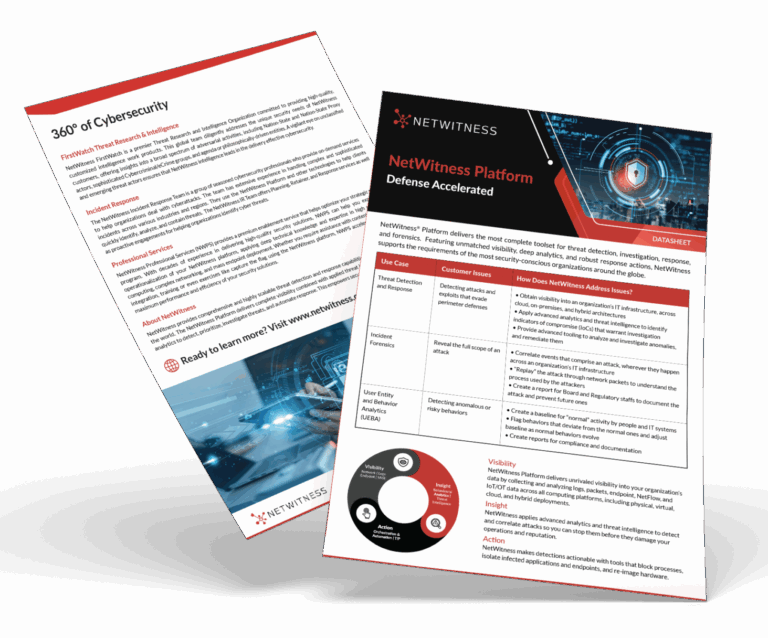
360° Cybersecurity with NetWitness Platform
– Unrivaled visibility into your organization’s data
– Advanced behavioral analytics and threat intelligence
– Threat detections and response actionable with the most complete toolset
Machine Learning Threat Detection and Behavioral Threat Detection in Context
There’s a lot of noise around AI in security, so it’s worth being precise here.
Machine learning threat detection is useful when it deals with patterns at scale. It can highlight anomalies across large datasets that would be difficult to spot manually.
Behavioral threat detection adds context to those anomalies. It focuses on how users and systems normally behave and flags deviations that matter. For example, a login itself is not suspicious. But a login followed by unusual access patterns across multiple systems, especially involving sensitive data, creates a signal.
When these insights feed into threat modeling cybersecurity, the model starts reflecting not just architecture and vulnerabilities, but actual behavior. That’s a different level of awareness.
Threat Modeling Methodology Still Matters, But It Needs to Adapt
Frameworks like STRIDE, DREAD, PASTA, and VAST still have value. They provide structure, especially during design. But in a continuous setup, they are not endpoints. They are inputs.
A modern threat modeling methodology blends these frameworks with real-time data. It uses structured thinking where needed, but it does not rely on static outputs. The methodology evolves along with the system it is meant to protect.
Threat Modelling Tools: What Actually Makes Them Useful
There’s no shortage of threat modelling tools. The difference lies in how they’re used. Tools like Microsoft Threat Modeling Tool, OWASP Threat Dragon, Irius Risk, and Threat Modeler can support structured analysis. But the structure alone is not enough.
The real value comes when these tools are connected to:
- CI/CD pipelines – A developer pushes a change. Before it goes live, the pipeline flags that a new API exposes sensitive data without proper authentication. The issue is caught and fixed before deployment, not after an alert.
- Cloud environments – A new cloud instance is spun up for testing and accidentally left exposed. The system detects it quickly, adds it to the attack surface, and flags it as a risk before it becomes an entry point.
- Vulnerability management systems – A known vulnerability appears on an internet-facing service. Instead of sitting in a backlog, it’s immediately prioritized because it connects to a real attack path in your environment.
- Threat intelligence feeds – A new exploit starts being used in the wild. The model checks if your systems are exposed to it and highlights exactly where you’re at risk, so teams can act before it’s targeted directly.
Without that integration, they remain diagramming tools. With it, they become part of a continuous system. And more importantly, when they integrate with behavioral analytics, machine learning models, and correlation engines that can continuously process and contextualize security data.
This is where threat modeling starts to evolve from static diagrams into something operational. When signals from user behavior, network activity, and real-time threat intelligence are correlated, the model begins to reflect how attacks actually unfold, not just how they might.
Platforms that can aggregate this intelligence and connect it with threat modeling workflows enable something more powerful: continuous, real-world threat modeling that adapts as the environment changes. Without that level of integration, tools remain diagramming aids. With it, they become part of an active security system.
Where NetWitness Fits In
This is where integration stops being a design goal and starts working in practice. NetWitness brings together behavioral analytics, machine learning, correlation engines, and threat intelligence into a single platform that continuously processes and connects security data across the environment.
Instead of treating these as separate capabilities, it aggregates them into a unified view that feeds directly into threat modeling workflows.
That means threat models are no longer static or tool-dependent. They are continuously informed by real user behavior, network activity, and evolving threat patterns. More importantly, this allows teams to move beyond theoretical risk and model threats based on what is actually happening in their environment.
In practice, this means threat models are continuously updated as applications evolve, with new risks automatically flagged during development and validated against real telemetry from production environments.
Implementing Continuous Threat Modeling in Cybersecurity Without Overcomplicating It
This doesn’t require a massive overhaul to get started, but it does require clarity.
First, focus on visibility. If your asset inventory is incomplete, everything built on top of it will be flawed.
Second, bring threat modeling into the development lifecycle. It should not sit outside engineering workflows.
Third, shift your thinking from isolated findings to attack paths. That’s where real risk lives.
Fourth, use automation carefully. Not everything needs to be automated, but the parts that involve continuous data collection and correlation do.
Finally, close the loop. Every incident should refine your model. If it doesn’t, the same patterns will repeat.
Conclusion: Continuous Threat Modeling as a Real Defense Mechanism
The gap between systems and their threat models is one of the most overlooked risks in cybersecurity. Continuous threat modeling reduces that gap by keeping threat modeling in cybersecurity aligned with how environments actually change.
It combines attack surface management, real-time threat intelligence, deeper cybersecurity threat analysis, and detection techniques like machine learning threat detection and behavioral threat detection into a single, evolving process.
When done right, it stops being a planning exercise and starts functioning as an active layer of defense. And that’s the point. Not to document risk, but to stay ahead of it.
Frequently Asked Questions
1. What is threat modeling in cybersecurity?
Threat modeling in cybersecurity is the process of identifying potential threats, vulnerabilities, and attack paths in systems so organizations can understand risk and design effective security controls.
2. Why is threat modeling crucial for application security?
It helps identify weaknesses early in the development lifecycle, reducing the chance of exploitable flaws reaching production and lowering long-term remediation costs.
3. How do you perform threat modeling for web applications step by step?
Define assets and sensitive data, map data flows and entry points, apply a framework like STRIDE, analyze risks, implement controls, and keep updating the model as the application evolves.
4. What are the top software tools for threat modeling in cybersecurity?
Common tools include Microsoft Threat Modeling Tool, OWASP Threat Dragon, IriusRisk, and Threat Modeler, each supporting different levels of automation and integration.
5. What are the differences between popular threat modeling frameworks used in cybersecurity?
STRIDE focuses on identifying threat categories, DREAD on evaluating risk, PASTA aligns threats with business impact, and VAST is designed for scalability in modern environments.
6. How do I choose the best threat modeling software for a financial services company?
Focus on tools that support regulatory requirements, integrate with development pipelines, incorporate threat intelligence, and enable continuous risk assessment across complex systems.
Unify Security Across Hybrid Environments
- Gain complete visibility across cloud, on-prem, and endpoints.
- Detect threats faster with correlated insights across all layers.
- Reduce complexity with a single, integrated security platform.
- Strengthen your defenses with NetWitness unified security