What is SASE and Why It Matters?
When you think of SASE, think of integrating networking and security into one cloud solution. By having unified security and networking instead of having a bunch of disparate tools, the visibility into your SASE threats increases and also enhances your SASE network security when connecting to users working from home or using cloud apps as well as users connected to the Internet.
Essential Strategies for Future-Proofing Your Organization with Secure Access Service Edge
The point is, networks didn’t just expand. They scattered.
With the rise of remote work, cloud apps, and devices everywhere, the old concept of network security has been pushed to the limit. And this is where Secure Access Service Edge (SASE) comes in. With SASE, networking and security are merged into one solution, which is exactly what the modern business world needs.
By using the concept of SASE security, companies can break free from the old approach and create something much better.
However, the implications of this go beyond the architecture itself. They go into the very heart of how SASE cybersecurity operates. And if not done right, things can go awry. So, what exactly makes up the concept of SASE architecture? How can one make the most out of it?
Understanding SASE Architecture: What’s Really Changing
At its core, SASE architecture simplifies something that’s been overly complicated for years: managing networking and security separately.
Instead of stitching together tools, SASE network security brings everything into one cohesive system.
1. Convergence of Networking and Security in SASE
This is where the real shift happens.
a) Integration of SD-WAN and Security Functions in SASE Architecture
SD-WAN handles traffic. Security tools protect it. Traditionally, they’ve lived in different worlds.
SASE architecture merges them. You get SD-WAN alongside FWaaS, SWG, CASB, and ZTNA in a single cloud-native service.
What this really means is fewer gaps, fewer handoffs, and a much cleaner system overall. And yes, this is where unified networking and security stops being a buzzword and starts being practical.
b) Simplified Management and Lower Latency in SASE Network Security
Older setups meant multiple dashboards, multiple vendors, and too many points of failure.
With SASE network security, control shifts to a single platform. Policies are easier to manage. Performance improves because security sits closer to the edge. And latency? Noticeably lower.
2. Scalability That Actually Keeps Up
Growth used to mean more hardware. More configs. More headaches. Not anymore.
a)Cloud-Native Flexibility in SASE Security
Because SASE cybersecurity is cloud-native, scaling becomes straightforward.
New users, new locations, more traffic, it all fits into the same framework without breaking anything. That’s the advantage of secure access service edge. It grows with you instead of slowing you down.
3. Built for Remote Work and Distributed Teams
This isn’t a “nice to have” anymore. It’s the default.
a) Secure Access Anywhere with SASE Security
Users connect from everywhere. Offices, homes, airports, you name it. SASE security ensures they get consistent protection and performance regardless of location.
b) Visibility Across Everything with SASE Cybersecurity
Here’s where things get interesting. With traditional setups, visibility drops as environments expand.
But SASE threat visibility flips that. You can actually see traffic, behavior, and risks across users, devices, and cloud apps in one place.
Strategies for Making SASE Security Work in the Real World
Adopting SASE security isn’t just a tech upgrade. It’s a shift in how you think about infrastructure.
Assess Where You Stand First
Before jumping in, get clarity on your current setup.
- Identify Gaps in Network Security – Look at performance issues, security blind spots, and operational complexity. This is where SASE cybersecurity starts showing its value, especially in improving SASE threat visibility.
- Map SASE Architecture to Your Needs-Not every organization has the same priorities. Some need better remote access. Others need tighter control. The strength of SASE architecture is that it adapts to both.
- Build a Practical Roadmap-Don’t try to replace everything overnight. Start with key areas. Expand gradually. Align teams along the way. That’s how you turn secure access service edge into a long-term advantage instead of a rushed deployment.
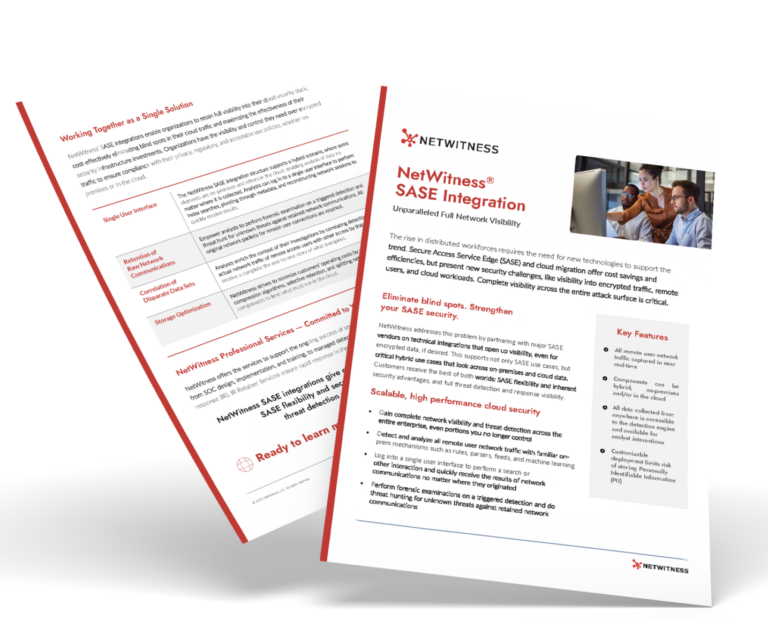
Extend security visibility across remote users, cloud workloads, and encrypted traffic with seamless SASE integration.
Strengthening SASE Threat Visibility with NetWitness
Even with SASE network security, visibility can still be a challenge without the right tools. That’s where NetWitness comes in. It enhances SASE threat visibility, giving security teams deeper insight into traffic, behavior, and potential threats across environments.
- Deeper visibility across SASE environments
- Centralized control for unified networking and security
- Faster detection and response to threats
- Smooth integration into existing SASE architecture
- Stronger compliance and reporting capabilities
Put simply, it helps you see what matters and act on it faster.
Frequently Asked Questions
1. What is SASE in cybersecurity?
SASE cybersecurity is a cloud-based cybersecurity model in which networking and cybersecurity come together in one framework, thus improving network security and enabling secure access anywhere.
2. What are the key components of a SASE architecture?
A typical SASE architecture includes SD-WAN, CASB, SWG, FWaaS, and ZTNA, all working together to deliver unified networking and security.
3. How does SASE improve network security?
SASE network security simplifies policies, reduces complexities, and enhances SASE threat visibility to ensure better security.
4. What challenges does SASE solve for IT teams?
It reduces tool sprawl, simplifies management, supports remote work, and improves visibility across distributed environments.
5. How can organizations successfully implement SASE?
Start with an assessment, define priorities, roll out in phases, and focus on integration to get the most out of SASE security.