What Is SIEM Log Monitoring and How Does SIEM Log Analysis Improve Security?
SIEM log monitoring is the process of collecting, correlating, and analyzing log data from across an organization’s IT environment to detect security threats in real time. It brings together SIEM and log management so security teams can see what’s happening, understand why it’s happening, and respond before damage occurs.
A modern SIEM log platform continuously ingests logs from servers, endpoints, networks, cloud services, and applications. Through SIEM log analysis, these events are normalized and correlated to identify abnormal behavior, such as unauthorized access attempts, lateral movement, or policy violations.
Effective SIEM monitoring goes beyond basic log storage. It applies automation and behavioral analytics to reduce noise, prioritize high-risk activity, and accelerate investigations. By unifying SIEM and log management in one platform, teams gain centralized visibility, faster threat detection, and clearer security context without manually combing through raw data.
When it comes to cybersecurity, one thing is certain; data tells the story. Every login, file access, configuration change, or system request leaves behind a trail. That trail is what we call logs. And monitoring those logs is what makes the difference between spotting a threat early and reacting too late.
Let’s break down how NetWitness SIEM log monitoring gives you the automation, visibility, and control you need to keep your organization secure.
What Is SIEM Log Monitoring and Why Does It Matter?
Think of SIEM log monitoring as your digital surveillance system. Logs are created every time something happens on your network, whether that’s a user signing in, a file being modified, or an unusual request hitting your firewall. These events get logged by computers, servers, switches, routers, apps, you name it.
- Every time someone logs in, accesses a file, runs an app, or changes a setting, it’s recorded. Those records are called logs. And they pile up fast.
- SIEM log monitoring is the process of collecting all that log data, analyzing it for anything suspicious, and triggering alerts when something is off. It gives your security team the full picture- what happened, where, when, and who was involved.
- A SIEM automated logging software solution like NetWitness collects these logs from across your infrastructure and analyzes them for patterns, anomalies, or indicators of a breach. Without a system to monitor and manage these logs, you’re essentially flying blind.
What Exactly Are Logs?
Logs are digital footprints- records of what happened, when it happened, who did it, and what was affected. And they’re everywhere. Emails sent, apps opened, databases queries- it all creates logs.
This is where security log management becomes critical. You don’t just store logs for compliance or troubleshooting; you use them to actively detect and respond to suspicious behavior. That’s the heart of network log analysis.
What Is SIEM Log Analysis?
SIEM log analysis is the process of examining and correlating log data from systems, applications, endpoints, and network devices to identify suspicious activity. It helps security teams detect anomalies, investigate incidents, and understand how threats move across an environment.
Unlike basic log storage, SIEM log analysis connects events from multiple sources to reveal patterns that individual logs might miss. For example, repeated failed logins followed by unusual account activity could indicate a compromised account.
Effective SIEM log data analysis helps security teams prioritise high-risk events, reduce false positives, and accelerate incident investigations.
SIEM Log Analysis Tools
SIEM log analysis tools help security teams collect, search, correlate, and investigate log data. The right solution should support the organisation’s data sources, monitoring requirements, and incident response workflows.
SIEM Log Analysis Tool | Key Capabilities | Why It’s Needed |
Log Collection and Normalisation | Collects logs from endpoints, servers, applications, firewalls, and cloud environments, converting them into a consistent format. | Provides a unified view of security data across diverse systems and simplifies log analysis. |
Log Correlation and Analysis | Correlates events across multiple sources to identify relationships, suspicious patterns, and potential attack sequences. | Helps analysts connect isolated events to detect complex threats that individual logs may not reveal. |
Threat Detection and Anomaly Analysis | Uses predefined rules, behavioural analytics, and machine learning to identify unusual activity and known threat indicators. | Enables early detection of suspicious behaviour, compromised accounts, and emerging threats. |
Search and Investigation | Supports queries, filtering, and historical log searches to trace events, investigate alerts, and reconstruct attack timelines. | Helps security teams identify the root cause, understand the scope of an incident, and gather evidence for incident response. |
Dashboards, Alerts, and Reporting | Provides real-time alerts, visualisations, and reports on security events, incidents, and log activity. | Improves security monitoring, prioritises investigations, and supports compliance reporting and audit requirements. |
When evaluating SIEM log software, prioritise real-time monitoring, flexible data collection, event correlation, and integration with existing security controls. NetWitness combines SIEM capabilities with security analytics to help teams investigate suspicious activity and improve visibility across their environments.
The Role of SIEM Cyber Security in Log Monitoring
SIEM cyber security goes beyond simply collecting log data. It’s about centralizing, analyzing, and responding in real time. A well-integrated SIEM log software platform helps teams build context across millions of logs quickly, so you know what’s noise and what’s a red flag.
Let’s say you’re tracking login attempts. A failed login once or twice? Probably harmless. Hundreds of failed logins from the same IP? That’s a brute-force attack in progress. SIEM log monitoring software helps you spot that difference fast.
Why Is Network Log Monitoring Software Critical Today?
Because threats don’t wait. Attackers move fast, and security teams need faster tools. Security log management software helps you:
- Establish what “normal” looks like across your systems.
- Flag behavior that doesn’t fit the norm.
- Respond to issues before they escalate.
The more logs you collect, the better your log management SIEM becomes at telling you when something’s off.
Common Challenges with Network Log Monitoring Software
Let’s be honest, network log monitoring software sounds simple until you’re drowning in data. Even small businesses can generate gigabytes of logs every day. Sorting through that manually? Impossible.
Here’s where most teams struggle:
- Too much data: Without SIEM automation, it’s hard to focus on what matters.
- Delayed response: By the time an analyst finds a threat, the damage is done.
- Lack of visibility: Siloed systems create blind spots.
A smarter, more scalable solution is needed. That’s where SIEM logging software steps in.
SIEM Logging vs SIEM Log Monitoring
SIEM logging and SIEM log monitoring are closely related but serve different purposes. Logging records events generated across an IT environment, while monitoring continuously examines those events to identify suspicious activity.
Aspect | SIEM Logging | SIEM Log Monitoring |
Primary purpose | Record and collect security events | Identify suspicious activity in collected events |
Main activity | Log generation, collection, and forwarding | Continuous analysis, correlation, and alerting |
Output | Searchable event records | Alerts, anomalies, and investigation leads |
Security value | Provides evidence for investigations and audits | Supports early threat detection and response |
Example | Recording a user’s login attempts | Flagging repeated failed logins that indicate a possible brute-force attack |
Both capabilities are essential to an effective security monitoring strategy. Logging provides the underlying evidence, while monitoring helps security teams identify events that require attention.
Organisations should also understand the difference between SIEM and log management. Log management primarily focuses on collecting, storing, and organising log data. SIEM builds on these capabilities with security-focused analytics, event correlation, threat detection, and alerting.
Following SIEM log management best practices, including collecting relevant logs, maintaining accurate timestamps, securing log storage, defining retention policies, and regularly reviewing detection rules, helps improve data quality and monitoring effectiveness.
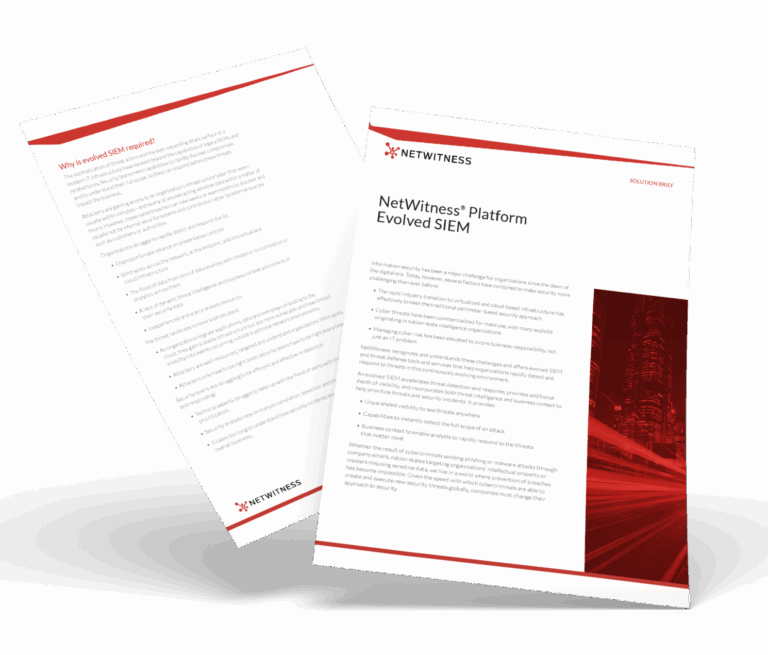
Elevate Threat Detection and Response with NetWitness® SIEM
-Correlate data across users, logs, and network for unified visibility.
-Detect advanced threats with AI-driven analytics and behavioral insights.
-Accelerate investigations using automated enrichment and guided workflows.
How SIEM Automation Transforms Log Monitoring
Automation is the game-changer. Using machine learning and advanced analytics, modern SIEM log management software can:
- Correlate activity across thousands of devices.
- Detect unusual patterns.
- Trigger instant alerts and responses.
In platforms like NetWitness, log management SIEM tools automatically extract metadata, organize it visually, and prioritize alerts based on severity.
It’s no longer about waiting for something to go wrong. It’s about seeing the warning signs early and acting fast.
Integration Makes It Smarter
Network log monitoring doesn’t exist in a vacuum. The best results come when it’s connected to other security tools. Here’s how integrations amplify your system:
- SIEM cyber security platforms: Consolidate logs from multiple sources.
- Threat Intelligence Platforms (TIPs): Enrich your data with external threat feeds.
- UEBA (User and Entity Behavior Analytics): Flag behavior that’s out of character.
When these tools work together, your security log management becomes proactive instead of reactive.
How to Build an Effective Log Monitoring Setup
Ready to build your own log monitoring setup? Here’s what’s essential:
1. Define What You’ll Monitor: Start with critical logs: system, server, firewall, database, and cloud siem services. The broader your input, the better your network log analysis becomes.
2. Choose the Right Log Management Tool: Pick security log management software that can scale with your business and integrate with your existing tools.
3. Set Parsing Rules and Filters: Decide what data you need and what to ignore. Your SIEM automated logging software should help with this.
4. Create Alerts and Response Playbooks: Set thresholds for triggering a response, then automate it. For instance, multiple failed logins? Isolate the user. Malware detected? Kill the process.
5. Test and Adjust: Run simulations. Tune your filters. Review what you missed. Your log management SIEM should evolve with your environment.
Why NetWitness SIEM Log Monitoring Make a Difference
Setting this all up in-house is no small feat. That’s why many organizations turn to providers like NetWitness.
Here’s why:
- Faster Deployment: You don’t start from scratch. A third-party SIEM log monitoring solution is already built, tested, and trusted.
- Built-In Integrations: NetWitness integrates seamlessly with your existing tools – SIEM logging software, TIPs, UEBA, and more – right out of the box.
- Powerful SIEM Automation: NetWitness automates security log management, so you can respond faster and smarter, without manual digging.
- Centralized Visibility: A single dashboard gives you insight into everything—from endpoints to cloud traffic. This makes your network log analysis clearer, faster, and more effective.
Why Choose NetWitness for Log Monitoring
If you’re serious about security, you can’t ignore your logs.
NetWitness brings together SIEM cyber security, automated logging, and advanced analytics to help you detect, respond to, and recover from threats with confidence. It’s time to stop reacting and start anticipating. Experience the power of NetWitness SIEM log monitoring today.
Ready to see how it works? Book a free demo and see how visibility, automation, and context can transform your security strategy.
Frequently Asked Questions
1. What is SIEM log monitoring, and how does it work?
SIEM log monitoring collects and analyzes log data across your network using automation. It identifies suspicious activity, alerts your team, and helps you respond faster. It’s a core part of any strong SIEM cyber security strategy.
2. How does SIEM log software help reduce security risks?
By analyzing millions of log entries in real time, SIEM log software detects abnormal patterns—like brute-force attempts or lateral movement—and triggers alerts. This gives your team a chance to stop threats before damage is done.
3. What should I look for in network log monitoring software?
Look for tools that combine automation, threat intelligence, and integration support. The best network log monitoring software will make network log analysis easier and faster, not more complex.
4. Is log management SIEM suitable for small businesses?
Yes. Modern log management SIEM tools like NetWitness are built to scale, making them ideal for small IT teams that need big-time visibility without hiring an army.
5. How is log management different from SIEM log software?
Log management SIEM tools focus on collecting, storing, and organizing logs, while SIEM log software goes further by analyzing that data for patterns and triggering alerts. Think of log management as organizing your data and SIEM as interpreting it for threats.
Choose the Right SIEM with Confidence
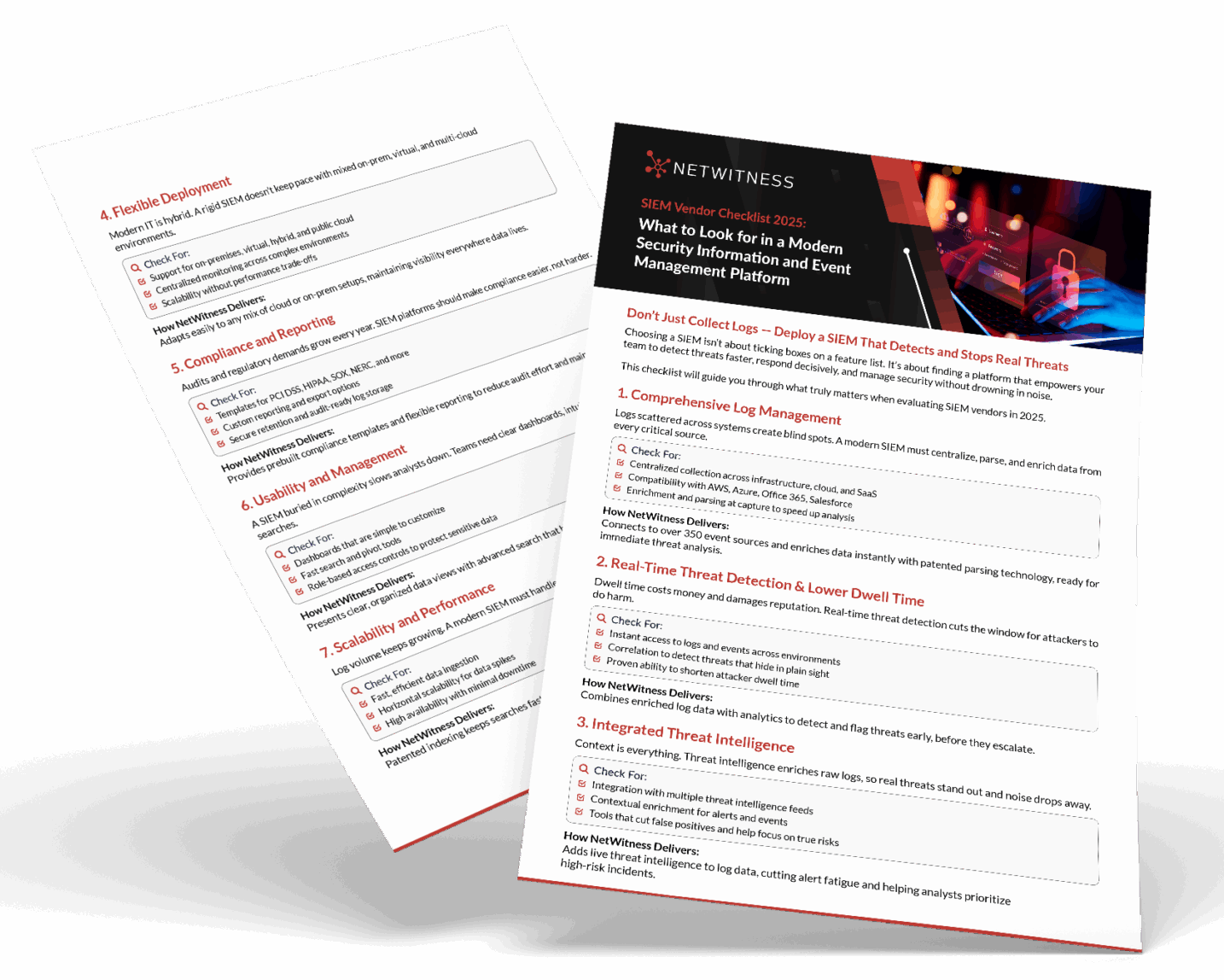
Evaluate vendors using a comprehensive, expert-built checklist.
Identify must-have SIEM features for complete visibility and faster detection.
Compare capabilities to ensure scalability, automation, and integration.
Make informed decisions with NetWitness’ proven SIEM guidance.