What is NDR Technology?
NDR technology (Network Detection & Response) refers to the actual method that today’s security teams use to understand what’s going on in their network, not just the edges of it.
This involves more than just log files and signatures; it means monitoring and analyzing network traffic based on the patterns and behavior of that traffic, combined with machine learning techniques.
Here’s what that translates to in practice:
- Real-time SOC network visibility across cloud, IT, and OT.
- Early detection of lateral movement and stealth attacks.
- Faster, clearer investigations with full traffic context.
- Stronger network visibility NDR security in environments where agents don’t exist.
Most enterprise NDR tools and NDR solutions are built to answer one simple question fast: What’s happening on my network right now, and should I care?
Why NDR Technology Has Become Critical
Network Detection and Response (NDR) Technology has quietly become one of the most important layers in enterprise security.
Attackers don’t break in loudly anymore. They move sideways, blend into normal traffic, and often sit undetected for weeks. Firewalls and prevention tools weren’t built for that level of subtlety.
That’s where NDR technology steps in. It gives security teams deep, continuous visibility into network activity and the ability to detect behavior, not just signatures.
For CISOs and security leaders evaluating NDR solutions, the real question isn’t whether you need it. It’s whether your current stack can function without it.
Why Enterprise Networks Need NDR Technology Today
Modern networks aren’t just bigger. They’re fragmented. You’ve got cloud workloads, on-prem systems, OT environments, IoT devices all generating traffic, all creating blind spots.
Relying only on logs or endpoints is like trying to understand a conversation by reading random sentences. You miss the context. NDR technology fills that gap by continuously inspecting traffic through deep network traffic analysis, giving teams a complete picture of what’s actually happening.
This matters even more in industries like healthcare and industrial OT, where:
- Devices can’t run agents
- Legacy protocols are common
- Downtime isn’t an option
In these environments, NDR cybersecurity isn’t a nice-to-have. It’s often the only reliable way to detect threats early.
Core Features of Modern Network Detection and Response (NDR) Solutions
1. Real-Time Network Traffic Analysis and Visibility
At its core, network detection and response is about visibility. Strong NDR solutions don’t just sample traffic. They capture and reconstruct it giving you full context, not fragments.
By deploying sensors across the network, NDR tools enable:
- Full visibility into east-west and north-south traffic
- Detection of threats that bypass perimeter defenses
- Centralized monitoring across hybrid environments
This is what true SOC network visibility looks like not dashboards full of alerts, but actual clarity.

2. Behavioral Analytics That Catch What Signatures Miss
Attackers evolve fast. Signatures don’t. That’s why modern NDR technology leans heavily on behavior. It learns what “normal” looks like and flags what doesn’t.
What this really means is:
- You can detect zero-day threats without prior signatures
- Alerts become more meaningful, not just more frequent
- Detection improves over time as the system learns
Most NDR cybersecurity platforms combine this with machine learning and threat intelligence to reduce noise and improve accuracy.
3. Faster, More Practical Threat Investigation
Detection is only half the problem. Investigation is where teams lose time. A strong network detection and response platform makes it easier to answer:
Where did the attack start? How did it move? What’s affected right now?
This is enabled through:
- Visual attack mapping
- Automated timeline reconstruction
- Session-level visibility
Instead of chasing alerts, teams can follow a clear narrative. That’s how you actually reduce response time.

4. Extending Security into OT and IoT Environments
OT environments weren’t designed with security in mind. No agents. Limited visibility. High risk. This is where network visibility NDR security becomes critical.
Modern NDR solutions address this through:
- Agentless monitoring across OT and IoT
- Deep protocol analysis for industrial systems
- Coverage for unmanaged or shadow IT assets
It’s one of the few ways to extend network threat detection into environments where traditional tools simply don’t work using NDR technology.
5. Integration That Makes the Stack Work Better
Security tools don’t fail because they’re bad. They fail because they don’t work together. NDR tools are designed to integrate with SIEM, SOAR, EDR, and threat intelligence platforms, which means:
- Faster deployment into existing workflows
- Better context across tools
- More efficient investigations
For SOC teams, this turns disconnected alerts into coordinated response.
6. Reducing Complexity While Improving Security Outcomes
Most security stacks grow over time and become harder to manage. By consolidating visibility, detection, and response, NDR solutions help reduce that complexity.
The outcome:
- Fewer tools to manage
- Better compliance support
- Clearer reporting for leadership
And most importantly, stronger network traffic analysis that drives real decisions not just more data enabled by NDR technology.
How NetWitness Delivers NDR Technology in Practice
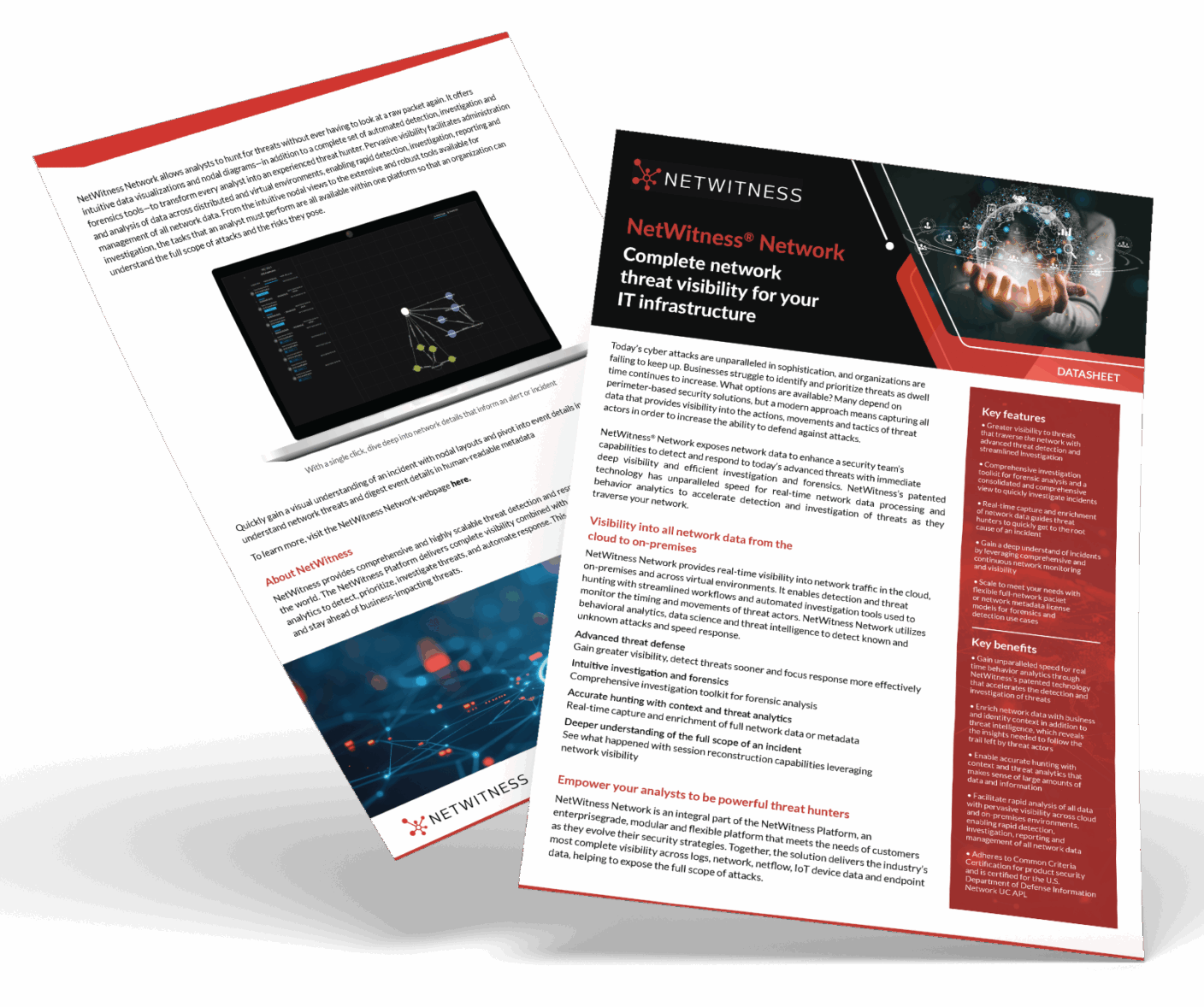
NetWitness NDR platform is a strong example of how NDR technology translates into real operational value.
Here’s how it approaches the problem:
- Packet-level capture that generates rich metadata instantly
- Detection that combines behavior, machine learning, and threat intelligence
- Built-in investigation workflows with full timeline reconstruction
- Role-based dashboards that support both junior analysts and experienced responders
By combining deep network traffic analysis with guided workflows, it simplifies what is usually a complex process. The result is clearer visibility, faster investigations, and more effective network detection and response at scale.

Conclusion
Security operatives are faced with the triple threat of needing to provide fast mitigation of risks, speedy responses, and justifying capital investments (for security initiatives) simultaneously. Network Detection & Response (NDR) technologies can assist security operatives in accomplishing all three objectives by helping to reduce blind spots, increasing the overall visibility of the security operation center (SOC) and making it easier to detect and respond to modern types of cyber threats This is particularly true in multi-faceted and distributed environments.
As networks are still being expanded into both the cloud and across operational technology (OT) systems, cyber-security NDRs have become a less important differentiator between businesses and a more essential baseline component of business requirements. Therefore, businesses now have to focus on the most effective means for implementing network detection and response (NDR) solutions rather than determining if they should implement them.