How Do You Monitor OT Networks Without Disrupting Industrial Operations?
The safest way to monitor industrial environments is through passive OT network security. Instead of actively scanning PLCs, HMIs, RTUs, or industrial controllers, modern OT cyber security tools observe network traffic using SPAN ports or network taps. This provides complete visibility without interrupting production.
The best OT security solutions for operational technology combine passive monitoring, protocol-aware analytics, real-time OT threat detection, and integration with enterprise IT security platforms. This allows security teams to detect threats early while maintaining operational uptime.
If you’re evaluating OT cyber security solutions, look for platforms that:
- Discover assets passively
- Understand industrial protocols
- Detect threats in real time
- Integrate with SIEM, SOAR, and NDR
- Support both IT and OT investigations
Introduction
Because industrial environments weren’t made with gracefully failing in mind, production stops when there is an OT system failure. Production ceases when there is an OT system failure, safety is compromised when there is an OT system failure, and production losses begin occurring just minutes following an OT system failure. The importance of having the best cybersecurity for operational technology networks has shifted from a necessary compliance-based decision to a decision rooted in survival.
However, the majority of organizations evaluate OT cybersecurity solutions using the same criteria for assessing IT cybersecurity solutions, which is a big mistake when the costs of downtime are significant, legacy systems are the norm, and visibility is at best patchy.
This means that to achieve the optimal cybersecurity for OT networks, you should evaluate your operational technology cybersecurity measures based on visibility, detection, and uptime, rather than assessing the control level at what expense, along with any disruptions to the process. Let’s explore what really matters.
Why OT Cybersecurity Solutions Require a Different Approach
OT environments operate on deterministic processes. They rely on predictable communication patterns, proprietary protocols, and systems that weren’t built with security in mind.
Unlike IT networks:
- You cannot patch frequently
- You cannot install heavy agents
- You cannot afford downtime
This is why cybersecurity for industrial environments demands specialized OT security tools.
Key differences shaping OT cybersecurity solutions:
- Legacy infrastructure with minimal native security
- Flat network architectures that increase attack spread
- Safety-critical operations where disruption can cause physical harm
What Makes the Best OT Cyber Security Solutions
You’re not buying tools. You’re buying resilience. The best cybersecurity for operational technology networks consistently delivers on five non-negotiables.
1. Deep OT Visibility Across All Assets
You can’t secure what you don’t see. OT visibility is the foundation.
Look for:
- Passive asset discovery (no disruption)
- Identification of PLCs, RTUs, HMIs
- Real-time mapping of OT networks
Strong OT network security solutions provide:
- Asset inventory with context
- Communication baselines
- Risk scoring tied to operational impact
2. Protocol-Aware Monitoring for OT Networks
Industrial protocols like Modbus, DNP3, and OPC are not designed for security.
The best cybersecurity for operational technology networks includes:
- Native decoding of OT protocols
- Behavior-based anomaly detection
- Deep packet inspection tailored for OT environments
This enables effective network monitoring for OT environments without interfering with operations.
3. Real-Time Threat Detection Without Disruption
Detection speed defines impact. OT threat detection solutions must operate in real time while remaining invisible to operations.
Capabilities to expect:
- Behavioral analytics for anomaly detection
- Detection of lateral movement inside OT networks
- Integration with threat intelligence feeds
4. Network Segmentation and Access Control
Flat OT networks remain one of the biggest risks. Effective OT security solutions must support:
- Micro-segmentation
- Zone-based architecture
- Secure remote access
This aligns with frameworks like NIST SP 800-82, which prioritizes segmentation as a core control.
5. OT Risk Management Tools That Align with Operations
Risk in OT isn’t theoretical. It’s operational. The best cybersecurity for operational technology networks connects:
- Vulnerabilities → operational impact
- Threats → safety consequences
- Incidents → downtime risk
Strong OT risk management tools should:
- Prioritize risks based on production impact
- Map threats to MITRE ATT&CK for ICS
- Provide actionable remediation without disrupting workflows
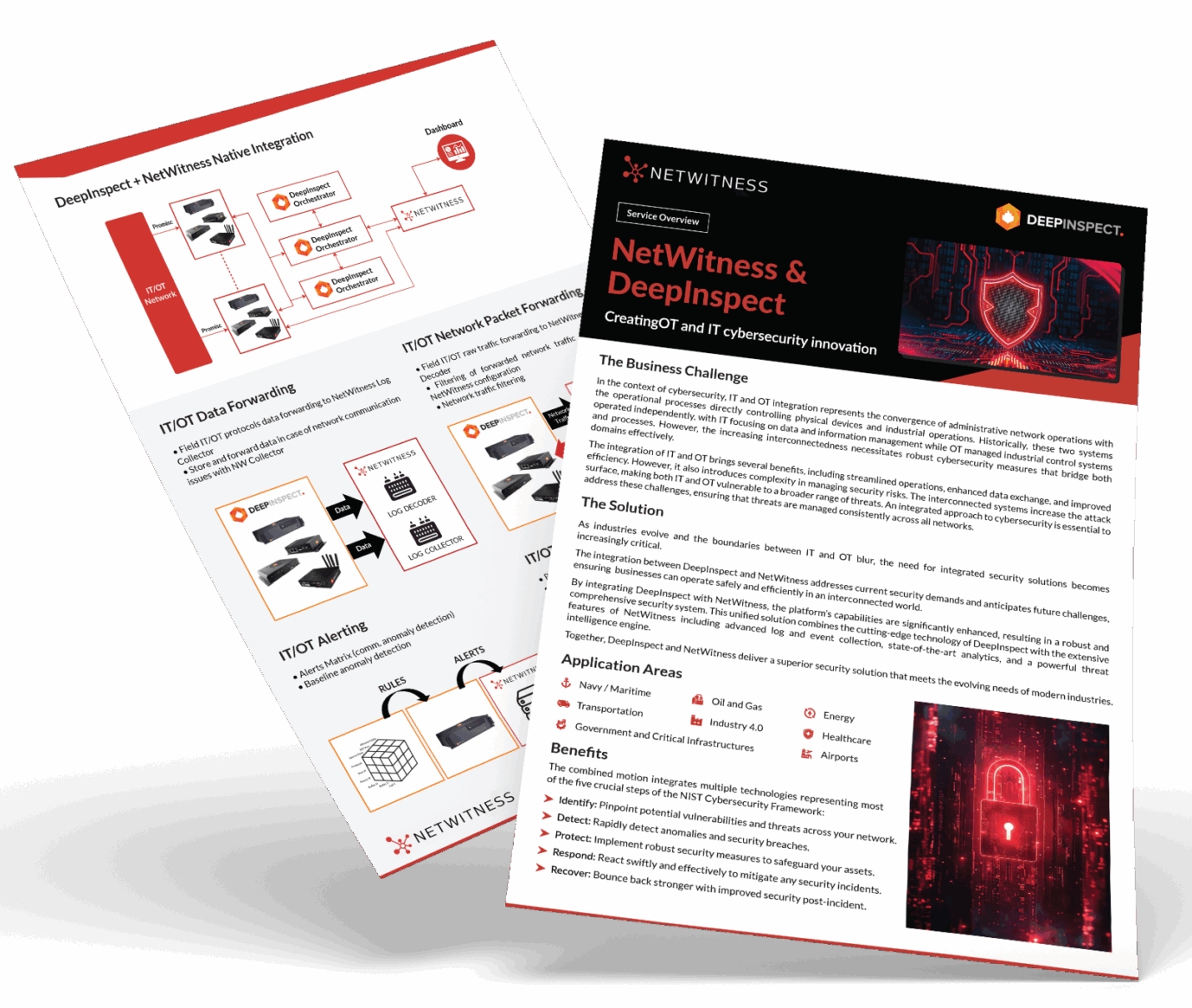
Unify IT and OT Threat Detection with NetWitness®
-Correlate IT and OT telemetry for end-to-end operational visibility.
-Detect advanced threats across industrial and enterprise networks with protocol-level intelligence.
-Accelerate investigations using enriched OT context and unified analytics.
-Reduce blind spots and strengthen response across converged IT/OT environments.
How to Choose the Best OT Cybersecurity Solutions
Choosing the right OT security solutions is fundamentally different from selecting IT security tools. Here’s the framework that separates effective decisions from costly mistakes.
Step 1: Assess Your OT Environment
Before you evaluate vendors, understand your own infrastructure.
Inventory Your Operational Technology:
- What industrial protocols do you run? (Modbus, DNP3, OPC, PROFINET, others)
- How are systems networked? (Flat? Segmented? Mixed?)
- What are the safety-critical processes? (Which systems, if compromised, cause physical harm)
- What’s your current uptime requirement? (99.5%? 99.99%? Continuous operation?)
- What’s your typical mean time to repair (MTTR)? What downtime costs per minute?
Define Your Operational Constraints:
- Can you tolerate any network scanning? (Most OT environments: no)
- What’s your remote access footprint? (Does this increase your attack surface?)
- How distributed is your infrastructure? (Single site? Multi-site? Geographically dispersed?)
- What legacy systems must remain unchanged? (Can’t patch? Can’t replace? Can’t update OS?)
This assessment guides every subsequent vendor evaluation. If you don’t understand your environment, vendor claims will sound equally compelling.
Step 2: Define Required Capabilities
Not all OT security solutions offer the same functionality. Prioritize based on your actual needs.
Essential Capabilities (Non-Negotiable):
- Passive OT asset discovery (no active scanning)
- Support for your specific industrial protocols
- Real-time threat detection without operational impact
- Ability to establish OT-specific behavioral baselines
Important Capabilities (Should Have):
- Network segmentation support or guidance
- Integration with your existing SIEM, SOAR, or NDR platforms
- Threat intelligence feeds with industrial-specific indicators
- OT-specific risk management and prioritization
Nice-to-Have Capabilities:
- Advanced hunting tools for proactive threat discovery
- Supply chain risk assessment
- Vulnerability management specifically for OT systems
- Regulatory compliance reporting
Clarity here prevents vendor overload. If you don’t need advanced threat hunting, don’t pay for it. If network segmentation is already implemented, focus on monitoring capabilities instead.
Step 3: Evaluate OT Security Vendors
This is where most organizations falter. They use IT security evaluation criteria for OT vendor assessment. Wrong approach.
Vendor Credibility in OT Environments:
Ask these questions directly:
- Protocol Support: Which industrial protocols do you support natively? Can you name specific deployments using Modbus? DNP3? IEC standards? Vendors with deep OT experience can articulate this immediately. Those with generic IT backgrounds hesitate.
- OT Network Constraints: Walk through your environment. How would their solution handle your flat network? Your deterministic processes? Your uptime requirements? Listen for whether they understand trade-offs (detection speed vs. operational impact, visibility vs. performance).
- Passive Deployment Model: Do they require active scanning? Do they support passive network taps or SPAN ports? If they insist on agent-based detection, they’re not OT-native.
- Real Deployments: Ask for references from similar industries. Better yet, industrial verticals (power generation, water treatment, manufacturing, pipelines). Generic “enterprise” references won’t validate OT capability.
- Regulatory Alignment: Can they map their solution to NIST SP 800-82? IEC 62443? NERC CIP (for utilities)? If they’re vague, they’re not mature in OT.
Step 4: Conduct Proof-of-Concept Testing
Theory fails in OT environments. Deploy and test before committing.
POC Design for OT Security Solutions:
- Non-Disruptive Testing: Request passive deployment only. If the vendor requires active network access or modifications, the POC is already failing.
- Protocol Coverage: Test with your actual industrial protocols. Not a demo environment. Your live network (safely). Can the solution decode your Modbus packets? Your DNP3 commands?
- Baseline Learning: Let the solution establish behavioral baselines for 1-2 weeks of normal operations. Evaluate whether it learns legitimate patterns without requiring manual configuration.
- Anomaly Injection: Simulate anomalous behavior (unauthorized device access, protocol command misuse, unusual communication patterns). Does the solution detect these without false alarms?
- Operational Impact: Monitor network performance, latency, and determinism during the POC. Confirm zero impact on production systems.
- Vendor Support: Evaluate responsiveness and OT knowledge. If technical support doesn’t understand your environment, post-deployment support will be painful.
POCs typically take 4-8 weeks. Don’t rush this. OT security decisions lock you in for 3-5 years. Validation now prevents regrets later.
Step 5: Evaluate Integration Capabilities
The best OT security tools rarely work in isolation. They need to integrate with your broader security infrastructure.
Integration Requirements:
- SIEM/SOAR Compatibility: Can alerts and detections flow into your central security operations? Or are they stuck in an isolated console?
- Unified Visibility: Can this solution correlate OT threats with IT threats? (Critical for understanding attack paths that span both environments.)
- Incident Response Workflows: If a threat is detected, what’s the response process? Automated? Manual escalation? Can it trigger containment actions?
- Third-Party Tool Support: Does it work with your EDR, firewall, or network access control? Or does it require ripping out existing tools?
Vendors selling “unified” platforms often oversell. Ask specifically how OT and IT data integrate. If the answer is “separate consoles with reporting”, that’s not unified. That’s stacked tools.
OT Security Tools Checklist: Features Every Buyer Should Compare
When evaluating specific OT security solutions and tools, these features separate mature platforms from immature ones.
Network-Level Visibility:
- Full packet capture and decoding for forensic investigation
- Session-level analysis (not just flow-level)
- Support for encrypted traffic analysis where possible
- Real-time network inventory updates
Behavioral Analytics for OT:
- Machine learning trained on OT communication patterns
- Ability to distinguish operational variance from attacks
- Predictive threat detection (threats that haven’t materialized yet)
- Correlation of network behavior with endpoint activity
OT-Specific Investigation Tools:
- Timeline reconstruction of attack progression
- Protocol-level forensics (what commands were executed? What parameters changed?)
- Lateral movement tracking across OT networks
- Evidence collection for incident response and forensics
Operational Excellence Features:
- Single-pane-of-glass investigation interface (no tool-switching)
- Alerts ranked by operational impact, not threat severity
- Integration with network segmentation tools
- Automated response workflows (isolation, blocking, notification)
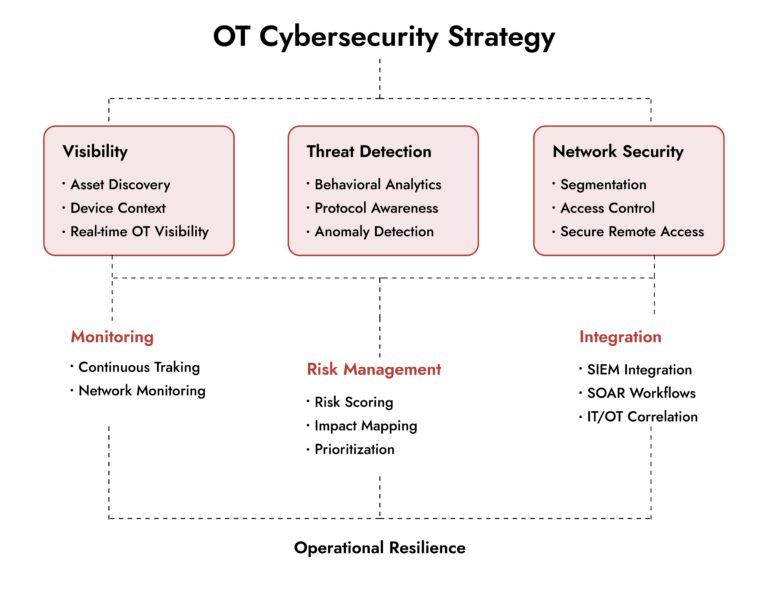
How the Best Cybersecurity for Operational Technology Networks Fits Together
Think of this as a working model, not a diagram. If one layer is weak, the entire OT security posture starts to crack.
If your current approach to the best cybersecurity for operational technology networks doesn’t connect these layers, you’re not securing OT, you’re managing isolated tools.
Missing visibility → You don’t know what to protect Weak detection → You’ll find threats too late No integration → Your response will always lag
Key Features to Look for in Best OT Security Tools
When evaluating specific OT security solutions and tools, these features separate mature platforms from immature ones.
1. Network-Level Visibility:
- Full packet capture and decoding for forensic investigation
- Session-level analysis (not just flow-level)
- Support for encrypted traffic analysis where possible
- Real-time network inventory updates
Behavioral Analytics for OT:
- Machine learning trained on OT communication patterns
- Ability to distinguish operational variance from attacks
- Predictive threat detection (threats that haven’t materialized yet)
- Correlation of network behavior with endpoint activity
OT-Specific Investigation Tools:
- Timeline reconstruction of attack progression
- Protocol-level forensics (what commands were executed? What parameters changed?)
- Lateral movement tracking across OT networks
- Evidence collection for incident response and forensics
Operational Excellence Features:
- Single-pane-of-glass investigation interface (no tool-switching)
- Alerts ranked by operational impact, not threat severity
- Integration with network segmentation tools
- Automated response workflows (isolation, blocking, notification)
Mistakes to Avoid When Choosing OT Security Companies
Even mature organizations get this wrong.
Watch for these pitfalls:
- Treating OT like IT
- Prioritizing compliance over operational risk
- Ignoring legacy systems
- Overloading teams with alerts
- Deploying intrusive tools that disrupt operations
The best cybersecurity for operational technology networks avoids these traps by design.
How to Compare OT Security Vendors Before You Buy
Not all OT cybersecurity solutions are built equally. Some focus on monitoring. Others claim visibility but lack depth.
Here’s how to evaluate effectively:
Signal vs Noise
- Can the system reduce false positives?
- Does it understand industrial behavior patterns?
Deployment Model
- Passive deployment preferred
- No operational downtime during rollout
Integration Capabilities
- Works with SIEM, SOAR, and NDR
- Supports unified visibility across IT and OT
Scalability
- Can handle large, distributed OT networks
- Supports multi-site industrial environments
The best cybersecurity for operational technology networks scales without complexity.
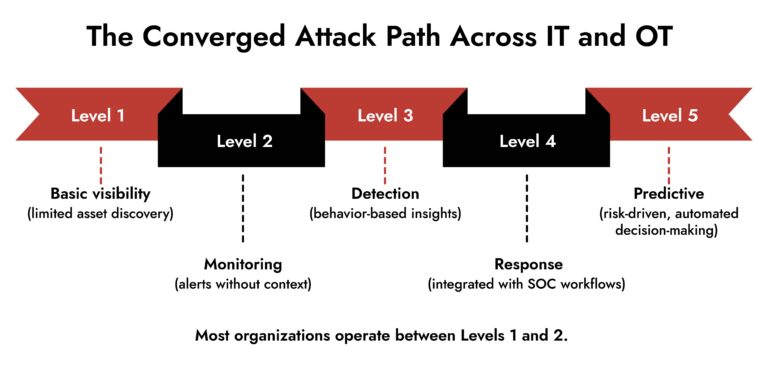
Where NetWitness Fits into OT Cybersecurity Strategy
Industrial security requires more than isolated OT tools. It demands integration across detection, investigation, and response.
Solutions like those from NetWitness focus on:
- Deep network visibility across IT and OT environments
- Advanced threat detection using behavioral analytics
- Packet-level inspection for forensic investigation
- Unified platform for detection, investigation, and response
What this enables:
- Faster identification of threats across OT networks
- Correlation between IT and OT attack vectors
- Stronger incident response workflows
This approach aligns with the growing need for convergence between IT security and OT cybersecurity solutions.
Conclusion
Industrial cybersecurity has moved beyond theoretical risk. It now directly affects uptime, safety, and revenue. The best cybersecurity for operational technology networks doesn’t rely on traditional controls. It builds visibility, understands industrial behavior, and detects threats before they disrupt operations.
Organizations that invest in the right OT cybersecurity solutions don’t just reduce risk. They gain operational confidence. If your current approach still treats OT as an extension of IT, it’s time to rethink the strategy.
Frequently Asked Questions
1. What key features should you look for in OT cybersecurity solutions?
The leading OT cybersecurity solutions provide extensive OT visibility, protocol-aware monitoring, immediate threat detection, segmentation features, and OT risk management instruments.
2. What is the importance of real-time monitoring in OT security?
Real-time monitoring in OT security is essential as it helps in detecting threats and anomalies immediately. In OT, any delay in recognizing threats and irregularities may result in outages.
3. What industries benefit most from OT cybersecurity solutions?
The industries that benefit most from OT cybersecurity solutions are manufacturing, energy, oil and gas, utilities, and transportation.
4. Why is scalability important in OT cybersecurity solutions?
OT environments involve various sites. Scalability is important in OT network security solutions because it does not increase complexity.
5. Why is asset visibility important in OT environments?
Asset visibility is important in OT environments because it gives an overall understanding of all devices in an OT network.
6. How do OT security tools differ from traditional IT security tools?
OT security tools differ from traditional IT security tools in that they use passive monitoring and protocol awareness. Traditional IT security tools use active controls.
Choose the Right OT Cybersecurity Solution with Confidence
- Evaluate platforms built for industrial environments and operational safety.
- Gain full visibility across IT, OT, and industrial control systems.
- Make smarter decisions with NetWitness OT security expertise.