Checklist for Choosing the Right Threat Detection and Response Solution
There are six key elements which need to be taken into account when assessing any threat detection and response capability. These elements include:
- The visibility of the solution within the enterprise;
- Threat detection and analysis;
- Hunting capabilities that help track the threat;
- An incident response process;
- The integration of the SOC toolset and scalability over time. Should all six elements be fulfilled by the solution under consideration, then it will deliver better threat detection and threat response for cybersecurity.
Introduction
Security teams today have tons of tools, telemetry, and alerts at their disposal. Yet, many orgs still can’t figure out if they can detect and prevent attacks before they seriously mess up business as usual.
The difficulty in answering this basic question keeps driving investments in Threat Detection and Response Solutions through the roof. Companies collect info from oodles of security sources, but lots of them still lack clear visibility into their cloud, endpoint, network, identity, and operational tech spaces.
Hackers take advantage of those visibility gaps. Ransomware groups, for example, don’t care where the alarms come from – endpoints, cloud workloads, or network gear. They only care if these alarms will confuse defenders enough to pull off the attack.
So, choosing the right Threat Detection and Response Solution is super important. You need a platform that boosts visibility, quickens investigations, aids in threat hunting, and bolsters incident responses. Otherwise, you could just be adding another useless dashboard to your toolkit.
This checklist zeroes in on the features that actually benefit modern security operations, helping you make a smarter decision.
Why Modern Threat Detection and Response Solutions Require a Different Evaluation Approach
Most businesses already have lots of security tools. The problem isn’t gathering data; it’s transforming that data into something useful.
According to the National Institute of Standards and Technology (NIST), monitoring, early detection, and timely response are critical aspects of cybersecurity.
As far as threat detection and response systems are concerned, what should be kept in mind is their effectiveness in real-life applications.
- Faster detection of threats
- Reduced analyst workload
- Improved investigation speed
- Better incident response coordination
- Stronger visibility across hybrid environments
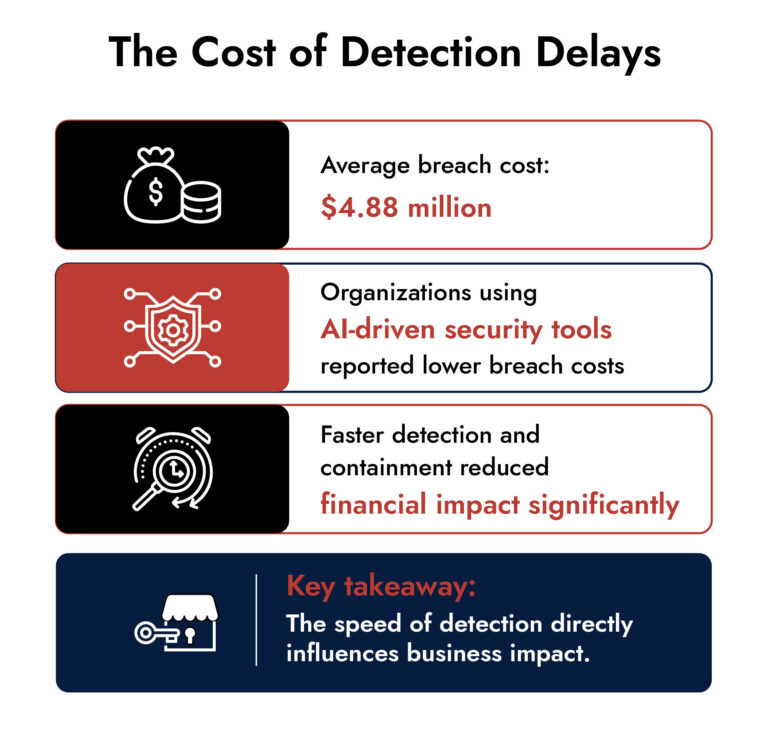
- Reduced dwell time for attackers
A platform should help teams answer:
- What happened?
- How did it happen?
- What assets were affected?
- What should happen next?
If the solution cannot answer those questions efficiently, it will struggle during a real incident.
Enterprise Checklist for Threat Detection and Response Solutions
1. Does the Platform Provide Enterprise Threat Detection Across the Entire Environment?
Visibility remains the foundation of effective security.
A solution should collect and correlate telemetry across:
- Networks
- Endpoints
- Cloud environments
- Identity systems
- Email infrastructure
- OT and IoT environments
- Security tools already in use
Many attacks move across multiple domains before triggering a response.
Here is an example:
The attacker gains access to credentials using phishing, moves laterally within the network, accesses cloud applications, and then steals data.
Without enterprise-level threat detection, organizations will not be able to see the full attack chain.
Evaluation Checklist
- Network visibility
- Endpoint telemetry
- Cloud workload monitoring
- Identity monitoring
- OT and IoT support
- Third-party integrations
2. Can the Threat Detection Platform Correlate Data Across Multiple Sources?
More data does not automatically create better security.
Effective threat detection platforms correlate activity from multiple sources and provide context around suspicious behavior.
Look for capabilities such as:
- Cross-domain analytics
- Behavioral analysis
- Threat intelligence enrichment
- Attack chain reconstruction
- Investigation timelines
Analysts should be able to move from alert to root cause without manually stitching together dozens of data points.
The faster teams understand attacker behavior, the faster they can contain it.
3. Does the Solution Support Unified Threat Detection?
Security teams often operate multiple tools with limited coordination.
A strong approach to unified threat detection combines data, analytics, investigations, and response workflows within a cohesive operational framework.
Benefits include:
- Fewer blind spots
- Reduced alert fatigue
- Improved prioritization
- Faster investigations
- Better analyst efficiency
When evaluating solutions, determine whether analysts can investigate network, endpoint, cloud, and user activity from a unified interface.
The ability to pivot across datasets can dramatically reduce investigation time.
4. How Strong are the Threat Hunting Tools?
Not every attack generates a high-confidence alert.
Many sophisticated adversaries intentionally operate below traditional detection thresholds.
This makes proactive hunting essential.
The best threat hunting tools allow analysts to:
- Search historical telemetry
- Investigate anomalies
- Build custom detection logic
- Validate indicators of compromise
- Analyze attacker behavior patterns
Consider how long telemetry remains accessible.
A platform that retains rich security data for extended periods provides greater investigative value than one that only stores limited event summaries.
Evaluation Checklist
- Historical visibility
- Threat hunting workflows
- Advanced search capabilities
- Custom detections
- Threat intelligence integration
5. Does the Solution Strengthen Incident Response Operations?
Detection without action creates risk.
Strong threat detection and response solutions streamline investigations and support rapid containment.
Look for capabilities that accelerate incident response, including:
- Case management
- Investigation workspaces
- Evidence collection
- Response orchestration
- Workflow automation
- Forensic analysis
During a ransomware incident, minutes matter.
Analysts should not waste time switching between disconnected systems while attackers continue moving through the environment.
The platform should help teams move naturally from detection to investigation to containment.
6. Can Analysts Investigate Beyond the Alert?
A security alert is only the beginning of an investigation.
Many organizations discover that their detection tools generate alerts effectively but provide limited context for understanding what actually happened. Analysts then spend valuable time switching between platforms, collecting evidence, and manually reconstructing events.
When evaluating threat detection and response solutions, determine whether the platform supports full incident investigation, not just alert generation.
Key capabilities to evaluate include:
- Full attack timeline reconstruction
- Historical telemetry access
- Session-level visibility
- Forensic investigation workflows
- Evidence collection and preservation
- Root cause analysis
- Cross-domain investigation across network, endpoint, cloud, and logs
For example, if an alert identifies suspicious credential use, analysts should be able to trace the complete attack path, understand lateral movement activity, identify affected systems, and determine whether data exfiltration occurred.
A strong threat detection platform helps security teams answer not only “What triggered the alert?” but also “What happened before, during, and after the attack?”
This distinction often separates alert-centric tools from true investigation platforms.
Additional Checklist Items
Under the checklist section, add:
✓ Attack timeline reconstruction
✓ Historical telemetry retention
✓ Forensic investigation capabilities
✓ Evidence preservation
✓ Cross-domain investigations
✓ Root cause analysis support
7. Does the Solution Improve Security Operations Center Performance?
Technology should make analysts more effective.
The best SOC threat detection tools help teams focus on high-priority threats rather than endless alerts.
Evaluate whether the platform improves:
- Mean Time to Detect (MTTD)
- Mean Time to Respond (MTTR)
- Alert prioritization
- Investigation efficiency
- Analyst productivity
A strong solution helps analysts spend less time managing alerts and more time investigating meaningful threats.
This is where modern security operations center tools create measurable value.
What to Look for in a Modern Threat Detection and Response Strategy
As businesses are increasingly in need of a holistic security solution that provides visibility across multiple dimensions (e.g., analytics, investigations, and responses), many organizations are turning to platforms like NetWitness Threat Detection and Response to streamline these various processes into one location. By gathering extensive telemetry across the networks, endpoints, cloud services, and logs from many different production sources, a platform such as this can provide a single view to enable comprehensive support for investigations and incident response as well as conducting threat hunting.
This method reduces operational silos and gives analysts the context they need. It helps them understand attacker movements across the company.
When assessing Threat Detection and Response Solutions, the idea isn’t about adding another security tool. Instead, it’s about enhancing overall security results.
Conclusion
Threat detection and response solutions abound in today’s marketplace, yet the difficulty lies within finding a perfect fit for your security operations unit.
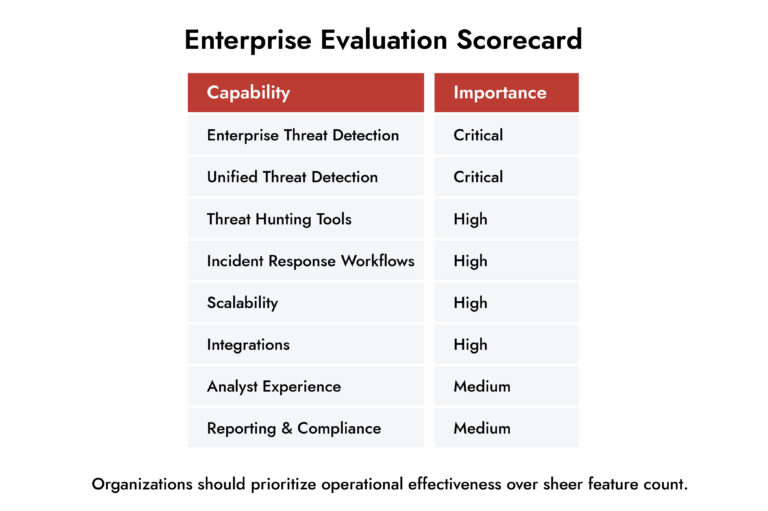
Security tools evaluated must include an area of focus on visibility, analysis, threat hunting, investigation, incident response, and scalability to deliver effective results.
Should organizations apply due diligence to these areas of focus, they will have the advantage of identifying and investigating threats more quickly than they would otherwise and responding to them in a timely fashion.
When it comes to selecting a solution, you should create an evaluation checklist, communicate with your security operations team, and test how well each solution you are evaluating responds to attack scenarios. Additionally, the solution you select should do more than simply alert you to the existence of threats.
The most effective threat detection and response solutions do more than generate alerts. They help analysts reconstruct attack timelines, investigate incidents using historical evidence, and understand the full scope of a compromise. As threats become more sophisticated, investigation capabilities are becoming just as important as detection accuracy.
Frequently Asked Questions
1. What are the best threat detection and response solutions for small businesses?
The best threat detection and response solutions for smaller businesses focus on being able to provide visibility, detection, and incident response while requiring minimal, if any, security staffing resources. Some parameters to look at in determining if the solution will fit their requirements are: scalability, ease of implementation, and ability to detect threats.
2. What are the top-rated threat detection and response platforms for enterprise security?
Most enterprise-level solutions allow for visibility to be gathered across the entire enterprise, which includes networks, endpoints, cloud computing, and logging. In addition, the majority of enterprise solutions use analytics and provide the ability to conduct threat hunting as well as have an incident response process built into the solution. Therefore, organizations can choose from any enterprise-level vendor based on their needs and do not have to rely on analyst reviews alone.
3. How do I choose a threat detection and response solution for healthcare organizations?
Healthcare organizations should evaluate threat detection and response solutions considering the visibility on clinical systems, compliance, incident response, threat hunting and hybrid environment capability.
4. What features should enterprises evaluate in threat detection platforms?
Enterprises should examine the following capabilities within threat detection platforms: i.e., enterprise threat detection; unified threat detection; threat intelligence integration; analytical capabilities; incident response workflows; tools for threat hunting; scalability; and the integration of existing security operations center tools.
5. Why is scalability important when choosing threat detection solutions?
The amount of telemetry collected by an organization continues to increase due to growth. Scalable Threat Detection and Response Solutions can help ensure continued visibility and investigation capabilities without having to make substantial adjustments to infrastructure.
6. How do cybersecurity detection and response platforms improve security operations?
Modern cyber detection and response systems enable organizations to correlate data from various sources and respond faster, thereby reducing the attacker dwell time.
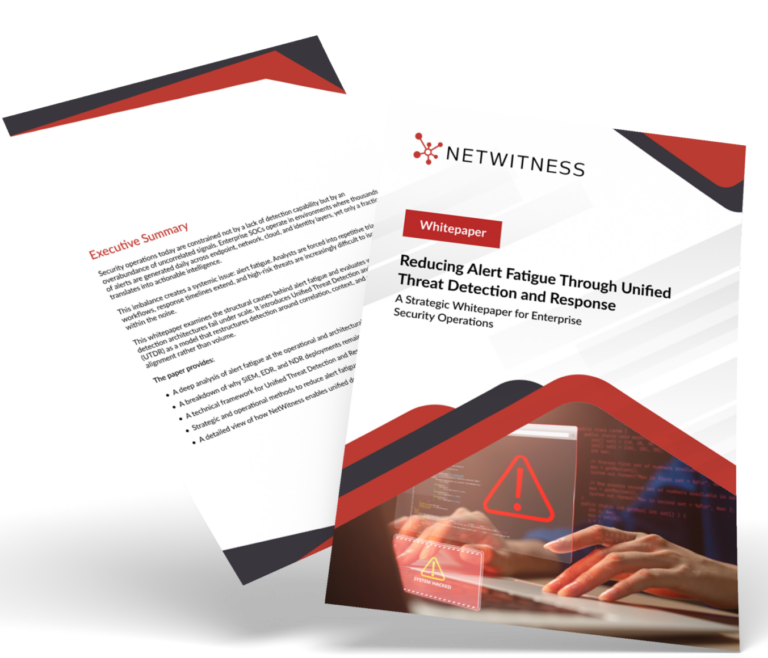
Explore how to reduce alert fatigue without compromising detection accuracy or SOC performance.
Inside you’ll find:
- Why traditional detection models create excessive alert noise
- How alert fatigue impacts SOC efficiency and analyst performance
- Practical strategies to reduce alert volume and improve accuracy
- Ways to align detection and response for faster outcomes