Choosing the Right Security Orchestration and Automation Tools: What Matters Most
SOAR tools provide the best benefits when they reduce analyst workload, streamline investigations, and ensure consistent threat response. The right SOAR tool is supposed to fit into the existing security framework, facilitate threat intelligence, automate mundane processes, and be scalable. This document will cover the critical elements in evaluating the tools, the typical mistakes made in choosing them, and the factors differentiating successful implementations from failed automation initiatives.
Introduction
All security teams face one problem – there are just too many alerts, too many tools, and not enough time.
Modern SOC teams receive thousands of incidents on a regular basis. Investigation of alerts, validation of threats, collection of evidence, coordination of response actions, and recording of results should be done by analysts. And when these activities require extensive manual work, even well-funded teams are unlikely to cope with.
This is why Security Orchestration and Automation tools have become essential components of contemporary security operations. It helps security teams to integrate technologies, automate routine activities, enrich their investigations, and speed up incident response while retaining visibility and control.
The need for automation will only increase over time. In its latest report titled, IBM states that organizations implementing extensive security AI and automation decrease data breach cost significantly compared to those with no automation at all. In turn, standards of incident response preparedness developed by bodies like NIST recommend using consistent incident response procedures.
Thus, there is little question about introducing security orchestration and automation tools into your SOC. The real issue is how to pick up the most suitable platform.
Why Security Orchestration and Automation Tools Matter for Modern SOCs
It is no longer enough for organizations to monitor their logs and investigate any alerts that come up with.
A modern SOC requires a combination of information coming from endpoints, networks, clouds, identities, threat feeds, and security analytics. Without proper orchestration, the analysis may be delayed because most of the time would be spent switching among the systems.
SOAR solutions enable the organization to overcome this challenge.
Key benefits include:
- Faster incident triage
- Reduced alert fatigue
- Consistent response procedures
- Improved analyst productivity
- Better threat intelligence integration
- Stronger compliance documentation
- Reduced mean time to detect (MTTD)
- Reduced mean time to respond (MTTR)
Instead of requiring analysts to manually gather evidence from multiple systems, a security orchestration platform can automatically collect and correlate relevant data before the investigation begins.
What Security Orchestration and Automation Tools Should Include
Not all SOAR tools deliver the same value.
Some focus heavily on workflow automation. Others emphasize investigation capabilities, threat intelligence, or case management. The best Security Orchestration and Automation Tools balance all of these functions.
Core Capabilities to Evaluate Security Orchestration and Automation Tools
Workflow Automation
Automation should eliminate repetitive tasks without removing analyst oversight where it matters.
Examples include:
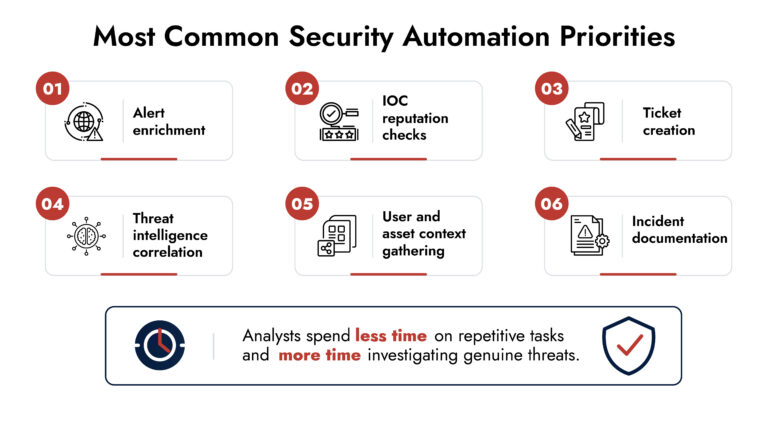
- Alert enrichment
- IOC validation
- Malware reputation checks
- User account verification
- Ticket creation
- Evidence collection
Security Orchestration
Cyber security orchestration enables coordinated actions across multiple technologies.
A mature platform should integrate with:
- SIEM platforms
- EDR tools
- NDR solutions
- Identity systems
- Cloud security services
- Threat intelligence platforms
- IT service management tools
Threat Intelligence Integration
Threat intelligence integration should enrich investigations automatically.
Look for platforms that can:
- Correlate indicators with threat feeds
- Prioritize high-risk alerts
- Map activity to known adversary techniques
- Provide contextual threat data
Case Management
Strong case management improves collaboration and investigation consistency.
Capabilities should include:
- Evidence tracking
- Analyst notes
- Workflow assignment
- Audit trails
- Investigation timelines
How to Evaluate Security Orchestration and Automation Tools Against SOC Requirements
A platform may look impressive in a demonstration but fail in production if it does not align with operational requirements.
Before evaluating vendors, identify the challenges that consume the most analyst time.
Questions worth asking include:
- Which workflows remain highly manual?
- Where do investigations slow down?
- Which tools create visibility gaps?
- What integrations are essential?
- How much customization will be required?
The best SOAR solutions solve specific operational problems rather than attempting to automate everything at once.
Evaluate Integration Depth, Not Just Integration Count
Many vendors advertise hundreds of integrations.
That number means little if the integrations only support basic data exchange.
Instead, evaluate whether the security automation solutions can:
- Execute response actions
- Exchange contextual data
- Support bidirectional workflows
- Scale across hybrid environments
A single deep integration often provides more value than dozens of superficial ones.
Assess Scalability Early
SOC requirements rarely stay static.
The Security Orchestration and Automation Tools selected today should support future growth in:
- Security data volume
- Cloud adoption
- Threat intelligence feeds
- Incident volume
- Compliance obligations
A platform that struggles at scale often creates new operational bottlenecks.
Security Orchestration and Automation Tools and Compliance Requirements
The role that automation plays in compliance that’s becoming critical.
Many compliance standards such as the NIST Cybersecurity Framework and ISO 27001 are requiring consistent and standardized procedures of responding to an incident and reporting on it. Other industry-related guidelines require similar procedures.
Automation and Security Orchestration tools provide the solution to this requirement:
- Recording response actions automatically
- Maintaining audit trails
- Standardizing investigation workflows
- Supporting evidence retention
- Improving reporting accuracy
When evaluating platforms, verify how compliance data is collected, stored, and reported.
Common Mistakes When Selecting SOAR Tools
Many organizations focus on features rather than operational outcomes.
That approach often leads to disappointing results.
Mistake #1: Prioritizing Automation Volume – More automated playbooks do not automatically mean better security. The goal is meaningful automation that reduces analyst effort while improving outcomes.
Mistake #2: Ignoring Analyst Experience – If analysts struggle to build workflows or investigate incidents, adoption suffers. Usability matters.
Mistake #3: Underestimating Integration Complexity – Complex environments require flexible integration capabilities. Evaluate implementation effort realistically.
Mistake #4: Focusing Only on Current Use Cases – SOC maturity evolves. Choose enterprise SOAR solutions that can support future requirements.
How NetWitness Supports Security Orchestration and Automation
Security teams require more than isolated automation. They need coordinated visibility, investigation, and response capabilities.
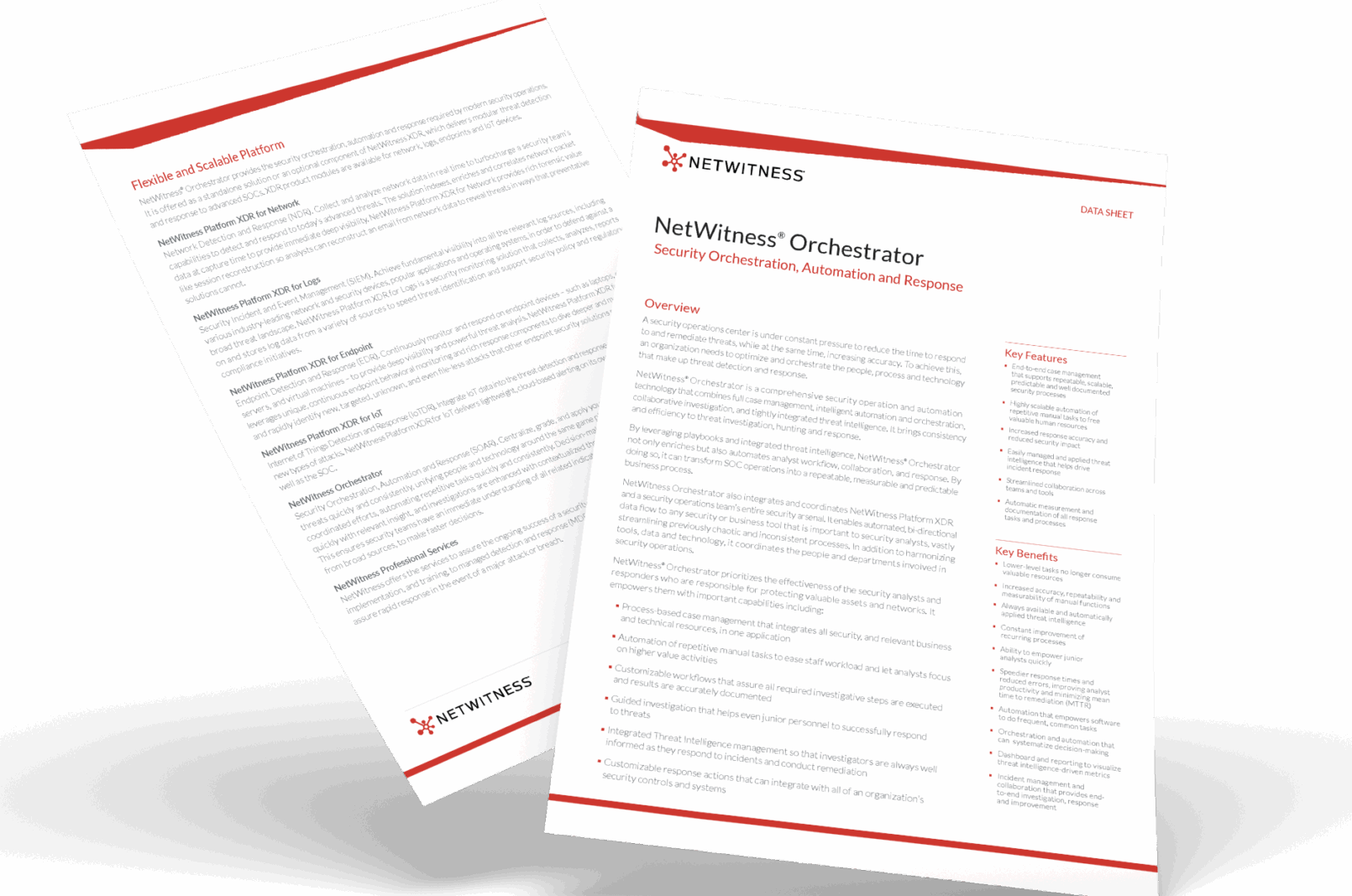
NetWitness addresses security orchestration through an approach that links security processes to advanced threat detection within network, endpoint, logging, and cloud environments. The orchestration and automation features provided by NetWitness will facilitate investigation, enrichment, automated action, and operation efficiency without compromising analysts’ control.
The following are some of the factors for companies looking for a security orchestration platform:
- Comprehensive support for integration
- Flexible automation workflows
- Threat intelligence integration
- Coordination of incident response
- Deployment of the solution at the enterprise level
A more productive implementation is possible if orchestration is integrated into the overall SOC process and not a standalone automation layer.
Conclusion
Decision for Security Orchestration and Automation Tools ultimately comes down to better security results rather than mere automation.
A good solution allows analysts to analyze things faster, more efficiently, and consistently. A good tool links technology and makes enrichments, fulfills the compliance requirements, and decreases friction in SOCs.
Taking into consideration that there are a lot of emerging threats and increasing pressure for SOCs to manage them all with their manpower, organizations who have invested in security orchestration will come out ahead when dealing with new threats.
In case your SOC is relying too much on manual processes, you should consider whether Security Orchestration and Automation Tools can bring some value to your SOC.
Frequently Asked Questions
1. What are the top security orchestration and automation tools used by enterprises?
Corporations usually consider integration features, automation capabilities, scalability, case management, and threat intelligence integration while selecting security orchestration and automation platforms. Selection criteria may vary based on factors like maturity level, technology stack, etc.
2. What are the core capabilities of security orchestration and automation platforms?
Core capabilities include workflow automation and security orchestration. They also include incident response automation and threat intelligence integration. Other features include case management, reporting, and integrations with security tools. These tools include SIEM, EDR, NDR, and cloud security platforms.
3. Which companies provide leading security orchestration and automation solutions?
Several cybersecurity vendors offer enterprise SOAR solutions. Organizations should assess platforms based on operational fit, integration depth, scalability, analyst usability, and support for existing security investments.
4. How do security orchestration and automation tools improve incident response times?
Security Orchestration and Automation helps to perform automated functions like alert enrichment, gathering evidence, indicator of compromise verification, and incident ticketing.
5. What features should I look for in a security orchestration and automation tool?
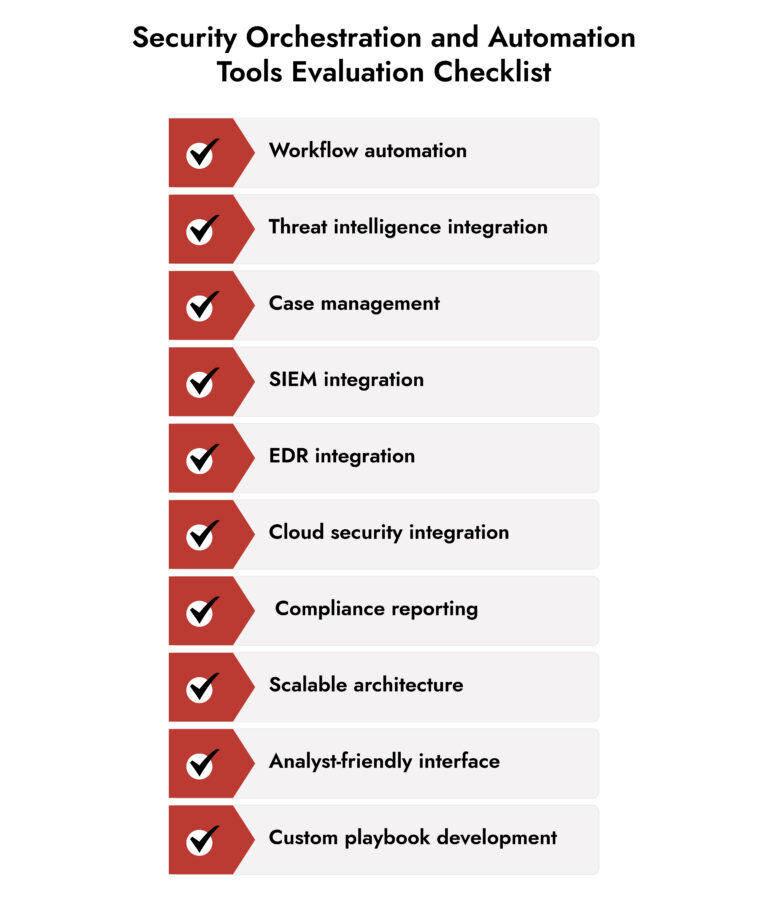
Look for workflow automation, threat intelligence integration, case management, cloud support, compliance reporting, custom playbook creation, API flexibility, and broad integration capabilities with existing security technologies.
6. Which security orchestration and automation platforms integrate well with cloud services?
Most modern SOAR platforms work with major cloud environments. They also connect to cloud-native security controls. They integrate with identity providers. They support cloud workload protection tools. Evaluate integration depth and automation capabilities before selection.
7. How do I evaluate security orchestration and automation tools for compliance requirements?
Consider audit logging and reporting capabilities, documentation support, evidence retention functionality, workflow reporting, and compliance with industry regulations and standards such as NIST and ISO 27001 frameworks.
Establish Incident Response consistency, speed, and scale with NetWitness® Orchestrator