There was a time when ransomware attacks followed a relatively predictable playbook.
Attackers gained access to a network, encrypted systems, displayed a ransom note, and demanded payment in exchange for a decryption key.
That model still exists, but it is no longer the primary threat.
Today’s ransomware operators have learned an uncomfortable truth: encryption alone is often insufficient to force payment. Organizations have improved backups, refined recovery procedures, and invested heavily in business continuity planning. As defenders became better at restoring systems, attackers adapted.
Modern ransomware groups are increasingly focused on something more damaging than encryption.
They are targeting recovery itself.
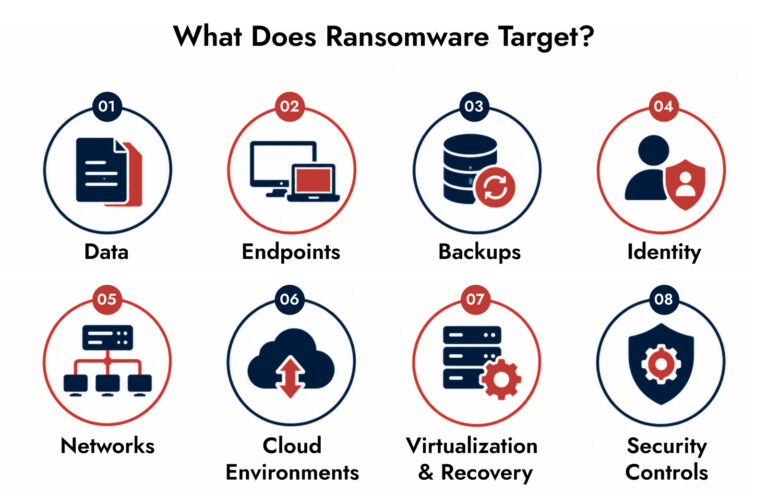
Recent incident response trend analysis notes that ransomware actors are increasingly attacking identity systems, virtualization infrastructure, and backup environments specifically to deny recovery options and maximize business disruption.
The objective is no longer simply locking files.
The objective is making recovery so difficult, expensive, and uncertain that payment appears to be the only viable path forward.
This shift makes cybersecurity awareness and ransomware attack preparedness important beyond simply knowing how ransomware spreads. Organizations also need to understand how attackers can interfere with the systems they depend on to recover.
The Evolution of Ransomware
The first generations of ransomware were largely technical attacks.
Success depended on infecting as many systems as possible and encrypting valuable data before defenders could respond.
Today’s attacks are operational campaigns.
Threat actors spend days or weeks understanding an organization’s environment before launching disruptive actions. During that time, they identify critical business systems, administrative accounts, backup infrastructure, cloud services, remote management tools, and disaster recovery capabilities.
When the attack finally becomes visible, it is often the final stage of a much larger operation.
Increasingly, ransomware attacks involve identity compromise, data theft, cloud platforms, third-party services, and multiple attack surfaces simultaneously. Modern incident response investigations frequently reveal activity spanning far beyond traditional endpoint encryption events. [live.paloa…tworks.com], [paloaltonetworks.com]
The ransomware note may be the first thing victims see.
It is rarely the first thing attackers do. That is why ransomware risk management needs to account for activity that occurs before encryption, not just the encryption event itself.
Why Encryption Is No Longer the End Game
Most organizations now understand the importance of backups.
Attackers understand that too.
If clean backups exist and can be restored quickly, the leverage created by encryption decreases significantly.
As a result, attackers have shifted their efforts toward increasing recovery costs and operational disruption rather than relying exclusively on locked files.
Many ransomware operations now combine:
- Data theft
- Extortion
- Destructive actions
- Credential abuse
- Infrastructure sabotage
- Recovery system disruption
This evolution reflects a broader reality within cybercrime.
The most profitable attacks are not necessarily those that cause the most technical damage.
They are the attacks that create the greatest business pressure.
Effective ransomware prevention therefore cannot stop at blocking malicious files. Ransomware mitigation also requires organizations to understand suspicious activity across identities, networks, endpoints, cloud environments, and recovery infrastructure.
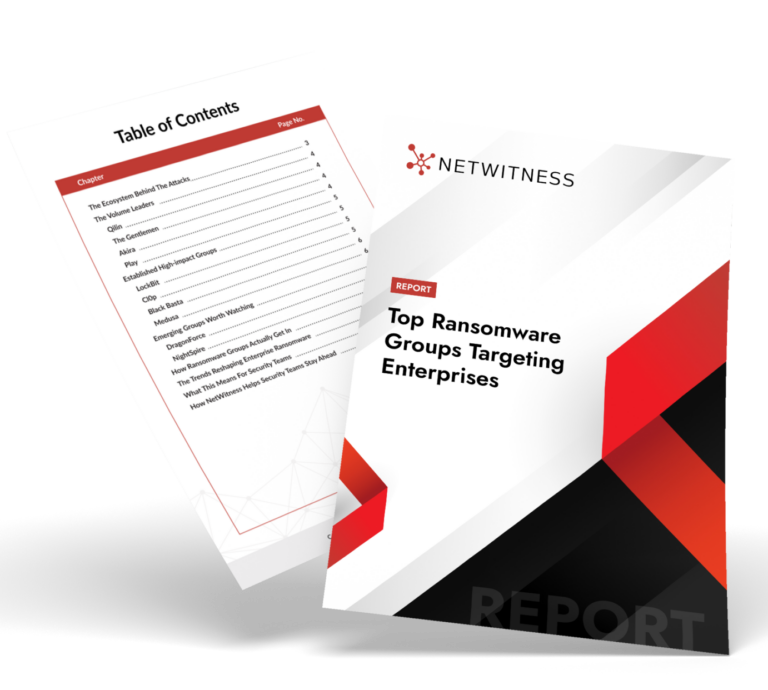
Understand today's most active ransomware groups, their tactics, and how to strengthen your defenses.
The New Targets: Backups, Identity, and Recovery Systems
Recovery depends on trust.
Organizations must trust their backups, trust their identities, trust their infrastructure, and trust the integrity of their environment.
Modern ransomware operators increasingly attack all four.
Backups remain a primary target because they represent the fastest path to recovery. Attackers actively search for backup servers, storage repositories, replication systems, and cloud backup accounts. If these assets can be deleted, encrypted, or corrupted, recovery becomes significantly harder.
Identity systems have emerged as another critical target.
Administrative credentials, privileged accounts, authentication services, and directory infrastructure often provide attackers with the access needed to disable security controls and interfere with recovery efforts. Recent industry reporting highlights identity compromise as a major factor across modern cyber incidents. [paloaltonetworks.com]
For attackers, compromise of identity systems creates a force multiplier.
For defenders, it creates uncertainty.
If identities cannot be trusted, nearly every recovery action becomes more difficult.
The Rise of Ransomware Recovery Denial Attacks
A growing number of ransomware campaigns appear designed around a simple principle:
Prevent recovery at every stage.
Rather than targeting production systems alone, attackers target the systems responsible for restoring production systems.
This may include:
- Backup infrastructure
- Disaster recovery environments
- Virtualization platforms
- Identity services
- Administrative workstations
- Security management platforms
The strategy is highly effective.
An organization that can restore operations in hours may refuse to negotiate.
An organization facing weeks of uncertainty may make different decisions.
Industry trend analysis increasingly identifies recovery-denial tactics as a defining characteristic of modern ransomware operations. Attackers continue expanding their focus beyond encryption toward operational disruption and prolonged recovery challenges.
Why Traditional Ransomware Recovery Strategies Are Failing
Many ransomware recovery plans were designed for equipment failures, natural disasters, or isolated technical outages.
They were not designed for intelligent adversaries actively attempting to sabotage recovery efforts.
Traditional assumptions often include:
- Backups remain trustworthy
- Administrative accounts remain secure
- Recovery systems remain untouched
- Documentation remains available
- Key personnel remain reachable
Ransomware operators increasingly challenge each of these assumptions.
The result is that recovery planning can no longer focus exclusively on technology.
Organizations must plan for the possibility that the recovery process itself becomes part of the attack surface.
This shift is forcing security and business leaders to rethink resilience strategies from the ground up.
Building Resilience Against Modern Ransomware
While ransomware tactics continue to evolve, the underlying objective remains consistent: create enough uncertainty and disruption to force business decisions under pressure.
Organizations should therefore evaluate resilience through a different lens.
Instead of asking:
“Can we restore our systems?”
A better question may be:
“Can we restore our systems if attackers deliberately target our recovery capabilities first?”
Key focus areas include:
- Recovery testing under realistic conditions
- Protection of backup and recovery infrastructure
- Identity security and privileged account management
- Crisis management planning
- Business continuity validation
- Cross-functional response exercises
The organizations that recover most effectively are often those that regularly validate these capabilities before an incident occurs.
The Future of Cyber Extortion
Ransomware’s future is unlikely to be defined by stronger encryption algorithms or more sophisticated malware.
It will be defined by the attacker’s ability to disrupt trust.
Trust in systems.
Trust in identities.
Trust in backups.
Trust in recovery itself.
As organizations improve defensive technologies, attackers will continue looking for ways to undermine the processes required to restore normal operations.
That makes resilience more important than ever.
Because in modern ransomware attacks, the real battle may not be about preventing encryption.
It may be about preserving the ability to recover.
Frequently Asked Questions
1. What is recovery-denial ransomware?
Recovery-denial ransomware refers to attacks that target recovery capabilities such as backups, administrative accounts, and disaster recovery infrastructure in addition to encrypting production systems. The goal is to make restoration significantly more difficult.
2. Why are attackers focusing on backups?
Backups reduce the effectiveness of ransomware. If organizations can rapidly restore systems, attackers lose leverage. As a result, backup infrastructure is often a primary target during ransomware campaigns.
3. Is data theft becoming more important than encryption?
In many incidents, yes. Attackers increasingly combine data theft and extortion with encryption or destructive actions to increase pressure on victims and create multiple avenues for monetization.
4. What is the biggest mistake organizations make when preparing for ransomware?
Many organizations test whether backups exist but fail to validate whether recovery processes would still function during an active attack that targets identities, administrators, and recovery infrastructure.
5. How should organizations measure ransomware readiness?
Organizations should evaluate their ability to detect attacks, protect recovery systems, secure privileged identities, maintain business continuity, and restore operations under realistic attack conditions rather than focusing solely on backup availability.
6. Why is ransomware recovery becoming more difficult?
Ransomware recovery is becoming harder because attackers are targeting backups, identity systems, virtualization platforms, and disaster recovery environments. This can leave organizations unable to trust or access the systems they need to restore operations, making ransomware incident response more complex.
7. What does it mean to make ransomware recovery impossible?
It means compromising or destroying the systems needed to restore operations. Attackers may encrypt backups, compromise privileged accounts, or disrupt recovery infrastructure so that even organizations with backups struggle to resume normal operations.
8. How can organizations protect backups from ransomware?
Organizations can protect backups by isolating them from production environments, restricting privileged access, securing backup accounts, and regularly testing restoration. These are essential ransomware best practices and part of effective ransomware protection.
9. How does network visibility help with ransomware resilience?
Network visibility helps security teams identify attacker activity before ransomware is deployed, including lateral movement, credential abuse, and suspicious data transfers. Earlier detection can give teams more time to contain the attack and protect recovery systems.
10. How does NetWitness support ransomware detection and recovery readiness?
NetWitness provides visibility across network, endpoint, and log data, helping analysts trace attacker activity, identify attack paths, and investigate the scope of an incident. This supports ransomware detection, ransomware response, and more informed recovery decisions.
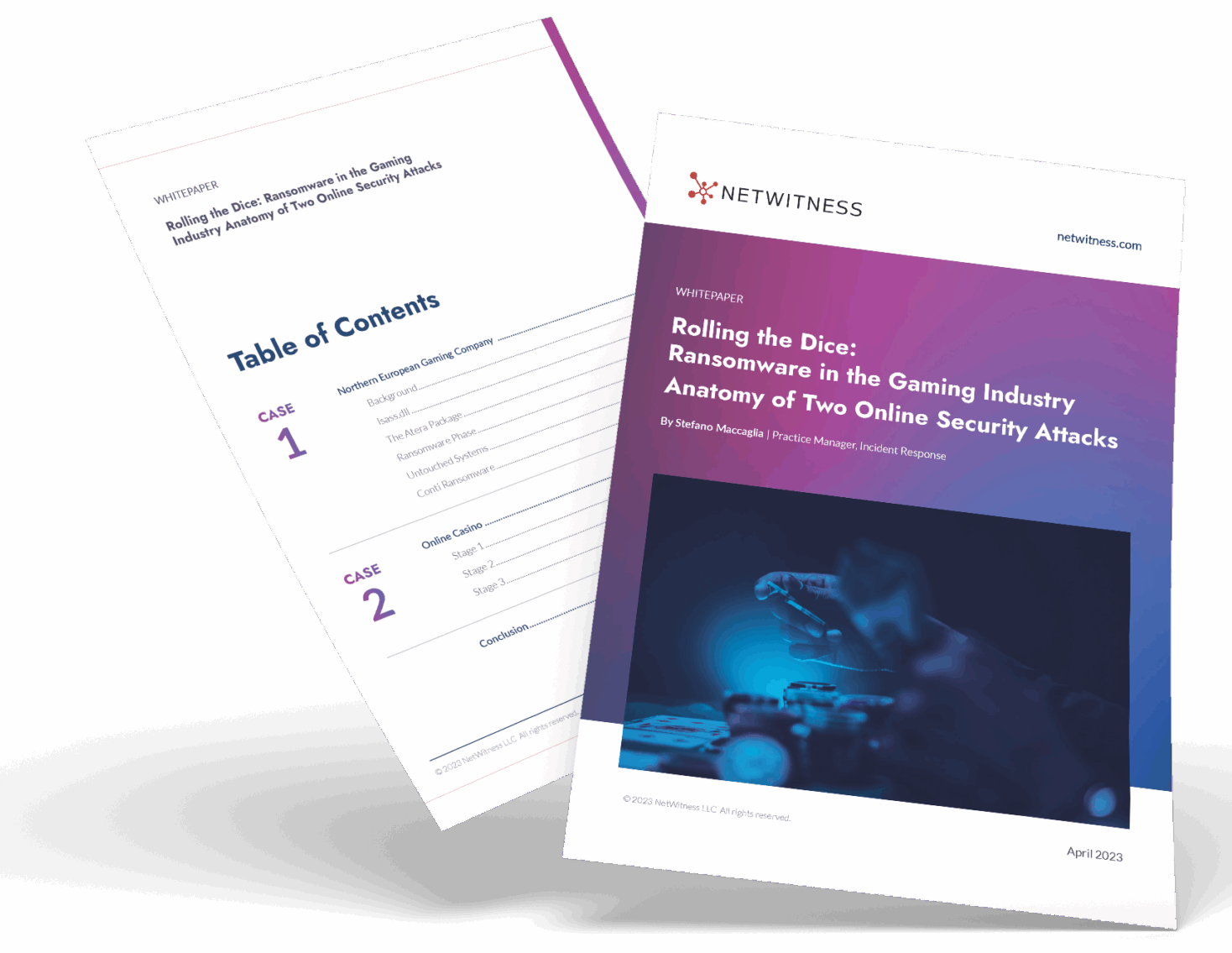
Rolling the Dice: Ransomware in the Gaming Industry
Discover how ransomware attacks hit gaming companies, how attackers moved laterally, and why network visibility is key. Learn real-world lessons and strategies to detect, respond, and protect critical systems.