What Is Packet Analysis and Network Packet Capture?
Packet analysis is the process of inspecting network data packets to understand traffic behavior, detect security threats, and troubleshoot performance issues.
It relies on network packet capture, where packet capturing tools in networks collect data packets in real time or store them for later analysis. Using packet analysis tools, security and IT teams can reconstruct sessions, identify anomalies, investigate incidents, and understand exactly how data moves across the network.
In short, packet capture provides the data, and packet analysis turns that data into insight.
When networks chatter, packet capture listens. It’s the tech wizardry that grabs and stores data zipping across your network – vital for security pros and IT gurus to troubleshoot threats or catch cyber sneaks red-handed. Think of it as a high-stakes digital stakeout where every byte could be a clue.
Dive in and you’ll get the lowdown on how this sleuthing plays out in real-time, snagging full packets for deep dives later. You’ll also meet some top-shelf tools like those NetWitness offers.
Catching wind of trouble? Packet analysis tools will arm you with insights into traffic patterns, letting you spot issues before they balloon into full-blown problems or track down culprits after an incident has rocked the boat.
The Fundamentals of Packet Capture and Network Packet Capture Tools
Understanding the intricacies of packet capture solutions is crucial for professionals striving to maintain network security and optimize performance. This method serves as a digital net, intercepting data packets that traverse the vast ocean of network traffic analysis. By examining these captured snippets, we glean invaluable insights into the health and safety of our cyber environments.
Key use cases of packet capture tools in networks include:
- Real-time detection of network anomalies or intrusions.
- Root cause analysis of performance degradation.
- Identification of bandwidth hogs or application misuse.
- Long-term forensic investigation after a cyber event.
- Compliance auditing and detailed traffic logging.
These capabilities make network packet capture solution an indispensable function in both security operations centers (SOCs) and IT teams managing large infrastructures.
What is Packet Capture?
Packet capture is akin to taking a snapshot of digital communications—a meticulous record of every byte that passes through a network link. These snapshots are stored in PCAP files, serving as detailed transcripts for later scrutiny by security teams or during performance monitoring sessions.
In essence, capturing packets allows us to freeze time and dissect complex interactions at our leisure—whether those be mundane exchanges between servers or nefarious attempts by attackers trying to sneak past defenses undetected.
How Does Packet Capture Work?
To start with, packet captures on any given network link require specialized p packet analysis software or hardware tools known commonly as packet sniffers. Such tools leverage promiscuous mode—a setting allowing them to eavesdrop unobtrusively on all traffic regardless of if it’s destined for them—and port mirroring techniques, which clone data from one route onto another where it can be inspected without interference.
This act isn’t merely passive observation; sophisticated filtering mechanisms hone in on specific IP addresses or protocols, ensuring only relevant information makes its way into the resulting PCAP file analysis—leaving out unnecessary noise while highlighting potential issues like malicious IPs attempting unsanctioned access.
NetWitness Packet Capture solution, an advanced platform designed for this purpose, exemplifies such technology prowess by providing unique capabilities beyond what traditional methods offer, including tailored analytics aimed directly at aiding incident response efforts.
Benefits of Full Packet Capture for Security and Performance
The value of full packet capture cannot be overstated when it comes to securing and optimizing network performance. Unlike partial packet captures that might only record headers or metadata, a full packet capture takes in every bit of data traversing the network. This means security teams have access to an exhaustive view—headers and payloads included—for analysis.
Common features of modern packet capture tools:
- Support for deep packet inspection and multi-protocol decoding.
- Real-time alerting and historical replay of traffic.
- Advanced filtering by IP, port, or protocol.
- Visualization dashboards for traffic flows.
- Integration with SIEM, UEBA, and SOAR platforms.
These features enhance the packet capture analysis workflow and allow teams to act quickly and confidently when threats arise.
Why Full Packet Capture Matters
The merits of full-fledged captures holding over their partial counterparts cannot be overstated. With complete visibility comes clarity. Each individual fragment tells part of a larger story when strung together, giving users the ability to trace the source, destination address, and other header fields associated within the context of the entire session rather than in piecemeal fashion.
A critical advantage fully encompasses the forensic value. In the aftermath of a breach, a comprehensive dataset offers unparalleled depths of investigation compared to pared-down versions. It presents a clear narrative of unfolding events, helping identify culprits behind security events. Moreover, even subtle anomalies stand out against the backdrop of normal activity, thus aiding swift remediation before damage spreads too far wide.
From advanced tools for network analysis to unique network challenges, NetWitness’s tools offer real-time visibility into network traffic, enabling security professionals to detect and respond to threats swiftly.
Benefits of Full Packet Capture
Benefits of full packet capture over partial collection:
- Complete visibility: Every packet—including payload—is recorded.
- Reliable forensic timeline: Ensures nothing is missed in post-breach investigation.
- Advanced pattern detection: Crucial for identifying zero-day attacks.
- Superior context: Understand the who, what, when, where, and how of data flows.
- Better compliance: Helps meet regulatory requirements for detailed audit trails.
Forensic Analysis Post-Incident
In the aftermath of a breach, time is often spent against investigators. Here’s where NetWitness, with its robust capabilities for full packet capturing, shines as an invaluable asset for critical incident response teams. The ability to look back at actual packets helps analysts uncover exactly what transpired on the network during an attack.
An accurate reconstruction relies heavily on PCAP files; these are like black boxes recording all traffic—including any malware communication or exfiltration attempts—that can provide vital forensic clues post-incident. Having both payload and complete metadata allows security experts not just to identify but also to understand sophisticated threat vectors.
But why does this matter? Well, imagine being able to pinpoint malicious IP addresses involved in an attack by analyzing saved packet captures from NetWitness—a task made more straightforward because you’re dealing with complete data sets rather than fragments that offer limited insights into potential breaches.
PCAP File: A Closer Look at Data Integrity
PCAP file is an important digital storage, and it captures all the bytes that pass through your network connection. Imagine it as the absolute reality, in-depth documentation which becomes inevitable during the exploration of anomalies or possible violations. Under the circumstances when the security of sensitive data is left on the line of fire, the availability of this kind of thorough records is not merely a luxury, but the key to thorough and efficient analysis.
In essence, the PCAP file is a digital snapshot, which captures by itself a snapshot of the complex details of data exchange in the network. This is not limited to the content of the communication but also important metadata like the source and destination addresses amongst other important header fields. These components are crucial in the accurate determination of patterns, be it related to performance problems or early discovering of zero-day exploits (vulnerability) which attackers will use prior to their being fully identified or repaired.
Grasping the complexity of the network action in detail is priceless especially when using the granular level of information provided by full packet capture. The source and destination addresses ensure that the analysts can trace the information flow through the network because they provide information as to the origin and destination of the data flows. Critical header fields provide more background information, helping to identify patterns of communication and possible deviation of the norm.
The use of PCAP files is indisputable even in high-stakes situations, when the breach of sensitive data might have had drastic implications. Such records are useful as a historical record of network transactions, as well as a forensic tool, enabling investigators to recreate the events, trace the steps of malicious events and comprehend the sequence of events that may result in a possible breach.
In addition, the capability to examine PCAP files will be an initiative to counter the unexpected attacks. Security professionals can then detect irregular activities or patterns of the contents of these files by closely examining the files to ascertain irregular behaviors or pattern that could translate to possible file security threats. This proactive strategy enables organizations to counter any vulnerability and possible exploits prior to their development into major security breaches hence limiting the effects on the data integrity and the data network security.
Altogether, the PCAP file is one of the guardians of data integrity that provides a painstaking record of network operations and becomes the key in the overall security analysis work. Its contribution to the digital footprint of network tasks is not only fruitful but also an essential element of reinforcing the defense and making digital security tools resistant to emerging threats.
Packet Capture Tools in Network Optimization
Full packet capture transcends its role as a security-centric tool and emerges as a versatile asset crucial for maintaining optimal network health. While its primary function is to thwart malicious activities and enhance cybersecurity, its utility extends into broader aspects of network management, troubleshooting, and performance optimization. This multifaceted capability is particularly exemplified through the integration of Network Performance Monitoring (NPM) tools, offering a comprehensive solution that goes beyond the realm of security concerns.
NPM tools, when coupled with full packet capture capabilities, play a pivotal role in addressing various network challenges. One notable area is the effective management of bandwidth, where organizations grapple with the constant demand for efficient data flow. By leveraging full packet capture, NPM tools provide accurate and real-time data on network traffic, enabling administrators to identify and troubleshoot bandwidth hogs. This functionality transforms what could be a nightmarish quest into a manageable task, allowing for precise identification of the sources and patterns contributing to bandwidth congestion.
Latency issues, another common challenge in network management, find resolution through the extensive capabilities of full packet capture coupled with NPM tools. The ability to capture and analyze complete data packets in real time facilitates the identification of bottlenecks and delays within the network. Armed with this information, administrators can proactively address latency problems, ensuring optimal performance and a seamless user experience.
How packet capturing tools improve network performance:
- Detect excessive latency and jitter in real-time.
- Pinpoint faulty devices or applications slowing the network.
- Validate Quality of Service (QoS) configurations.
- Reduce Mean Time to Resolution (MTTR) for network issues.
- Ensure optimized bandwidth utilization.
Continuous monitoring techniques, facilitated by the comprehensive data obtained through full packet capture, empower organizations to stay ahead of potential network issues. Commercial-grade solutions, including NetWitness and other providers, offer sophisticated tools that not only enhance security but also contribute to the overall health and efficiency of the network infrastructure.
In the realm of modern-day solution offerings, advanced features further augment the versatility of full packet capture. Filter options, for instance, provide users with the ability to tailor their surveillance according to specific needs. This might involve targeting certain protocol types or traffic patterns, allowing for a more focused and efficient analysis. Additionally, the implementation of measures designed to protect against known suspect IPs capable of launching Distributed Denial of Service (DDoS) attacks introduces an extra layer of security and control.
The integration of full packet capture into network management strategies transforms it into a proactive tool with applications far beyond security concerns. The ability to address bandwidth management, latency issues, and overall network optimization positions full packet capture as an indispensable asset for organizations seeking to maintain not only a secure but also a high-performing network infrastructure. The synergy of NPM tools and full packet capture offers a holistic approach to network management, ensuring organizations are well-equipped to navigate the complexities of the digital landscape.
Advanced Tools for Packet Analysis
NetWitness: A Leader in Network Security Monitoring
The landscape of network security is ever-evolving, and with it grows the need for sophisticated tools that can keep pace. Among these are packet capture utilities designed to capture, dissect, and analyze traffic flowing across networks.
NetWitness: A Leader in Network Security Monitoring
Distinguished as a powerhouse in this realm is NetWitness. Our tools extend beyond traditional data collection methods by offering real-time visibility into all corners of a digital environment. It doesn’t just stop at surface-level metrics; instead, NetWitness dives deep to give security teams insights needed to detect and thwart complex threats swiftly.
Why choose NetWitness for packet capture?
- Industry-grade full packet capture at scale.
- Granular metadata enrichment for faster triage.
- Seamless integration with SIEM, UEBA, and SOAR tools.
- Visibility across hybrid, on-prem, and cloud environments.
- Actionable insights through behavioral analytics.
A pivotal aspect that sets NetWitness apart from other solutions is its ability to reconstruct network sessions. By doing so, analysts can review full conversations between endpoints rather than mere snippets or abstracts of data—vital when piecing together an incident response puzzle.
Fueled by advanced heuristics and behavioral analytics, NetWitness stands tall as an ally in safeguarding critical infrastructure against both known vulnerabilities and emerging threats lurking within network packets.
See Every Threat, Stop Every Attack
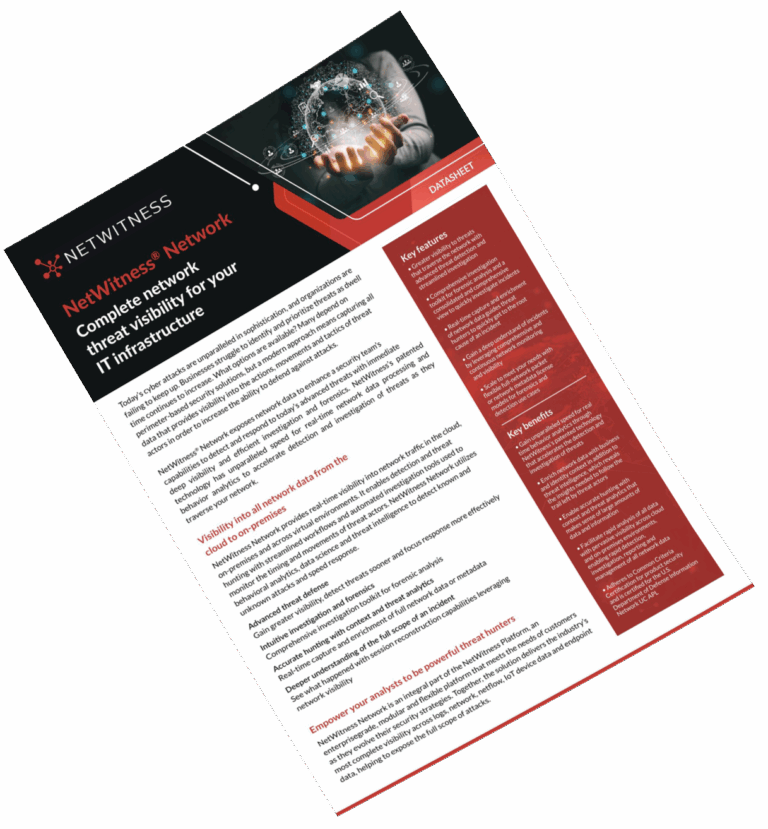
Gain complete visibility across cloud, on-prem, and virtual networks with NetWitness® Network Detection and Response. Detect and investigate threats faster with real-time analytics and forensic-grade session reconstruction.
NetWitness in Action: Reading and Reconstructing Packets
Interpreting the intricate details within a packet capture file is akin to decoding the DNA of network traffic. With NetWitness, this interpretation goes far beyond simple logging—it reconstructs entire sessions and timelines.
Here’s how NetWitness enhances network forensic analysis using packet capture:
- Session Reconstruction: NetWitness pieces together full conversations between endpoints, not just isolated packets. This gives security teams context, helping them identify what kind of data was exchanged, when, and between whom.
- Real-Time Logging: Whether it’s a benign handshake or malicious command-and-control traffic, NetWitness logs all interactions in real-time, enabling immediate threat detection.
- Deep Packet Inspection + Metadata Enrichment: NetWitness uses deep packet inspection to add important metadata to each packet. This includes application type, country of origin, and behavioral indicators. This helps analysts work more efficiently.
- Time-Synced Forensics: For post-incident review, teams can rewind and analyze PCAP File frame-by-frame, using NetWitness’s visual timelines to pinpoint anomalies, infiltration paths, and exfiltration attempts.
This isn’t just packet capture analysis. It’s a complete narrative of what your network experienced delivered by a platform designed for real-time visibility and forensic depth.
NetWitness: Bringing Full Packet Capture and DPI Together
NetWitness elevates traditional packet capture by layering deep packet inspection, behavioral analytics, and real-time metadata enrichment on top of full packet capture.
NetWitness Network provides complete network visibility into network activity with rapid, enriched insights.
- NetWitness UEBA identifies unknown and emerging threats using behavioral analytics applied to DPI data.
- NetWitness Endpoint reduces dwell time by extending monitoring beyond the network layer.
- NetWitness Orchestrator automates investigations and response actions using DPI-driven intelligence.
Together, these components form a powerful ecosystem that helps organizations detect threats earlier, understand incidents more clearly, and respond with precision.
Why Choose NetWitness
NetWitness stands out for its ability to give security teams deeper visibility and faster response across every layer of the environment.
It uses deep packet inspection to deliver richer, more accurate insight than traditional monitoring tools.
The platform unifies Network, UEBA, Endpoint, and Orchestrator to create a cohesive and reliable security ecosystem.
- NetWitness UEBA helps surface unknown and emerging threats quickly through advanced behavioral analytics.
- NetWitness Endpoint reduces dwell time by exposing activity that network-only solutions often miss.
- NetWitness Orchestrator accelerates response by automating actions driven by real DPI-based context.
Together, these capabilities help organizations detect threats earlier, act with confidence, and stay ahead of a constantly shifting threat landscape.
Conclusion
The journey through the intricacies of packet capture and NetWitness’s advanced cybersecurity offerings has illuminated the critical role these technologies play in securing networks and navigating the ever-evolving landscape of digital security. Packet capture serves as a digital net, capturing every byte of data flowing through the network, providing security professionals with essential tools for troubleshooting and detecting potential cyber threats.
The comprehensive benefits of full packet capture, explored in detail, underscore its unparalleled value in both security and network optimization. PCAP files, acting as meticulous records of network transactions, become indispensable tools for forensic analysis of post-incident. They not only serve as historical accounts but also as proactive measures against unforeseen threats, empowering organizations to address vulnerabilities before they escalate.
The discussion on NetWitness has showcased its leadership in network security monitoring, leveraging deep packet inspection to deliver real-time visibility and fortifying organizations against a broad spectrum of cyber threats. The synergy of NetWitness Network, UEBA, Endpoint, and Orchestrator forms a robust cybersecurity ecosystem, providing organizations with the tools needed to proactively defend against cyber threats and respond swiftly in the face of incidents.
In the art of reading packets effectively, NetWitness stands out as an ally, reconstructing network sessions and offering insights beyond surface-level metrics. NetWitness’s ability to unveil the profound insights embedded within binary exchanges positions it as a key player in safeguarding critical infrastructure.
As we navigate the digital environment, NetWitness’s commitment to utilizing deep packet inspection technology reinforces its position at the forefront of the cybersecurity domain. It not only equips organizations with powerful tools for defense but also ensures they remain agile in the face of evolving threats.
The exploration of packet capture and NetWitness’s offerings emphasizes the significance of staying vigilant, proactive, and technologically equipped in the dynamic realm of cybersecurity.
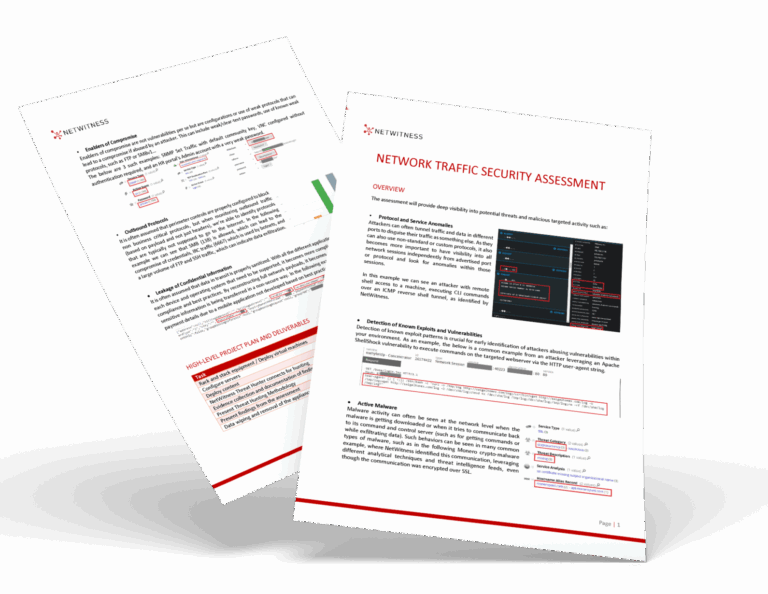
Strengthen Network Visibility with NetWitness® Network Traffic Security Assessment
-Uncover hidden threats through deep packet inspection and analytics.
-Identify vulnerabilities and blind spots before they’re exploited.
-Enhance detection and response with NDR-driven intelligence.