Introduction
Security Information and Event Management (SIEM) integrations are an essential part of any organization’s security arsenal. By connecting SIEM networking to other systems, organizations can ensure that all available logging data is monitored for potential threats and drive a more efficient response when a breach occurs. SIEM integrations also help organizations detect malicious activity quickly, allowing them to take action before damage is done.
In this article, we will explore the different types of SIEM integrations, as well as how they can be used to better protect your organization from cyberattacks and why you should contact NetWitness to get started. We’ll also talk about some challenges and benefits of SIEM integration, so if you’re ready to start, let’s dive into SIEM integrations at NetWitness.
What Is SIEM Integration?
SIEM integration is the process of connecting multiple security tools and data sources such as firewalls, endpoints, servers, and cloud platforms to a centralized SIEM platform. Proper SIEM integration strengthens overall SIEM security by enabling unified monitoring, analytics, and incident response. It also enhances SIEM network monitoring by giving security teams a single view of activity across the environment.
What Is SIEM Technology?
Security Information and Event Management software (SIEM technology) can be used to detect, investigate, respond to, and monitor security threats or suspicious activity. SIEM solutions allow organizations to collect log data from various sources such as network devices, applications, databases, operating systems, users, and other sources in order to analyze potential threats. This data can then be used to identify and respond to potential threats, as well as build a better understanding of the organization’s security posture.
Some threats that SIEM technology can help monitor throughout your organization are malware, ransomware, phishing, DoS (Denial of Service), and many more. As the digital age evolves, more cyberattacks are being introduced by threat actors. Using NetWitness as your cyber security provider will help you stay ahead of the attacks as they surface. Protecting your bottom line is our top priority. Keep reading to learn more about NetWitness and SIEM integration.
How Does SIEM Integration Work?
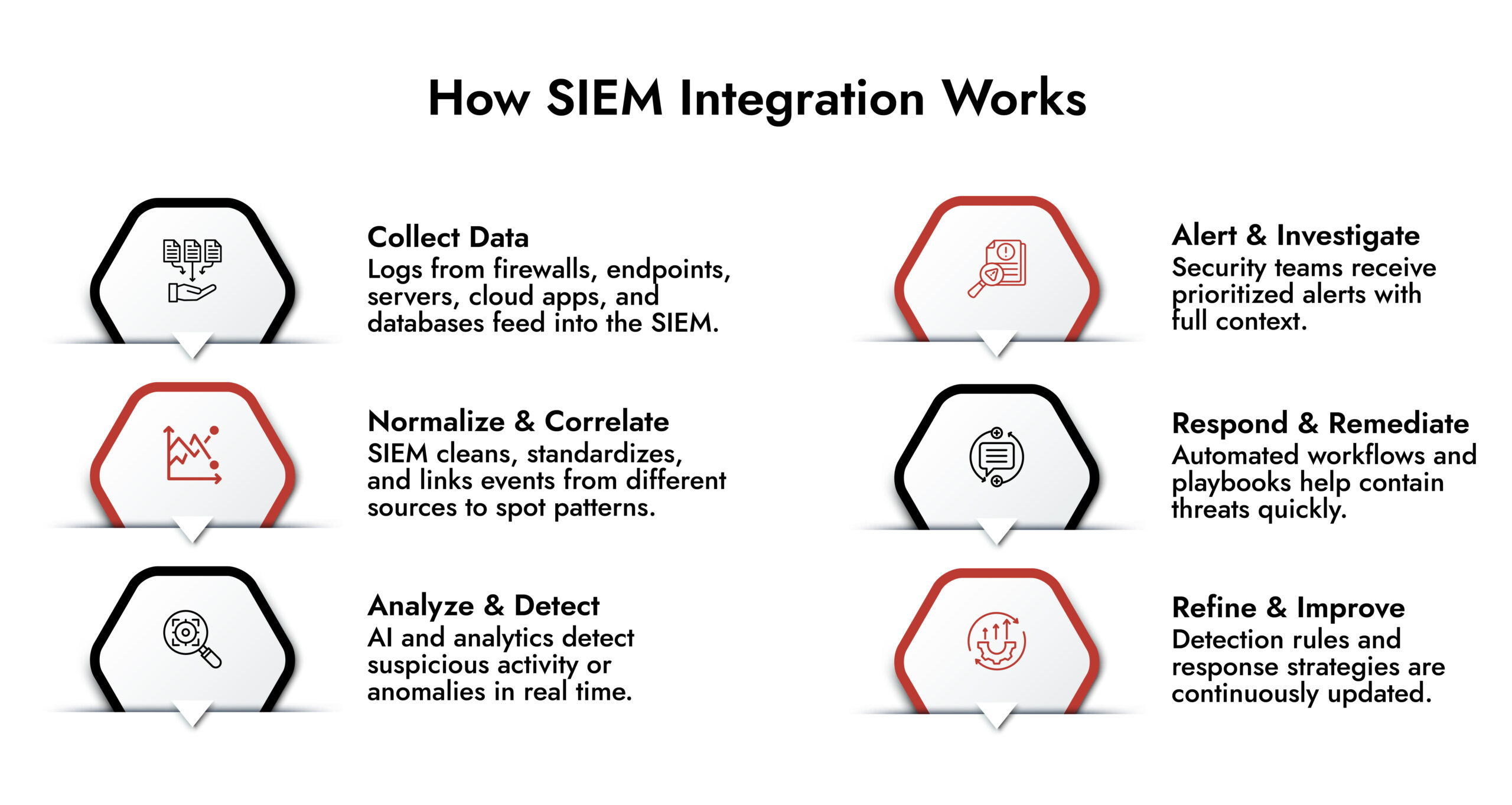
SIEM integration connects security tools, IT infrastructure, and data sources to a central platform for unified monitoring and threat detection. It allows security teams to correlate events across systems, identify suspicious activity, and investigate incidents using data from across the environment.
The process typically involves four steps:
- Data Collection: Collect logs and security events from firewalls, endpoints, servers, applications, and cloud environments.
- Data Normalisation: Standardise incoming data so events from different sources can be analysed together.
- Event Correlation and Analysis: Apply correlation rules, analytics, and behavioural detection to identify suspicious patterns and potential threats.
- Alerting and Response: Generate alerts and trigger investigation or response workflows, including automated actions through integrated security tools.
Effective SIEM integration gives security teams a more complete view of threats and helps them investigate incidents with greater context.
What Makes SIEM Integrations Essential to a Strong Security System?
SIEM integration is the process of connecting various security tools, systems, and data sources – like firewalls, endpoints, servers, and cloud platforms to a centralized SIEM platform for unified monitoring, analysis, and response. In today’s modern world, having a comprehensive security system is essential for businesses of all sizes. With the right security system in place, organizations can protect their assets and data from malicious activities such as hacking or theft. Moreover, by integrating the latest technology, such as SIEM integrations, businesses can improve the effectiveness of their security system and keep their operations running smoothly.
Types of SIEM Integrations
Organisations can implement different SIEM integration types depending on their infrastructure, security requirements, and operational workflows.
- SIEM, NDR and EDR Integration: Combines log data, network traffic analysis, and endpoint telemetry to help security teams investigate threats across multiple attack surfaces. Network Detection and Response (NDR) adds network-level evidence, while Endpoint Detection and Response (EDR) provides visibility into endpoint activity.
- SIEM and SOAR Integration: Connects SIEM alerts with Security Orchestration, Automation and Response (SOAR) workflows to automate repetitive investigation and response tasks.
- SIEM Cloud Integration: Collects security events from cloud platforms, workloads, SaaS applications, and cloud-native services to extend monitoring beyond on-premises infrastructure.
- Identity and Access Management Integration: Brings authentication events, access logs, and privilege-related activity into the SIEM to help detect compromised accounts and suspicious access.
- Firewall and Network Security Integration: Incorporates firewall, intrusion detection and prevention system (IDS/IPS), and other network security events to improve threat visibility and event correlation.
- Threat Intelligence Integration: Enriches security events with indicators of compromise, malicious IP addresses, suspicious domains, and other threat intelligence to support investigation and prioritisation.
Choosing the right integrations helps organisations correlate activity across systems instead of investigating isolated alerts.
How Does SIEM Integrations Help Secure Your Data?
SIEM integrations provide businesses with an additional layer of protection for their data. By connecting systems together to share information across different applications in real time, it becomes much harder for unauthorized entities such as hackers or criminals to access or manipulate sensitive information. By using the latest technologies like artificial intelligence (AI) and machine learning (ML), organizations can improve their security systems and stay updated on emerging threats.
Advanced Detection Capabilities
Another benefit of implementing a comprehensive security system with SIEM integrations is the advanced detection capabilities it provides. By connecting existing systems together into a single platform, businesses can leverage powerful analytics tools to detect potential threats before they become an issue. For example, if there is suspicious activity on one system or application, responders in the security operations center (SOC) can be alerted immediately.
What Can SIEM Integrations Do?
SIEM software solutions are used to provide visibility across the environment to detect cyber threats and to maintain the operational health of systems. It leverages log management capabilities and techniques to detect anomalies within your environment that could signify malicious activity.
1. Log Management – Log management is the process of collecting log-based data from various sources within a system in order to identify potential security risks or incidents. This is a core capability of SIEM networking and allows real-time monitoring and audit trail creation.
2. SIEM Network Monitoring and Analysis – SIEM network monitoring allows organizations to track network activity in real time and understand traffic behavior across the environment.
3. Endpoint Detection and Response (EDR) Integration – Endpoint detection and response visibility becomes more powerful when endpoint telemetry is brought into a SIEM integration.
4. User and Entity Behavior Analytics (UEBA) – UEBA within SIEM uses machine learning models to identify anomalous behavior and accelerate investigation timelines.
5. Event Correlation – Event correlation connects activity across multiple systems to identify threats that would otherwise remain hidden, a core strength of SIEM integrations.
6. Intrusion Detection and Prevention – IDS and IPS SIEM integrations provide early warning and prevention of unauthorized access attempts.
SIEM integrations are essential for keeping networks secure from potential cyber threats by leveraging connections with log management, network monitoring and analysis, event correlation, and intrusion detection and prevention solutions. By understanding how each type of integration works together, security professionals, IT administrators, and tech startups will be able to better protect their systems against malicious actors who are looking to gain unauthorized access or cause harm through other means. With SIEM integrations in place, organizations will have peace of mind knowing their networks are safe from harm while still being able to keep up with the ever-changing landscape of cyber threats out there today.
What Are the Key Benefits of SIEM Integrations?
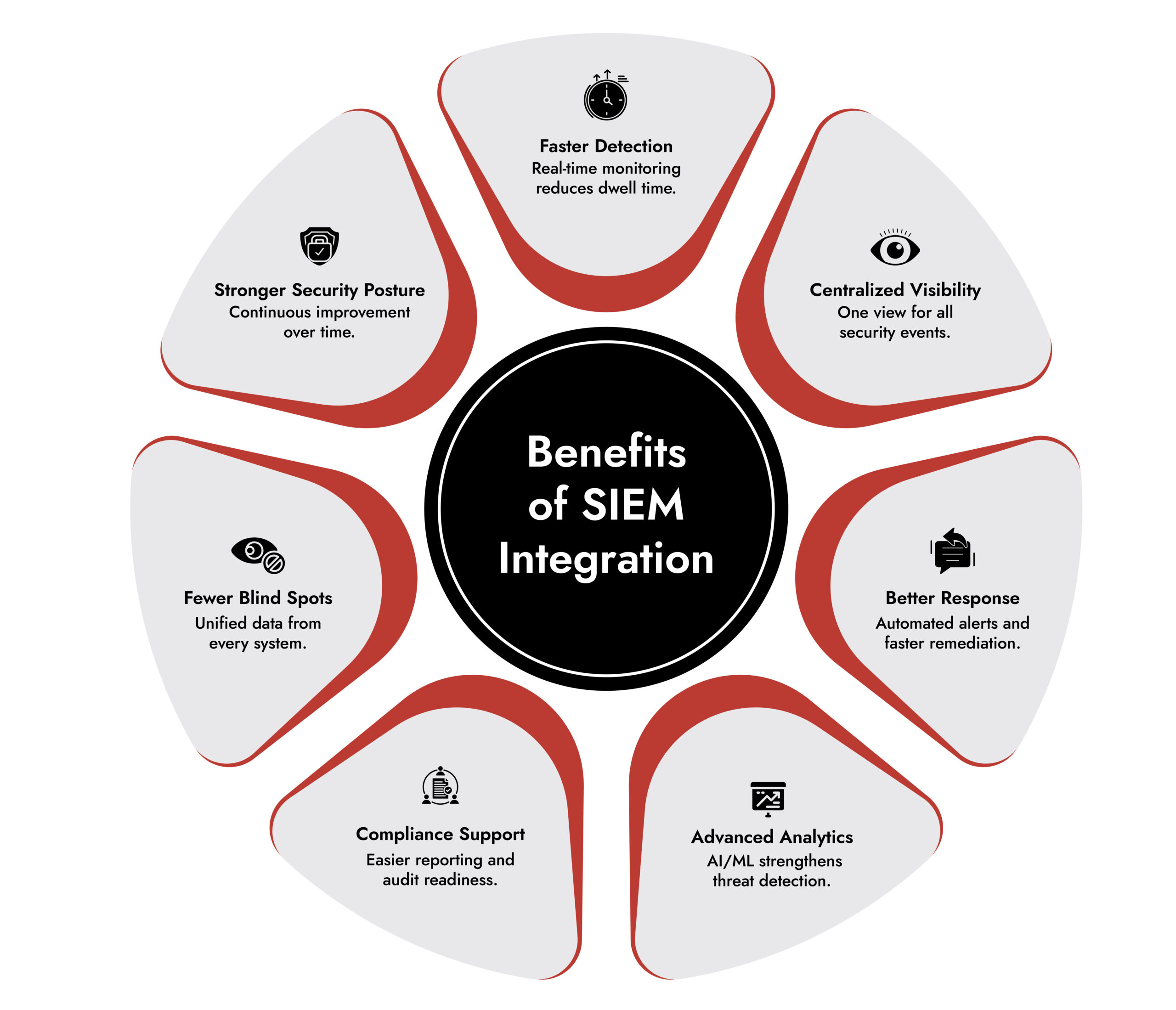
For any business to succeed in the digital age, it must have a robust security infrastructure in place. One of the most important tools for achieving this is SIEM. SIEM integrations with other tools in your security arsenal are designed to provide organizations with increased visibility into their overall security posture as well as improved incident response times. In this section, we will discuss some of the key benefits that SIEM integrations have to offer.
1. Improved Incident Response Times
One of the primary benefits of SIEM integrations is improved cyber incident response times. By having an integrated platform that can quickly detect and respond to potential threats, organizations can drastically reduce the amount of time it takes to detect and respond to incidents and minimize the damage caused by them.
2. Increased Visibility into Security Events
Another benefit of SIEM integration is increased visibility into security events. By integrating multiple sources of data, such as log files from systems, applications, databases and other sources, organizations gain a comprehensive view of their environment, which helps them identify potential threats more quickly and accurately. Having this level of visibility also allows organizations to prioritize security incidents based on their severity so they can address the most urgent ones first.
In short, SIEM integrations provide businesses with improved incident response times, increased visibility into security events, and automation of various security processes and responsibilities, which ultimately leads to a more secure environment for your organization. If you are looking for ways to strengthen your organization’s cybersecurity posture, then consider investing in an integrated SIEM solution. It could be just what you need.
Introduction
Security Information and Event Management (SIEM) integrations are an essential part of any organization’s security arsenal. By connecting SIEM networking to other systems, organizations can ensure that all available logging data is monitored for potential threats and drive a more efficient response when a breach occurs. SIEM integrations also help organizations detect malicious activity quickly, allowing them to take action before damage is done.
In this article, we will explore the different types of SIEM integrations, as well as how they can be used to better protect your organization from cyberattacks and why you should contact NetWitness to get started. We’ll also talk about some challenges and benefits of SIEM integration, so if you’re ready to start, let’s dive into SIEM integrations at NetWitness.
What Is SIEM Integration?
SIEM integration is the process of connecting multiple security tools and data sources such as firewalls, endpoints, servers, and cloud platforms to a centralized SIEM platform. Proper SIEM integration strengthens overall SIEM security by enabling unified monitoring, analytics, and incident response. It also enhances SIEM network monitoring by giving security teams a single view of activity across the environment.
What Is SIEM Technology?
Security Information and Event Management software (SIEM technology) can be used to detect, investigate, respond to, and monitor security threats or suspicious activity. SIEM solutions allow organizations to collect log data from various sources such as network devices, applications, databases, operating systems, users, and other sources in order to analyze potential threats. This data can then be used to identify and respond to potential threats, as well as build a better understanding of the organization’s security posture.
Some threats that SIEM technology can help monitor throughout your organization are malware, ransomware, phishing, DoS (Denial of Service), and many more. As the digital age evolves, more cyberattacks are being introduced by threat actors. Using NetWitness as your cyber security provider will help you stay ahead of the attacks as they surface. Protecting your bottom line is our top priority. Keep reading to learn more about NetWitness and SIEM integration.
How Does SIEM Integration Work?
SIEM integration connects security tools, IT infrastructure, and data sources to a central platform for unified monitoring and threat detection. It allows security teams to correlate events across systems, identify suspicious activity, and investigate incidents using data from across the environment.
The process typically involves four steps:
- Data Collection: Collect logs and security events from firewalls, endpoints, servers, applications, and cloud environments.
- Data Normalisation: Standardise incoming data so events from different sources can be analysed together.
- Event Correlation and Analysis: Apply correlation rules, analytics, and behavioural detection to identify suspicious patterns and potential threats.
- Alerting and Response: Generate alerts and trigger investigation or response workflows, including automated actions through integrated security tools.
Effective SIEM integration gives security teams a more complete view of threats and helps them investigate incidents with greater context.
What Makes SIEM Integrations Essential to a Strong Security System?
SIEM integration is the process of connecting various security tools, systems, and data sources – like firewalls, endpoints, servers, and cloud platforms to a centralized SIEM platform for unified monitoring, analysis, and response. In today’s modern world, having a comprehensive security system is essential for businesses of all sizes. With the right security system in place, organizations can protect their assets and data from malicious activities such as hacking or theft. Moreover, by integrating the latest technology, such as SIEM integrations, businesses can improve the effectiveness of their security system and keep their operations running smoothly.
Types of SIEM Integrations
Organisations can implement different SIEM integration types depending on their infrastructure, security requirements, and operational workflows.
- SIEM, NDR and EDR Integration: Combines log data, network traffic analysis, and endpoint telemetry to help security teams investigate threats across multiple attack surfaces. Network Detection and Response (NDR) adds network-level evidence, while Endpoint Detection and Response (EDR) provides visibility into endpoint activity.
- SIEM and SOAR Integration: Connects SIEM alerts with Security Orchestration, Automation and Response (SOAR) workflows to automate repetitive investigation and response tasks.
- SIEM Cloud Integration: Collects security events from cloud platforms, workloads, SaaS applications, and cloud-native services to extend monitoring beyond on-premises infrastructure.
- Identity and Access Management Integration: Brings authentication events, access logs, and privilege-related activity into the SIEM to help detect compromised accounts and suspicious access.
- Firewall and Network Security Integration: Incorporates firewall, intrusion detection and prevention system (IDS/IPS), and other network security events to improve threat visibility and event correlation.
- Threat Intelligence Integration: Enriches security events with indicators of compromise, malicious IP addresses, suspicious domains, and other threat intelligence to support investigation and prioritisation.
Choosing the right integrations helps organisations correlate activity across systems instead of investigating isolated alerts.
How Does SIEM Integrations Help Secure Your Data?
SIEM integrations provide businesses with an additional layer of protection for their data. By connecting systems together to share information across different applications in real time, it becomes much harder for unauthorized entities such as hackers or criminals to access or manipulate sensitive information. By using the latest technologies like artificial intelligence (AI) and machine learning (ML), organizations can improve their security systems and stay updated on emerging threats.
Advanced Detection Capabilities
Another benefit of implementing a comprehensive security system with SIEM integrations is the advanced detection capabilities it provides. By connecting existing systems together into a single platform, businesses can leverage powerful analytics tools to detect potential threats before they become an issue. For example, if there is suspicious activity on one system or application, responders in the security operations center (SOC) can be alerted immediately.
What Can SIEM Integrations Do?
SIEM software solutions are used to provide visibility across the environment to detect cyber threats and to maintain the operational health of systems. It leverages log management capabilities and techniques to detect anomalies within your environment that could signify malicious activity.
1. Log Management – Log management is the process of collecting log-based data from various sources within a system in order to identify potential security risks or incidents. This is a core capability of SIEM networking and allows real-time monitoring and audit trail creation.
2. SIEM Network Monitoring and Analysis – SIEM network monitoring allows organizations to track network activity in real time and understand traffic behavior across the environment.
3. Endpoint Detection and Response (EDR) Integration – Endpoint detection and response visibility becomes more powerful when endpoint telemetry is brought into a SIEM integration.
4. User and Entity Behavior Analytics (UEBA) – UEBA within SIEM uses machine learning models to identify anomalous behavior and accelerate investigation timelines.
5. Event Correlation – Event correlation connects activity across multiple systems to identify threats that would otherwise remain hidden, a core strength of SIEM integrations.
6. Intrusion Detection and Prevention – IDS and IPS SIEM integrations provide early warning and prevention of unauthorized access attempts.
SIEM integrations are essential for keeping networks secure from potential cyber threats by leveraging connections with log management, network monitoring and analysis, event correlation, and intrusion detection and prevention solutions. By understanding how each type of integration works together, security professionals, IT administrators, and tech startups will be able to better protect their systems against malicious actors who are looking to gain unauthorized access or cause harm through other means. With SIEM integrations in place, organizations will have peace of mind knowing their networks are safe from harm while still being able to keep up with the ever-changing landscape of cyber threats out there today.
What Are the Key Benefits of SIEM Integrations?
For any business to succeed in the digital age, it must have a robust security infrastructure in place. One of the most important tools for achieving this is SIEM. SIEM integrations with other tools in your security arsenal are designed to provide organizations with increased visibility into their overall security posture as well as improved incident response times. In this section, we will discuss some of the key benefits that SIEM integrations have to offer.
1. Improved Incident Response Times
One of the primary benefits of SIEM integrations is improved cyber incident response times. By having an integrated platform that can quickly detect and respond to potential threats, organizations can drastically reduce the amount of time it takes to detect and respond to incidents and minimize the damage caused by them.
2. Increased Visibility into Security Events
Another benefit of SIEM integration is increased visibility into security events. By integrating multiple sources of data, such as log files from systems, applications, databases and other sources, organizations gain a comprehensive view of their environment, which helps them identify potential threats more quickly and accurately. Having this level of visibility also allows organizations to prioritize security incidents based on their severity so they can address the most urgent ones first.
In short, SIEM integrations provide businesses with improved incident response times, increased visibility into security events, and automation of various security processes and responsibilities, which ultimately leads to a more secure environment for your organization. If you are looking for ways to strengthen your organization’s cybersecurity posture, then consider investing in an integrated SIEM solution. It could be just what you need.