What are the guidelines for choosing an IoT network service provider?
When choosing an IoT network service provider, businesses should look for strong IoT Network Security capabilities, real-time network monitoring, and advanced IoT threat detection. The right provider should offer unified security visibility across connected devices, strong network visibility, and scalable IoT security solutions that can grow with business needs.
It is also important to evaluate the provider’s IoT monitoring features, incident response capabilities, and overall IoT cybersecurity solutions. Providers that offer managed IoT security services, continuous device monitoring, and centralized security management can help organizations reduce risks, improve compliance, and strengthen overall IoT security.
The IoT Network Security Problem Nobody Talks About Honestly
Most enterprise networks today run thousands of connected devices. Industrial sensors, IP cameras, smart HVAC systems, medical equipment, manufacturing controllers. They all sit on the same network as your servers and laptops.
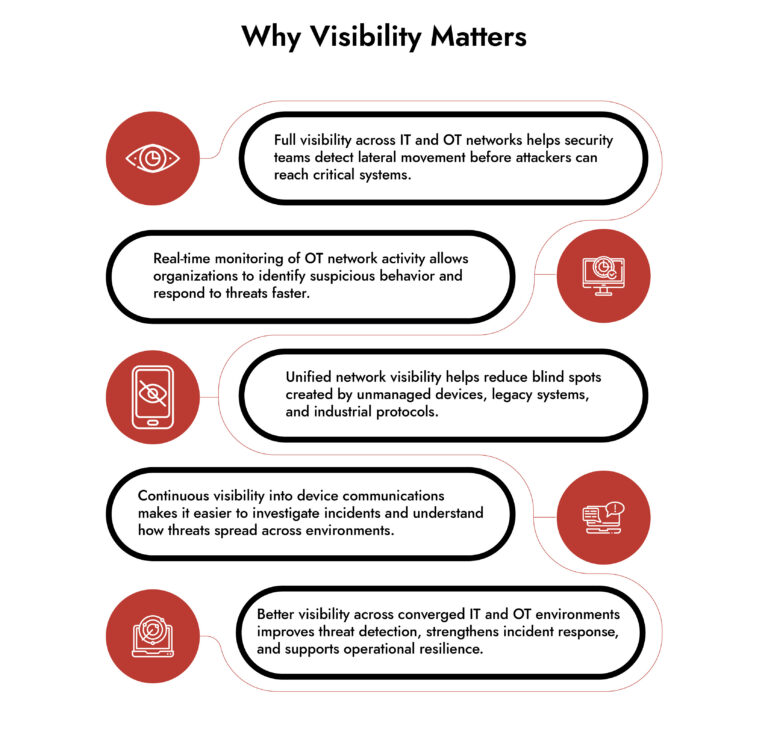
Here’s the problem: these devices are essentially invisible to most security tools.
They don’t support agents. They run outdated firmware. They communicate over protocols your SIEM was never built to parse. And because operational teams manage them instead of IT, security teams often have no idea what these devices are doing until something goes wrong.
The result:
- Massive blind spots across the network
- No behavioral baselines for connected devices
- Zero visibility into what protocols IoT devices are actually using
- No way to detect lateral movement originating from a compromised device
This is exactly why IoT network security has become one of the hardest problems in enterprise cybersecurity. And it’s why platforms like NetWitness exist.
Why Traditional Network Monitoring Tools Fail at IoT Network Security
Before getting into what NetWitness does, it’s worth understanding why most tools fall short.
Standard network monitoring tools were built for IT environments. They look for known signatures, monitor managed endpoints, and work best when devices can communicate their own status. IoT devices do none of that reliably. Modern IoT network security strategies require visibility beyond traditional endpoint monitoring because most connected devices operate outside standard security controls.
The specific gaps:
- Agent dependency: Most endpoint security tools require software installation. IoT devices don’t support it.
- Protocol blind spots: IoT devices use MQTT, CoAP, Modbus, BACnet. Legacy tools don’t parse these.
- No behavioral context: Without a baseline of normal device behavior, anomalies go unnoticed.
- Alert overload without context: Tools that do flag IoT activity rarely give analysts enough context to investigate.
What organizations actually need is a platform that sees every device, understands what normal looks like, and gives security teams real investigation capability when something goes wrong. That’s where NetWitness changes the equation.
How NetWitness Improves IoT Network Security?
NetWitness is a full-packet capture and network detection platform. It works at the network layer, which means it monitors traffic from every connected device regardless of whether that device supports any kind of security software.
For IoT network security, this is the foundational advantage.
Instead of relying on devices to report their own activity, NetWitness captures and inspects the actual network traffic. It parses that traffic against protocol libraries, applies behavioral analytics, and surfaces anomalies that indicate threats.
What this looks like in practice:
- A sensor that suddenly initiates outbound connections on unusual ports gets flagged immediately
- A device communicating with an external IP it has never contacted before triggers an alert
- Lateral movement from a compromised IoT device to internal systems gets detected in real time
- Command-and-control traffic hidden inside legitimate protocols gets identified through behavioral analysis
This approach to IoT monitoring works because it doesn’t depend on the device. It depends on the network, which means nothing slips through because a device couldn’t report it.
Unified Security Visibility: What It Actually Means
The phrase “unified security visibility” gets used a lot. Here’s what it actually means in the context of NetWitness.
The platform consolidates three types of telemetry into one place:
- Full-packet network data captured across IT and IoT environments
- Log data from infrastructure, firewalls, and security tools
- Endpoint data from managed devices across the network
This level of visibility is essential for organizations trying to strengthen IoT network security across distributed industrial and enterprise environments. For security analysts, this changes how investigations work. When a suspicious device is flagged, the analyst doesn’t have to pivot across four different dashboards to understand what happened. Everything is in one place, with full context.
Specific benefits for IoT environments:
- Device communication history: See every connection a device has made, who it talked to, and what data moved
- Cross-environment correlation: Link IoT device activity to events on managed endpoints or cloud systems
- Full-packet context on every alert: Every detection links back to the raw traffic that triggered it
- Behavioral baselining per device type: NetWitness learns what normal looks like for each category of device and flags deviations automatically
This level of network visibility is what separates a real IoT security solution from a tool that just generates more alerts.
IoT Threat Detection: How NetWitness Catches What Others Miss
Most monitoring platforms work from signature libraries. Known threat, known signature, alert fires. Novel threat or modified malware? It gets through.
NetWitness uses a layered detection approach:
- Signature-based detection for known threats and malware families
- Behavioral analytics to catch deviations from established device baselines
- Machine learning models that identify patterns consistent with attack behavior even without a known signature
- Custom detection logic using YARA rules and Lua scripts for environment-specific threats
This matters for IoT cybersecurity solutions because IoT-targeted malware evolves fast. Mirai variants, for example, blend into normal device traffic until they launch an attack. They won’t match a signature. But they will behave differently from a legitimate device, and NetWitness is built to catch that difference.
For organizations in regulated industries, this also means:
- Detecting threats targeting medical devices or industrial controllers specifically
- Building custom detections based on your actual device inventory
- Identifying threats that abuse legitimate IoT protocols to stay hidden
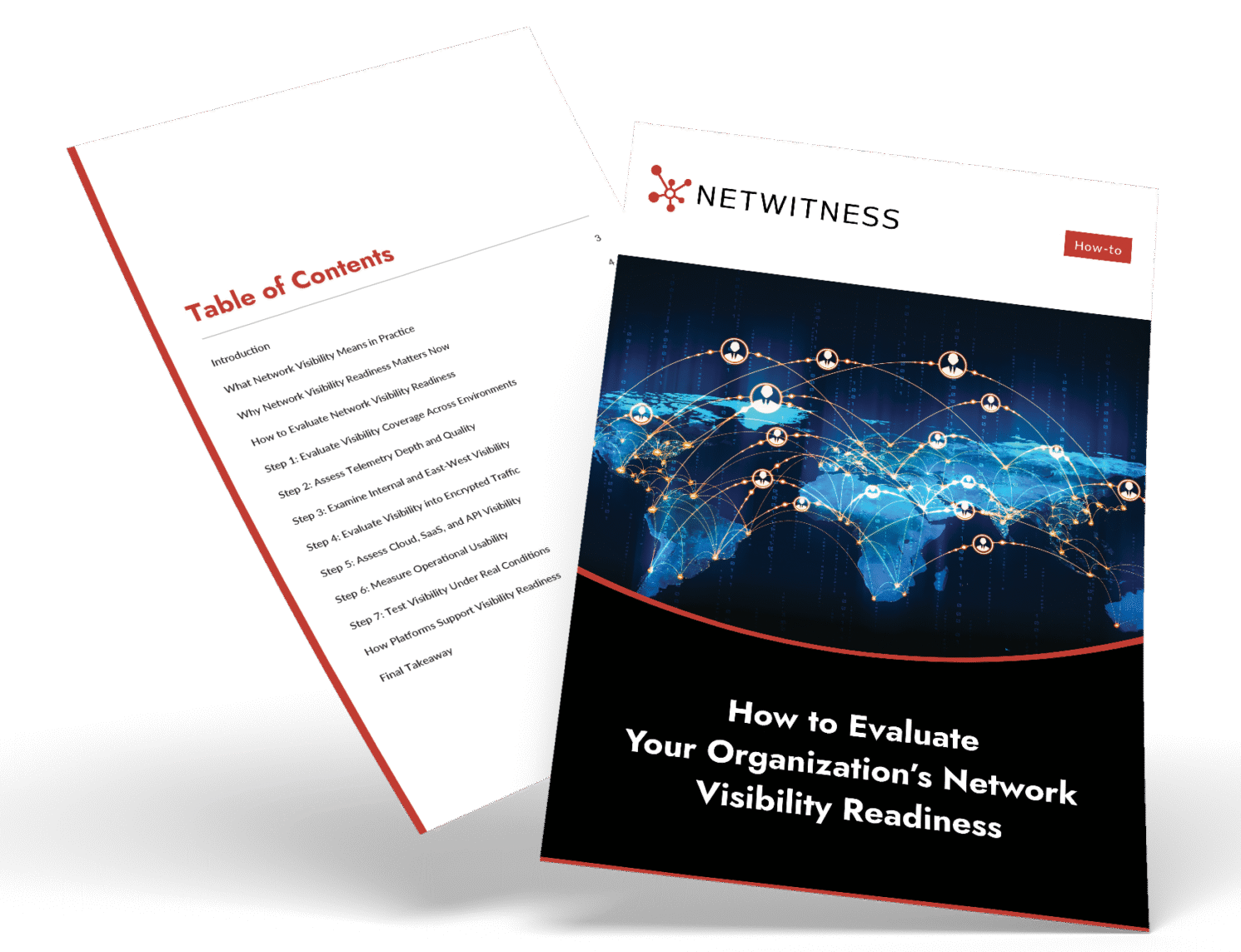
Network Visibility Readiness Guide
Discover how to identify blind spots, monitor traffic across cloud and on-prem environments, and strengthen detection with a practical 7-step evaluation framework. Download the guide to improve investigation speed and security clarity.
IoT Incident Response: From Alert to Answer Faster
Detecting a threat is only half the job. What happens after the alert matters just as much.
Most IoT security solutions hand you an alert and leave you to figure out the rest. NetWitness is built around investigation from the ground up.
When a device triggers a detection:
- Analysts get direct access to the raw packet data that generated the alert
- Full session reconstruction lets teams see exactly what communication took place
- Payload inspection reveals what data moved and where it went
- Timeline views show how an incident developed across minutes or hours
This investigation depth is what makes NetWitness genuinely useful as an IoT security service rather than just another monitoring tool. Security teams spend less time guessing and more time actually understanding what happened.
For compliance teams, this also creates a full-fidelity audit trail of IoT device activity. No manual log collection after the fact. No gaps in the record. Everything is captured automatically.
How NetWitness Integrates into Your Existing Security Stack
NetWitness isn’t asking you to rip and replace your current tools. It’s designed to slot into existing security architectures.
Integration points include:
- SIEM platforms: Feed enriched IoT telemetry into your existing SIEM for centralized correlation
- SOAR platforms: Trigger automated response playbooks when IoT threats are detected
- Threat intelligence feeds: Enrich detections with external context about known malicious IPs, domains, and indicators
- Network segmentation tools: Use NetWitness visibility data to inform and validate segmentation decisions
This makes NetWitness practical for organizations that already have security tooling in place. You’re adding visibility and investigation capability, not rebuilding your stack.
Who Should Be Looking at NetWitness for IoT Security?
NetWitness is a good fit for organizations that:
- Run large or complex IoT deployments across OT, healthcare, manufacturing, or smart building environments
- Have tried perimeter-based approaches and know they’re not getting real device visibility
- Need full-packet visibility for compliance or regulatory requirements
- Want investigation-grade context on IoT alerts, not just alert volume
- Are running hybrid environments where IT and OT networks converge
If your organization is still relying on firewall logs and basic network monitoring to cover IoT devices, you have gaps. The question is whether you find them before an attacker does.
The Bottom Line
IoT network security is genuinely hard because IoT devices operate outside the boundaries of traditional security tooling. They don’t run agents, they use obscure protocols, and they generate minimal native logging.
NetWitness strengthens IoT network security by moving the visibility layer to the network itself. Full-packet capture, behavioral analytics, unified telemetry, and investigation-grade context give security teams what they need to actually protect IoT environments instead of hoping nothing goes wrong.
If you’re evaluating IoT security solutions that scale to real enterprise complexity, NetWitness is worth putting at the top of the list.
Frequently Asked Questions
1. What is IoT network security?
IoT Network Security protects connected devices, networks, and data from cyber threats using tools like network monitoring, IoT threat detection, encryption, and access control. It helps improve network visibility and overall IoT security.
2. What are the best IoT network security solutions for small businesses?
The best IoT security solutions for small businesses include network monitoring, IoT monitoring, threat detection, and centralized management. These IoT cybersecurity solutions improve unified security visibility while reducing security risks.
3. Which companies offer comprehensive IoT network security audits?
Many cybersecurity providers offer IoT security services that include device assessments, network visibility analysis, and IoT threat detection reviews. Businesses should look for vendors with strong IoT security solution capabilities.
4. What are common IoT security risks?
Common IoT security risks include weak passwords, outdated firmware, insecure APIs, and poor network visibility. Without proper IoT monitoring, attackers can exploit devices and networks more easily.
5. What are the challenges in IoT application security?
IoT application security challenges include device diversity, weak access controls, limited security standards, and poor unified security visibility. Strong IoT cybersecurity solutions help reduce these risks.
6. What are the issues and challenges in IoT?
Major IoT challenges include cybersecurity risks, device management, data privacy, scalability, and network monitoring. Effective IoT security solutions improve visibility and threat detection across connected environments.
7. What is a main security problem for IoT devices?
A major IoT security problem is weak device security, including default passwords and outdated software. Continuous IoT monitoring and IoT threat detection are essential for protecting connected devices.
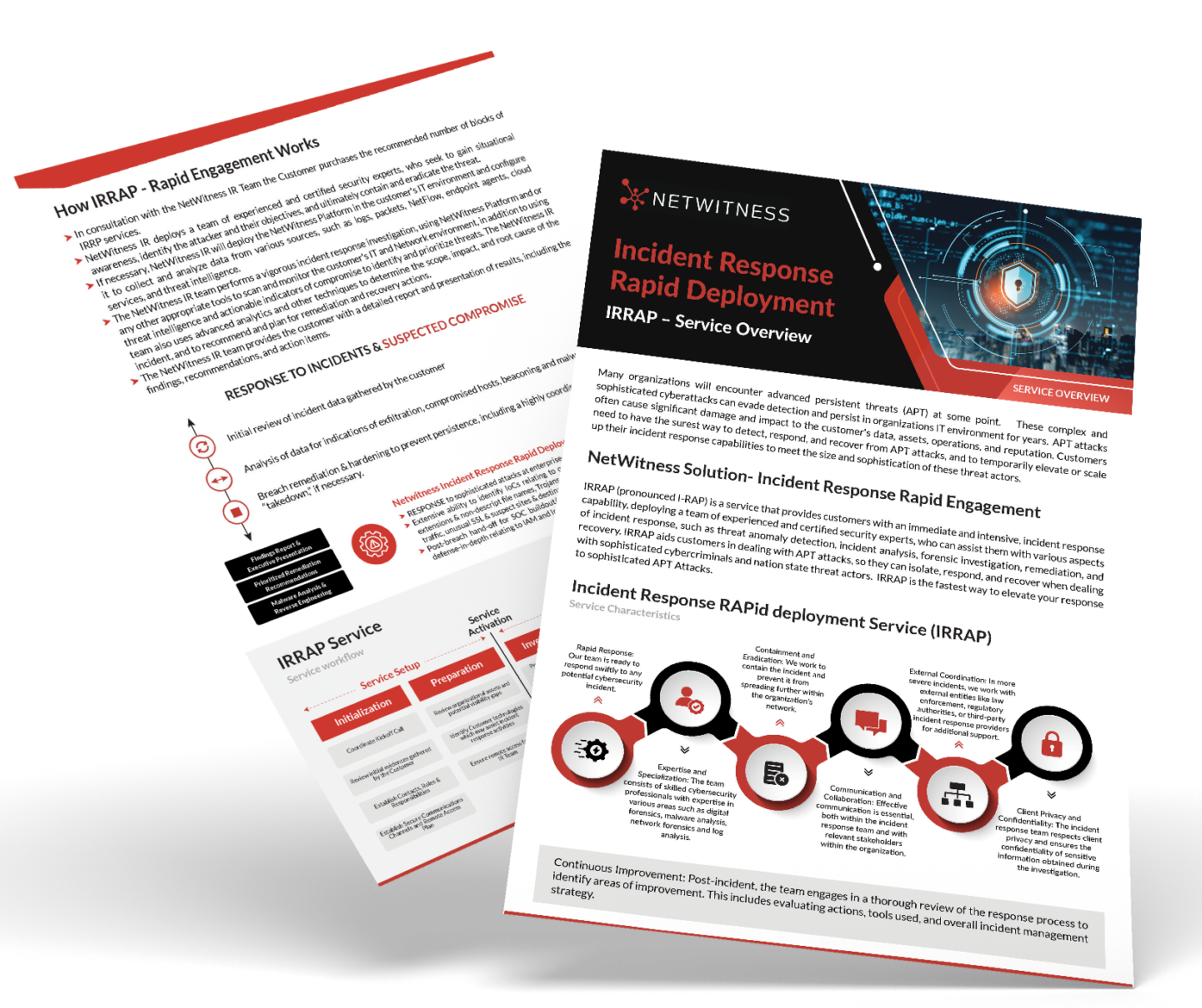
Respond to Advanced Threats Before They Escalate
- Deploy Expert Responders in Hours
- Identify Patient Zero
- Contain and Eradicate Attackers
- Reduce Attacker Dwell Time