Why Tabletop Exercises Deliver Real Resilience?
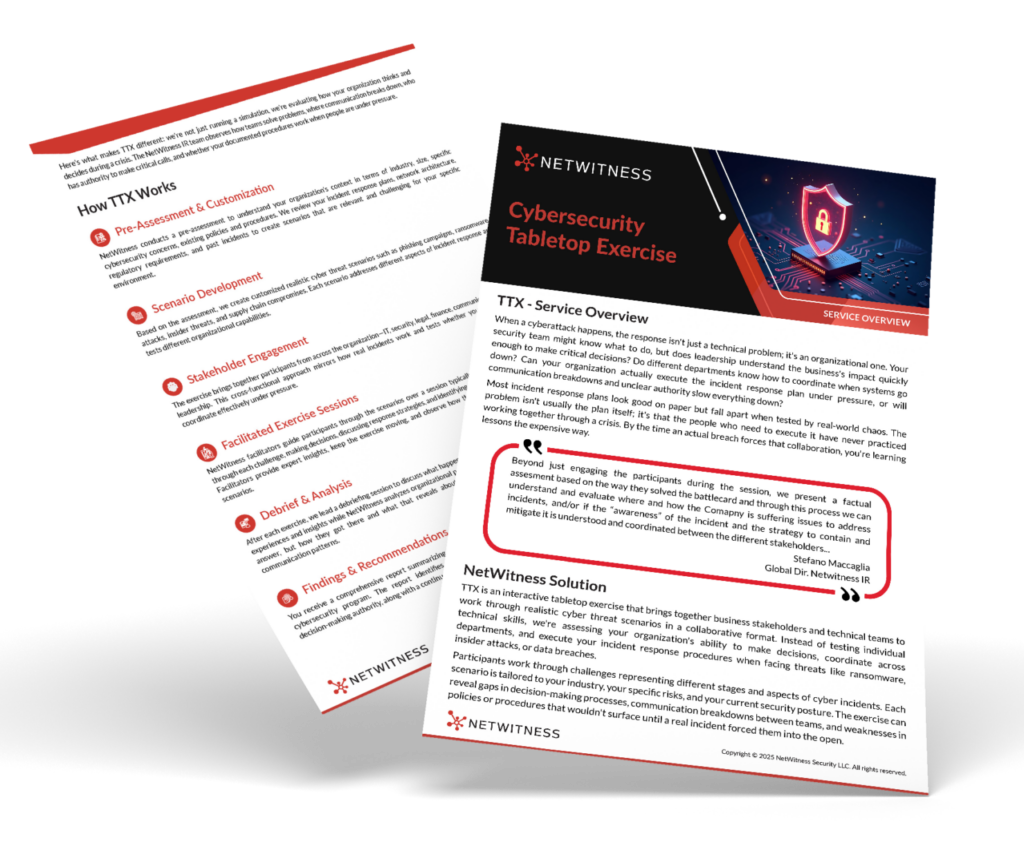
Tabletop exercises (TTX) simulate cyber incidents in a low-stakes environment, allowing teams to test decision-making, uncover hidden weaknesses in processes, and improve coordination before a real breach occurs. Organizations that conduct them regularly identify critical gaps in communication, visibility, and recovery, often reducing incident impact and response times significantly. In today’s threat environment, TTX transform static plans into practiced capabilities that matter when attacks strike.
The Reality Security Leaders Face
Attackers move fast. Your team discovers the breach days later. Roles blur under pressure. Recovery drags because assumptions in the plan never faced real testing.
Tabletop exercises address this challenge directly. They place decision makers in realistic scenarios, such as ransomware encrypting critical systems, insider threats moving laterally, or supply chain compromises, without the operational disruption or risk of real-world impact. Teams work through decisions, uncover gaps and conflicts, and leave with concrete, actionable improvements.
While the average cost of a breach now stands at $4.88 million, organizations with tested response capabilities see materially lower impact. Tabletop exercises build that capability, strengthening incident response readiness through structured, scenario-driven practice.
What Tabletop Exercises Reveal
Tabletop exercise cybersecurity simulations expose operational truths no policy document captures. Consider a ransomware tabletop exercise: attackers have already encrypted files on critical servers and exfiltrated data. Participants must decide on containment, notifications, and recovery while business pressure mounts.
Typical discoveries include:
- Escalation paths that don’t account for OT systems or executive availability.
- Communication failures between technical teams, legal, and external relations.
- Cyber Incident Response Team, operational security failures like communicating on compromised channels.
- Gaps in correlating network, endpoint, and log data for fast lateral movement detection.
- Overly optimistic recovery timelines that don’t match actual backup and restoration capabilities.
Tabletop exercises surface these insights in a controlled environment. A single session often uncovers more than months of audits, as teams confront real-time tradeoffs and assumptions break down under simulated stress.
How to Run Effective Tabletop Exercises
Start with purpose. Align scenarios to your highest risks like ransomware, insider threats, or hybrid IT/OT attacks.
Core process:
- Gather cross-functional participants: security operations, IT, legal, communications, and business leaders.
- Build realistic, organization-specific scenarios using current threat intelligence.
- Facilitate with clear injects that escalate complexity and pressure.
- Document decisions, bottlenecks, and unanswered questions live.
- Debrief rigorously, turning observations into prioritized actions.
Best practices for conducting a crisis management tabletop exercise include running them quarterly, increasing sophistication over time, and involving executive leadership for strategic alignment. Advanced sessions for mature teams can focus on insider threat programs with highly technical role-play.
Visibility: Strengthening Enterprise Incident Response Strategy
Single exercises help, but recurring tabletop exercise incident response programs drive transformation. They validate incident response planning, enhance SOC incident response, and support cybersecurity risk mitigation at scale.
These reports usually consist of an executive summary, findings, and recommendations both for the short and long term. Organizations that have adopted this approach have found better synchronization between their technical experts and management, as well as a quick response in case of any incidents.
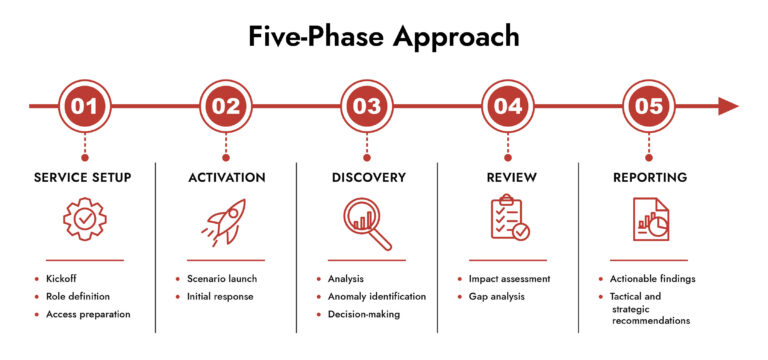
NetWitness IR Builds Incident Readiness
NetWitness provides expert-led services through technical compromise assessments / discovery services, red team testing, and tabletop exercises (TTX) designed specifically for enterprise environments. Our methodology leverages parallel investigative streams, combining network analysis, log correlation, endpoint forensics, and host visibility, to uncover hidden threats and response weaknesses that traditional assessments often miss. We build incident response readiness through a structured methodology that combines compromise assessments, red team exercises, and tabletop scenarios, enabling organizations to validate defenses, stress decision-making, and continuously improve their ability to detect, respond, and recover from real-world threats.
Assessment and testing services are structured for maximum impact: engagements typically run two to four weeks, with skilled professionals delivering immediate escalation of critical findings, clear stakeholder communication, and thorough post-exercise reviews. Every incident response tabletop exercise features realistic, organization-specific scenarios, while final deliverables include executive summaries, detailed findings, tactical recommendations, and strategic roadmaps.
This practical approach helps security leaders move beyond theoretical plans to build proven readiness, stronger coordination, and measurable improvements in incident response strategy.
Conclusion
Tabletop exercises expose the gaps real attacks exploit before they happen. They build coordination, test assumptions, and sharpen threat detection and response capabilities that determine outcomes.
Prioritize your next incident response tabletop exercise. Review existing plans, engage experienced service providers, and turn insights into stronger enterprise incident response and ransomware response planning. The organizations that practice deliberately recover faster and lose less.
Frequently Asked Questions
1. What is a tabletop exercise?
Tabletop exercise is a discussion-oriented simulated process that involves the step-by-step walkthrough of a cyber event, decision-making, and recognition of flaws in the incident response approach without disrupting the business operations.
2. How to conduct a tabletop exercise?
Set out proper goals, prepare suitable scenarios, bring in the appropriate team members, discuss the issues using injects that increase in severity, document the whole process, and conclude with actionable plans and timelines of improvements.
3. How to run a tabletop exercise effectively?
Ensure realism, encourage the honest involvement of employees from various departments, employ progressively complex scenarios, and assign specific tasks for follow-up at the end of each tabletop exercise session.
4. What are best practices for conducting a crisis management tabletop exercise?
Get executives and technical teams involved, utilize realistic scenarios based on actual threats, be flexible during the simulation exercise, ensure transparency when making decisions, and translate all lessons into tangible actions.
5. Which companies offer cybersecurity tabletop exercise services?
There are several leading cybersecurity providers who offer incident response tabletop exercise services, usually bundled with compromise assessments and other readiness programs.
6. How do tabletop exercises improve SOC incident response?
They help test the transition between detection, analysis, and recovery teams, prove the efficiency of using certain tools, and identify areas that lack visibility, enabling quicker and more assured detection and response during real incidents.
Test your organization's readiness to manage cyber incidents with expert-led tabletop exercises.
- Simulate ransomware, data breach, and insider threat scenarios
- Assess response processes across security, IT, legal, and executive teams
- Validate roles, responsibilities, and incident escalation paths
- Improve cyber resilience with detailed findings and remediation guidance