How NetWitness Platform Helps Detect and Prevent Ransomware ?
NetWitness Platform is an advanced ransomware detection tool that helps organizations improve protection from ransomware attack through continuous Network Visibility, Lateral movement detection, endpoint telemetry, Endpoint Detection and Response (EDR), Network Detection and Response (NDR), Security Information and Event Management (SIEM), and integrated Threat Intelligence. Security teams can identify suspicious activity, detect Indicators of Compromise (IOCs), investigate attacks using the MITRE ATT&CK framework, and accelerate ransomware incident response before attackers encrypt critical systems or exfiltrate sensitive data. Following proven ransomware best practices and maintaining a tested ransomware response plan significantly improves ransomware attack preparedness.
Why Ransomware Detection is More Important Than Ever
From video games to healthcare to auto parts distributors to municipal governments, ransomware attacks are a major security issue for nearly every type of organization. The attacks – which encrypt, block access to, or leak IP and other company information until a victim pays a fee – were already a challenge before the pandemic.
But as more people and businesses spend more time online than ever before, the impact of ransomware attacks continues to grow. Different outlets have reported that the total number of ransomware latest attack campaigns is increasing, ransomware attacks are becoming more targeted, ransomware payouts are becoming steeper, or some combination of all three. Wherever you look, the news isn’t great: a recent report found that 70% of enterprise ransomware victims have paid ransoms and estimated that ransomware attacks could net cybercriminals $20 billion in 2021.
Another troubling trend? Cybercriminals are increasingly using double extortion of ransomware attacks, in which they threaten to “sell or even auction the encrypted data.”
Using NetWitness Platform for Ransomware Detection and Protection from Ransomware Attack
Cybercriminals who use ransomware want to infect as many endpoints as possible. To do that, they need to infiltrate the network, establish persistence, set up backdoors, harvest credentials, move laterally between users, and exfiltrate data.
Each of these stages represents a key opportunity to detect and stop an attack before significant damage occurs. Strong Network Visibility, Lateral movement detection, endpoint telemetry, and behavioral analytics allow security analysts to identify suspicious activity early. Because ransomware campaigns can progress from initial compromise to encryption within hours, rapid detection and response are essential.
Organizations can use NetWitness Platform at each of these stages to strengthen ransomware mitigation, improve ransomware protection for business, and support proactive ransomware attack preparedness before encryption begins.
NetWitness Resources for Better Ransomware Attack Preparedness
The following resources explain how:
- How to Begin Looking for Malware with NetWitness Platform – Four-minute video detailing manual malware analysis and binary identification using NetWitness Platform 11.4.
- Using NetWitness to Detect Ransomware Attacks – Our step-by-step guide detailing how businesses can use this ransomware detection tool to identify anomalous behaviors, monitor Indicators of Compromise (IOCs), improve ransomware detection, and prevent successful attacks.
- Detecting and Responding to a Ransomware Attack – See our infographic for steps on how to safely detect, investigate, execute ransomware incident response, and implement an effective ransomware response plan.
Looking Ahead: Better Ransomware Mitigation Through Visibility and Threat Intelligence
Ransomware isn’t going away. Security Boulevard reported an average 139% year-over-year growth in ransomware attacks in Q3 of 2020 compared to the same period in 2019. Cybercriminals are becoming more targeted and more sophisticated in their approach as they aim for their campaigns to encrypt the highest-value assets across every industry.
The good news is that organizations continue to improve ransomware mitigation by combining automation, Threat Intelligence, Network Visibility, Endpoint Detection and Response (EDR), Network Detection and Response (NDR), Security Information and Event Management (SIEM), and rapid investigation capabilities. Following proven ransomware best practices, implementing a Zero Trust security model, and working with an experienced ransomware detection vendor can significantly reduce risk and accelerate response.
Contact NetWitness to learn more.
Frequently Asked Questions
1. How to detect ransomware attack?
Effective ransomware detection starts with monitoring abnormal file encryption, privilege escalation, suspicious PowerShell activity, credential theft, unusual network connections, and Lateral movement detection. Modern security platforms combine Network Visibility, endpoint monitoring, behavioral analytics, and Threat Intelligence to identify attacks before encryption spreads.
2. How threat intelligence helps detect and prevent ransomware?
Threat Intelligence helps security teams identify emerging ransomware latest attack campaigns by providing Indicators of Compromise (IOCs), attacker infrastructure, malware signatures, and tactics mapped to the MITRE ATT&CK framework. This enables earlier detection, proactive blocking, and faster ransomware incident response.
3. How endpoint detection and response (EDR) stop ransomware before encryption?
Endpoint Detection and Response (EDR) continuously monitors endpoints for suspicious behavior, including malicious processes, credential theft, privilege escalation, and encryption attempts. By isolating compromised devices and stopping malicious activity, EDR helps improve ransomware mitigation before attacks spread across the network.
4. What are the best practices for protecting ransomware?
Some of the most effective ransomware best practices include:
- Maintain secure offline backups.
- Enable multi-factor authentication.
- Apply security patches promptly.
- Follow Zero Trust principles.
- Monitor Network Visibility continuously.
- Detect suspicious Lateral movement.
- Use an enterprise ransomware detection tool.
- Integrate Threat Intelligence.
- Test your ransomware response plan regularly.
- Conduct security awareness training.
5. Which industries are most frequently targeted by ransomware?
Healthcare, manufacturing, financial services, retail, education, government, energy, technology, and critical infrastructure are among the industry’s most frequently targeted because they depend on uninterrupted operations and store high-value sensitive data. Every organization should invest in strong ransomware protection for business and improve overall ransomware attack preparedness.
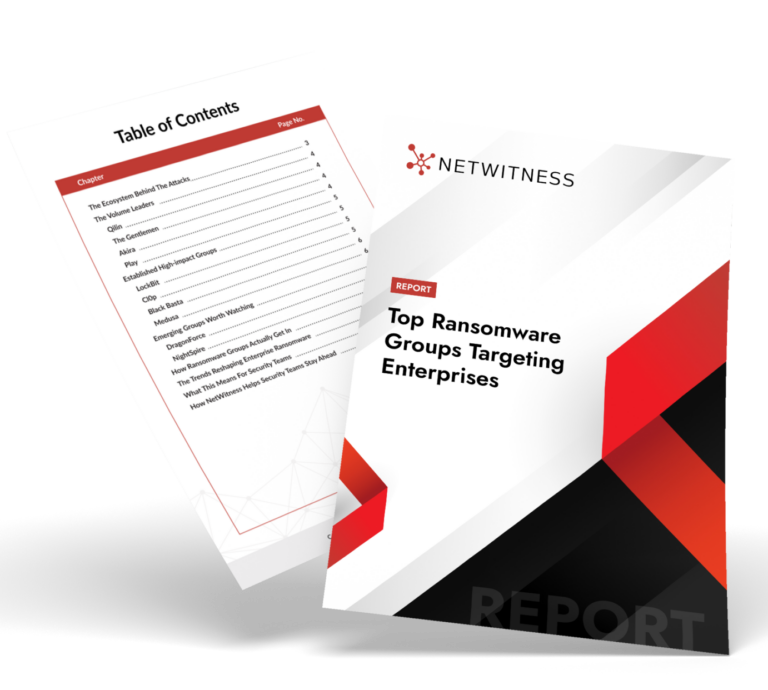
Understand today's most active ransomware groups, their tactics, and how to strengthen your defenses.