What Strong OT Network Security Looks Like Today
Industries have a lot of dangers to protect themselves from being out-of-date with IT protection. The best protection for OT (Operational Technology) networks requires having constant visibility of assets and being able to see and understand protocol aware monitoring and the ability to detect threats. When you can monitor and see your OT network with context regarding IT and OT, you are in a better position to reduce downtime, increase resilience, and respond to changing threats that come from cyber.
Introduction
An interruption of the business process triggered by cyberattacks may incur costs far more severe than losses from reduced revenue alone. It may result in the interruption of operations, affecting security measures, postponing shipments and putting critical infrastructure at great risk.
This is the reason why industrial enterprises are reviewing what the best network security for operational technology should really mean. Network security solutions have been developed specifically for the IT environment where regular updates are possible, endpoint agents work, and downtime is easy to plan. The requirements for operational technology environments are quite different.
Many years after their implementation, control systems, programmable logic controllers, SCADA platforms, HMI systems, and other devices still function. Many of them have not been designed considering cybersecurity challenges. Meanwhile, the trend towards digital transformation makes OT environments integrate into corporate networks, cloud, and remote access solutions.
The U.S. Cybersecurity and Infrastructure Security Agency (CISA) reports growing cyber risks to critical infrastructure and industrial systems. These risks are rising due to more integration and a larger attack surface. IBM’s 2025 Cost of a Data Breach Report says operational disruption is a major cost of cyberattacks.
The challenge is no longer whether organizations need OT cybersecurity. The challenge is identifying the best network security for operational technology without disrupting production.
Let’s examine what truly matters.
Why the Best Network Security for Operational Technology Requires a Different Approach
Operational technology environments prioritize availability, safety, and reliability.
Unlike traditional enterprise networks, industrial systems often include:
- Legacy devices that cannot support modern security agents
- Proprietary industrial protocols
- Long asset lifecycles
- Limited maintenance windows
- Strict uptime requirements
- Safety-critical operations
A security strategy that works perfectly in IT can create operational issues in OT.
This is why operational technology security must begin by considering how the physical components interact with one another and contribute to the manufacturing process.
There is a need for security approaches that have been made keeping in mind the operational technology environment as opposed to being derived from IT systems.
Key Features of the Best Network Security for Operational Technology
The strongest OT security programs share several foundational capabilities.
Complete OT Network Visibility
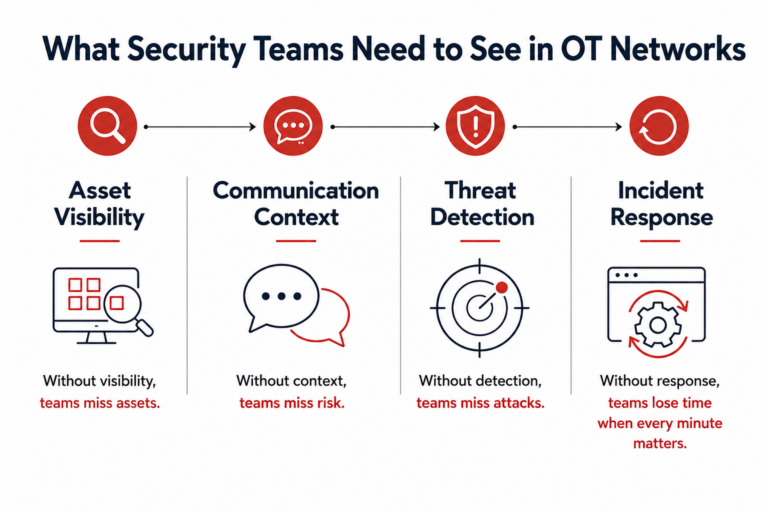
You cannot secure what you cannot see.
Many industrial organizations still struggle with incomplete asset inventories. Unknown devices, unmanaged systems, and shadow OT assets create blind spots that attackers can exploit.
The best network security for operational technology provides:
- Real-time asset discovery
- Device identification
- Communication mapping
- Asset classification
- Relationship analysis between systems
Effective OT network visibility enables security teams to understand exactly what exists across operational technology networks without interrupting operations.
Protocol-Aware Monitoring
Industrial environments rely on specialized protocols such as:
- Modbus
- DNP3
- OPC UA
- BACnet
- PROFINET
- EtherNet/IP
Traditional network security tools often struggle to interpret these protocols.
Strong OT security monitoring solutions analyze industrial communications natively and establish behavioral baselines for operational processes.
This visibility helps distinguish legitimate industrial activity from suspicious behavior.
Threat Detection Designed for Industrial Operations
Industrial attacks rarely follow traditional enterprise attack patterns.
Threat actors often target:
- Engineering workstations
- Remote access systems
- Industrial controllers
- Safety systems
- Operational processes
The best network security for operational technology includes advanced OT threat detection capabilities that identify:
- Unauthorized controller changes
- Configuration modifications
- Abnormal command sequences
- Lateral movement across OT environments
- Remote access misuse
Early detection can significantly reduce operational impact.
Why IT and OT Security Must Work Together
The divide between IT and OT continues to shrink.
Enterprise applications increasingly connect with production systems. Remote maintenance, cloud analytics, and industrial IoT initiatives further blur traditional boundaries.
As a result, IT OT security has become a business requirement rather than a technical preference.
Strong security platforms should help teams:
- Correlate IT and OT activity
- Identify attack paths across environments
- Detect threats moving between networks
- Investigate incidents using shared context
- Improve collaboration between security and operations teams
Organizations that maintain separate visibility for IT and OT often miss critical indicators that span both environments.
What the Best Network Security for Operational Technology Should Deliver Beyond Visibility
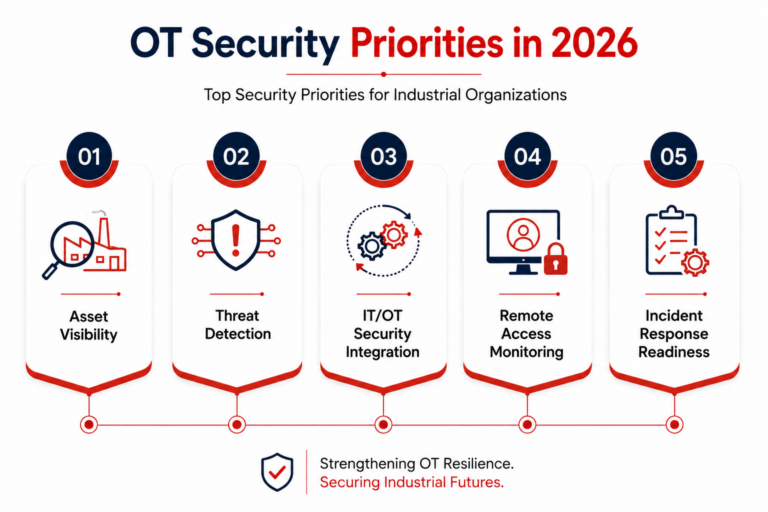
Visibility is the foundation, but visibility alone does not stop threats.
Modern industrial security programs should also support:
Continuous Risk Assessment
Industrial environments change constantly. New assets appear. Configurations evolve. Remote access requirements expand.
Continuous monitoring helps identify:
- Vulnerable devices
- Misconfigurations
- Unauthorized connections
- High-risk communication paths
Security Monitoring Without Disruption
Industrial teams cannot afford production interruptions.
The best OT cybersecurity solutions rely heavily on passive monitoring approaches that observe network activity without interfering with operational processes. This reduces risk while maintaining visibility.
Faster Incident Investigation
When an incident occurs, security teams need answers immediately.
They need to know:
- Which systems were affected?
- What changed?
- When did it happen?
- How did the threat move?
- Which assets remain at risk?
Integrated visibility and investigation capabilities reduce response times and improve decision-making.
Common Mistakes Organizations Make When Evaluating OT Network Security
Many organizations focus on technology features while overlooking operational realities.
Common mistakes include:
- Choosing IT-Centric Tools – Many security solutions claim OT support but lack deep industrial visibility. Evaluate whether a platform understands industrial protocols, assets, and operational workflows.
- Ignoring Asset Context – An IP address alone provides limited value. Security teams need context about asset roles, operational importance, and production dependencies.
- Prioritizing Compliance Over Risk Reduction – Compliance matters. However, effective industrial network security should focus on reducing operational risk rather than simply meeting audit requirements.
- Overlooking Incident Response – Detection without investigation capabilities creates delays during active incidents.
Look for platforms that support both detection and response workflows.
How NetWitness Supports Operational Technology Security
Organizations need visibility that extends beyond isolated alerts.
NetWitness operational technology security helps security teams gain insight into industrial environments by combining network visibility, threat detection, and investigation capabilities across both IT and OT ecosystems.
Key capabilities include:
Visibility into operational technology networks Detection of suspicious activity across industrial environments Context-rich investigations Monitoring of industrial communications Unified visibility across IT and OT environments Faster identification of operational threats
Rather than treating operational technology as a separate security challenge, NetWitness helps organizations understand how threats move across connected environments and impact business operations.
This approach supports stronger OT cybersecurity outcomes while maintaining operational continuity.
Conclusion
Finding the most secure network solution for operational technology would begin with the following query: Is your team able to observe all relevant activity on any critical industrial device, communication channel and operation procedure?
At present, the combination of visibility, context and threat detection is essential for the implementation of efficient operational technology security. Companies that will be able to join their IT and OT knowledge, detect possible threats and investigate incidents will be more likely to safeguard their production infrastructure from today’s cyberattacks.
With growing connectivity of operational technology networks, companies’ security solutions need to adjust to changing times. The purpose is not to avoid cyberattacks but to ensure resilience and safety in case of incidents.
Find out more about the NetWitness capabilities in securing operational technology environments.
Frequently Asked Questions
1. What are the top solutions for network security in operational technology environments?
The most effective solutions combine OT network visibility, industrial protocol monitoring, OT threat detection, asset discovery, and incident investigation capabilities. Organizations should prioritize platforms designed specifically for operational technology networks.
2. What features should I look for in network security tools for operational technology?
Look for real-time asset discovery, protocol-aware monitoring, OT security monitoring, threat detection, IT OT security visibility, passive deployment options, and investigation capabilities.
3. How do I evaluate network security platforms for critical infrastructure operations?
Evaluate visibility depth, industrial protocol support, scalability, threat detection accuracy, integration with existing security tools, and the ability to monitor operational technology networks without disrupting production.
4. Are there managed security service providers focusing on operational technology networks?
Yes. Many security providers now offer managed detection, monitoring, and incident response services tailored to operational technology environments. Organizations should assess OT expertise, monitoring capabilities, and incident response readiness before selecting a provider.
5. What are the best practices for implementing network security in operational technology systems?
Best practices include maintaining asset inventories, segmenting networks, monitoring industrial protocols, implementing continuous threat detection, securing remote access, and integrating IT OT security workflows.
6. What are the key considerations when choosing an OT security appliance?
Consider deployment model, protocol visibility, scalability, passive monitoring support, threat detection capabilities, integration options, and operational impact before selecting an OT cybersecurity solution.
7. How to choose network security solutions that protect operational technology from cyber threats?
Focus on solutions that provide comprehensive OT network visibility, industrial threat detection, asset intelligence, investigation capabilities, and support for operational technology security requirements without affecting production reliability.
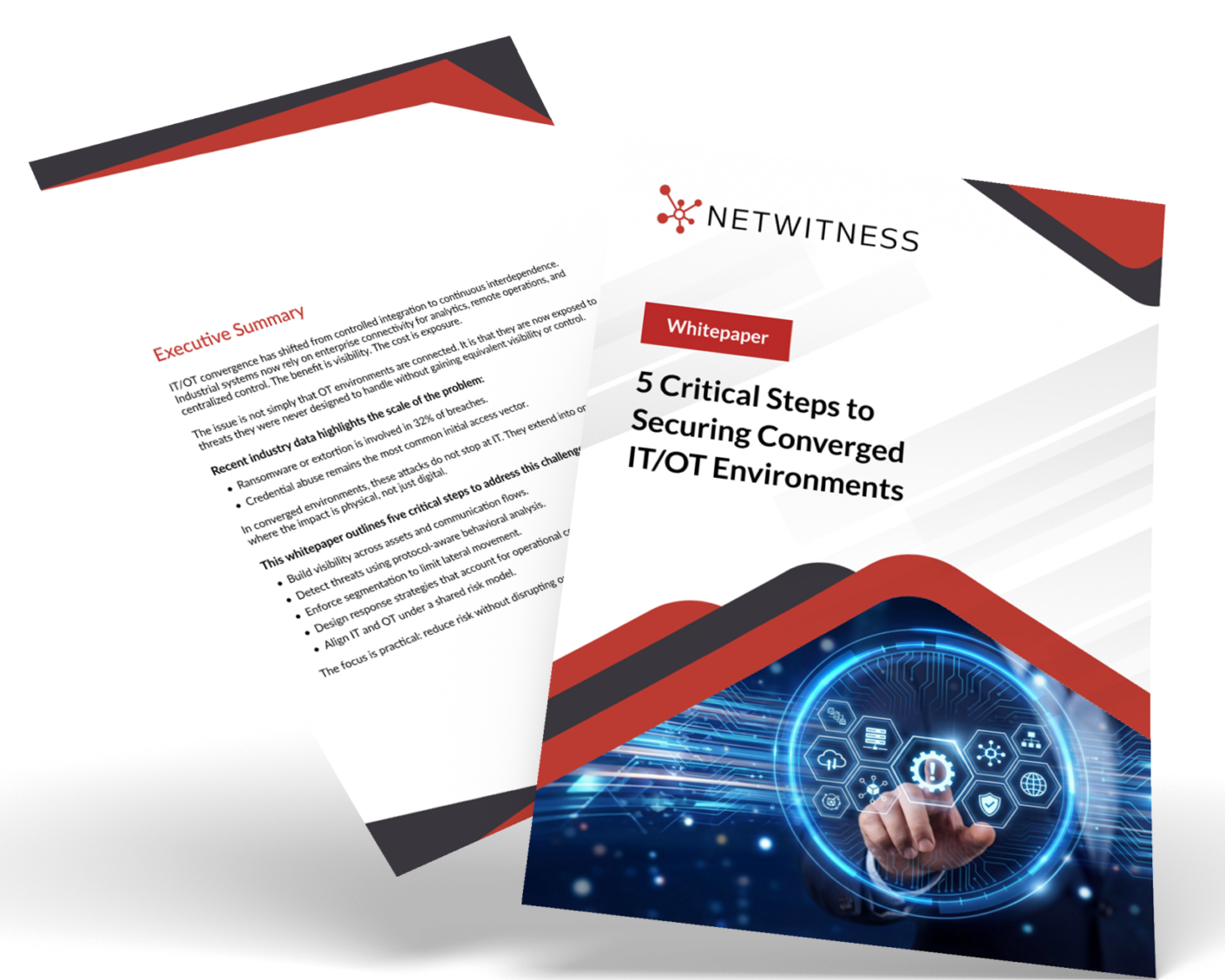
Discover five essential steps to protect converged IT and OT environments from evolving cyber threats.