What is Network Traffic Analysis (NTA)?
Network Traffic Analysis (NTA) is the process of monitoring, collecting, and analyzing network communications to understand how data moves across an organization’s infrastructure. It helps security and IT teams detect threats, identify abnormal behavior, improve network performance, and maintain visibility into both internal and external traffic. Modern network traffic analysis tools leverage automation, AI, and behavioral analytics to uncover risks that traditional security controls may miss.
Network traffic analysis is the process of collecting, monitoring, and examining data that moves across a network to understand communication patterns, identify security threats, and optimize network performance.
Synonyms
- Network Data Analysis
- Network Traffic Review
- Cyber Traffic Analysis
- Network Threat Detection
- Full Packet Capture (FPC)
- Network Anomaly Detection
- Network Traffic Monitoring
- Network Traffic Inspection
- Network Traffic Visibility
- Network Intrusion Analysis
- Network Telemetry Analysis
- Application Traffic Analysis
- Deep Packet Inspection (DPI)
- Packet Capture (PCAP) Analysis
- Network Behavior Analysis (NBA)
- Network Security Monitoring (NSM)
- Infrastructure Traffic Monitoring
- Network Detection and Response (NDR) Analysis
Why is Network Traffic Analysis Important?
Organizations generate massive amounts of network traffic every day. Without proper visibility, malicious activity can go unnoticed, allowing attackers to move through networks, exfiltrate data, or disrupt operations.
The importance of network traffic analysis extends beyond cybersecurity. It also helps organizations:
- Improve network performance monitoring.
- Enhance application performance and availability.
- Detect unauthorized devices and users.
- Support compliance and auditing requirements.
- Strengthen network security management.
- Identify network security vulnerabilities before they become incidents.
Effective network traffic analytics provides the visibility needed to understand both normal and abnormal network behavior. This enables security teams to quickly identify anomalies and respond to potential threats before they escalate.
How Network Traffic Analysis Works
At its core, analysis of network traffic involves collecting and examining data packets as they travel across a network.
A typical network traffic analysis (NTA) process includes:
- Data Collection: Network sensors, taps, switches, and monitoring systems capture information about traffic moving through the environment. This includes source and destination IP addresses, protocols, applications, and packet metadata.
- Traffic Visibility: Security teams gain visibility into:
- North-south traffic (traffic entering and leaving the network).
- East-west traffic (traffic moving between internal systems).
- Cloud and hybrid environment communications.
- User and application activity.
- Traffic Inspection: Advanced solutions use deep packet inspection (DPI) to examine packet contents and identify suspicious behavior, malware, or unauthorized communications.
- Pattern Analysis: Network traffic pattern analysis establishes a baseline of normal activity. Deviations from this baseline may indicate security incidents, insider threats, compromised devices, or misconfigurations.
- Threat Detection: Organizations use network traffic threat detection capabilities to identify:
- Malware communications.
- Command-and-control activity.
- Data exfiltration attempts.
- Unauthorized access.
- Lateral movement between systems.
Key Components of Advanced Network Traffic Analysis
Modern advanced network traffic analysis platforms combine multiple technologies to provide deeper visibility and faster threat detection.
- Network Monitoring: Continuous network monitoring and real-time network monitoring provide ongoing visibility into traffic flows and system communications.
- Deep Packet Inspection: DPI examines packet contents rather than just metadata, enabling more comprehensive security analysis.
- Anomaly Detection: Behavioral analytics identify unusual traffic patterns that may indicate cyberattacks, insider threats, or compromised accounts.
- Data Visualization: Dashboards and data visualization capabilities make complex traffic patterns easier to understand and investigate.
- Infrastructure Visibility: Organizations gain comprehensive infrastructure visibility across on-premises, cloud, and hybrid environments.
AI and Machine Learning in Network Traffic Analysis
The growing volume and complexity of network data have accelerated the adoption of AI network traffic analysis and network traffic analysis machine learning technologies.
AI-powered solutions can:
- Automatically identify suspicious behavior.
- Detect unknown threats.
- Reduce false positives.
- Prioritize high-risk alerts.
- Accelerate investigations.
By leveraging machine learning, organizations can identify subtle anomalies that traditional rule-based systems may miss. This improves both threat detection accuracy and operational efficiency.
Best Practices for Network Traffic Analysis
To maximize the value of network traffic analysis software, organizations should follow several best practices:
- Establish baseline network behavior before investigating anomalies.
- Implement continuous network traffic monitoring across critical systems.
- Monitor both north-south and east-west traffic.
- Use network segmentation to limit lateral movement opportunities.
- Integrate NTA with intrusion detection systems and security operations workflows.
- Deploy solutions that support real-time analysis and alerting.
- Regularly review traffic trends to improve network performance optimization.
Organizations pursuing a Zero Trust strategy should also monitor zero trust network traffic continuously to validate access decisions and identify unusual activity.
NetWitness Connection
NetWitness helps organizations gain deep network visibility through comprehensive packet capture, behavioral analytics, and threat detection capabilities. By combining network traffic analysis, real-time network monitoring, and advanced threat detection, NetWitness enables security teams to identify malicious activity, investigate incidents, and strengthen overall cybersecurity resilience across modern enterprise environments.
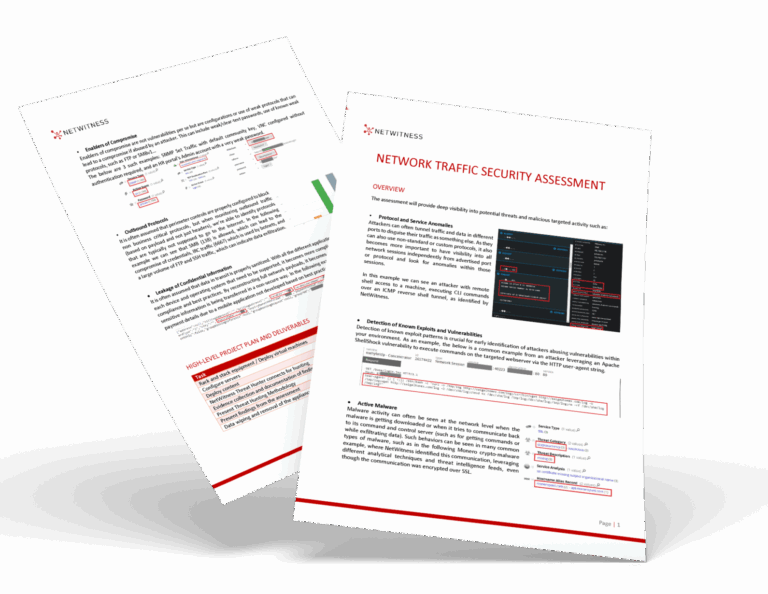
Strengthen Network Visibility with NetWitness® Network Traffic Security Assessment
– Uncover hidden threats through deep packet inspection and analytics.
– Identify vulnerabilities and blind spots before they’re exploited.
– Enhance detection and response with NDR-driven intelligence.
Related Terms & Synonyms
Several terms are closely associated with network traffic analysis:
- Network Data Analysis: Examining network communications to identify trends and security risks.
- Network Traffic Review: Periodic assessment of traffic patterns and network activity.
- Cyber Traffic Analysis: Security-focused evaluation of digital communications.
- Network Threat Detection: Identifying malicious activity within network traffic.
- Full Packet Capture (FPC): Collecting complete packet data for forensic analysis.
- Network Anomaly Detection: Identifying deviations from normal network behavior.
- Network Traffic Monitoring: Continuous observation of network communications.
- Network Traffic Inspection: Reviewing packet content and metadata for threats.
- Network Traffic Visibility: Understanding activity occurring across the network.
- Network Intrusion Analysis: Investigating suspicious network activity.
- Network Telemetry Analysis: Analyzing operational data generated by network devices.
- Application Traffic Analysis: Monitoring application-specific communications.
- Deep Packet Inspection (DPI): Detailed examination of packet contents.
- Packet Capture (PCAP) Analysis: Investigating recorded packet data.
- Network Behavior Analysis (NBA): Identifying abnormal user and system behavior.
- Network Security Monitoring (NSM): Continuous monitoring for security events.
- Infrastructure Traffic Monitoring: Observing traffic across critical infrastructure.
- Network Detection and Response (NDR) Analysis: Detecting and responding to threats using network telemetry.
People Also Ask
1. What is network traffic analysis?
Network traffic analysis is the process of monitoring and examining network communications to identify performance issues, security threats, and abnormal activity across an organization’s infrastructure.
2. How to implement network traffic analysis?
Organizations typically deploy network sensors, monitoring tools, and analytics platforms that collect traffic data, establish behavioral baselines, and provide threat detection capabilities.
3. How to leverage AI for network traffic analysis?
AI enhances network traffic analysis by automating anomaly detection, identifying emerging threats, reducing false positives, and accelerating investigations.
4. How to monitor network traffic?
Organizations can monitor network traffic using dedicated network monitoring tools, packet capture solutions, and NTA platforms that provide real-time visibility into traffic flows.
5. What is network traffic monitoring?
Network traffic monitoring is the continuous observation and analysis of communications across a network to maintain performance and identify security risks.
6. What is network traffic?
Network traffic refers to the flow of data packets transmitted between devices, applications, users, and systems within a network.
7. What is network behavior analysis?
Network behavior analysis examines communication patterns to establish normal behavior and identify anomalies that may indicate threats or policy violations.
8. What is network traffic analysis (NTA)?
NTA is a cybersecurity practice that uses traffic monitoring, analytics, and behavioral detection techniques to identify suspicious activity and improve network visibility.
9. What are the best practices for network traffic analysis?
Best practices include continuous monitoring, establishing behavioral baselines, analyzing east-west traffic, implementing network segmentation, and integrating NTA with security operations workflows.
10. How network traffic works?
Network traffic consists of data packets that travel between devices and systems using network protocols. These packets carry information required for communication, applications, and services.
11. What is the purpose of measuring network traffic?
Measuring network traffic helps organizations understand usage patterns, optimize performance, detect security threats, and improve operational visibility.
12. Why is it important to secure network traffic?
Secure network traffic helps protect sensitive data, prevent unauthorized access, reduce attack surfaces, and support overall network security management.