Introduction:
Enterprise security teams are drowning. Not in threats in tools. The average organization runs 75+ security applications. Some detect network anomalies. Others monitor endpoints. A third watches logs. None of them talk to each other.
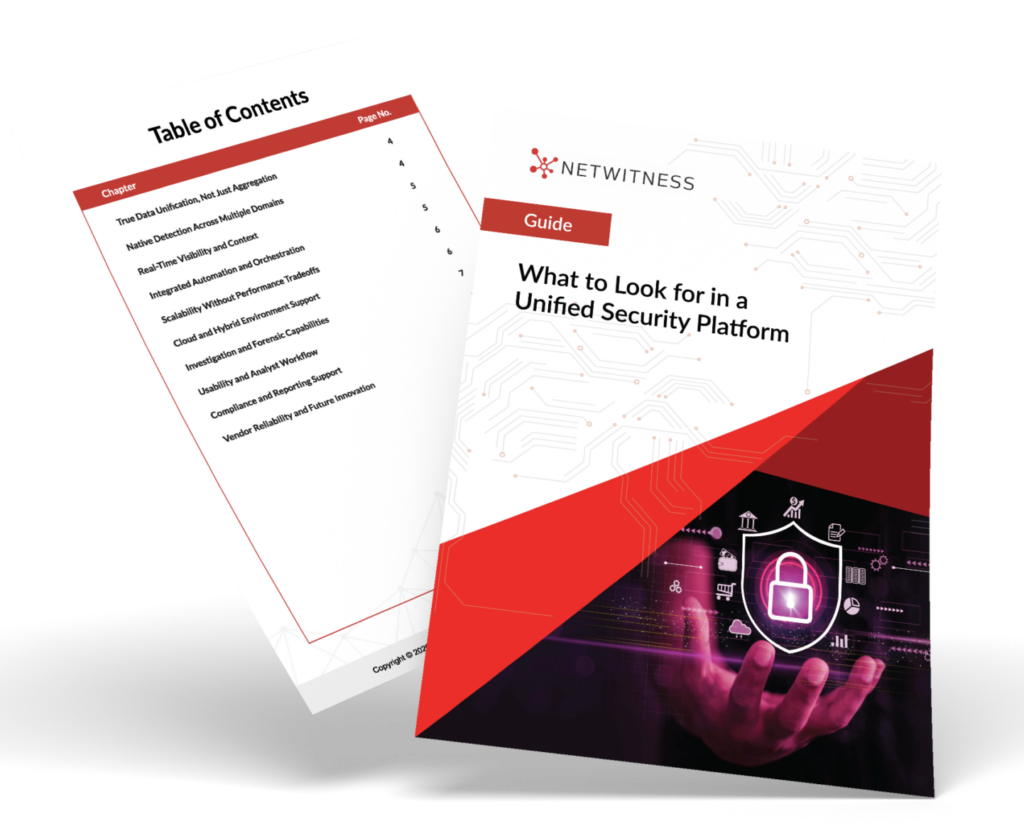
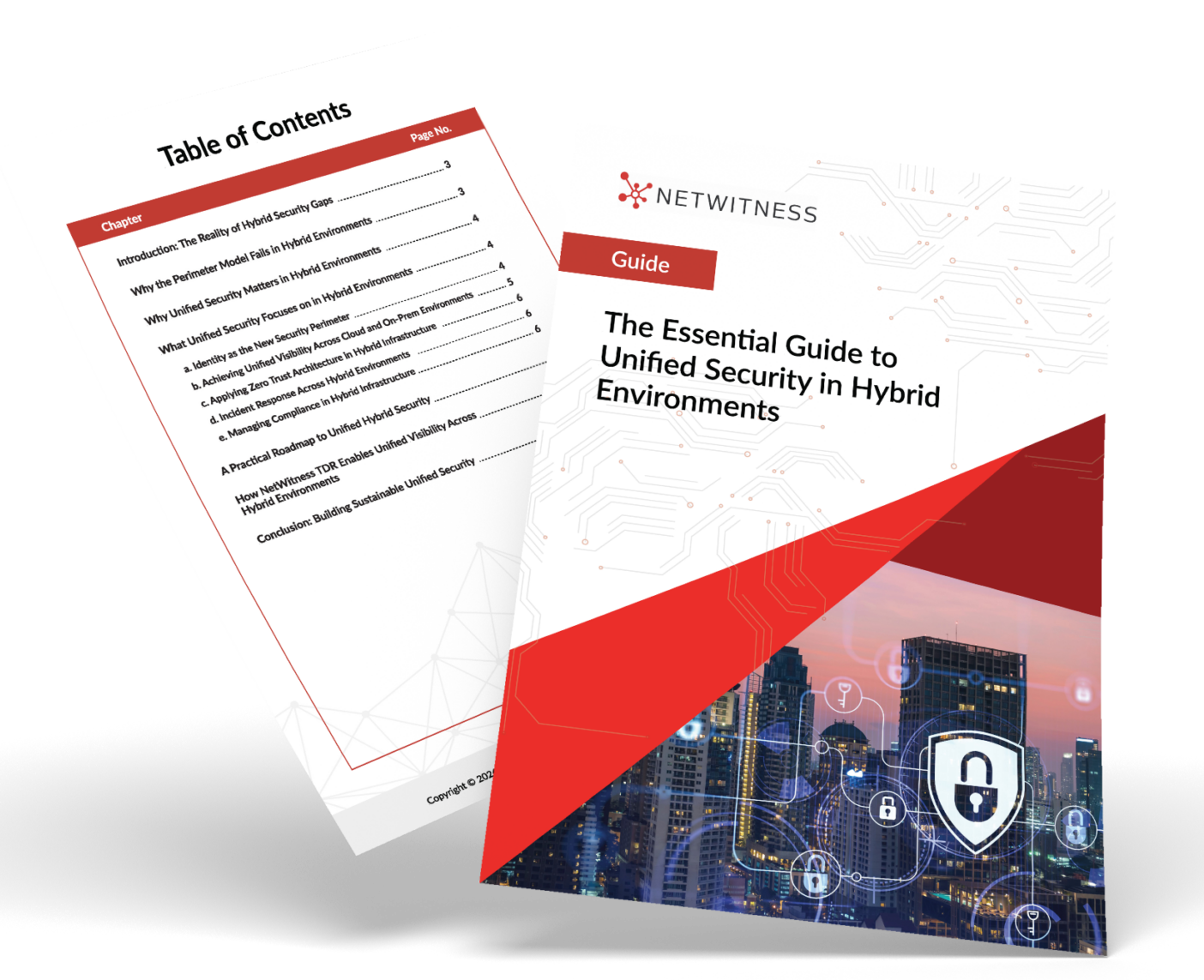
The result? Alert fatigue. Missed detections. Investigations that take days instead of hours. This is why organizations are shifting toward a unified cybersecurity solution: a single platform that connects network visibility, threat detection and response, and security operations without the complexity.
A unified security platform isn’t just consolidation. It’s operational efficiency. When your security infrastructure actually works together, you move faster, see more, and respond better.
What Is a Unified Cybersecurity Solution?
A unified cybersecurity platform brings together key parts of your cyber defense. It includes network monitoring and endpoint detection and response. It also includes threat intelligence, behavioral analytics, and orchestration. All of these work within one connected system.
It is not just stacking tools under one dashboard. It enables visibility, speed, and strategic coordination across your environment. It does this through a structured unified security strategy.
Here is what a unified solution typically connects in a broader unified security and network architecture:
These aren’t stacked tools under one dashboard. They’re integrated. A single detection engine correlates signals across network, endpoint, and user activity. One investigation workspace. One response framework. This is what a unified security strategy actually looks like.
How Unified Security Differs from Traditional Point Solutions
The old approach worked until it didn’t. Traditional endpoint security solutions focus on device-level threats. They’re good at what they do. But they operate in isolation no network context, no visibility into lateral movement, no correlation across the infrastructure.
Here’s what happens in a fragmented environment:
- You get alerts from your EDR about suspicious process execution
- Simultaneously, your NDR flags unusual traffic to an external IP
- Your SIEM logs show failed authentication attempts on a file server
- Your team spends two hours connecting the dots manually
In a unified cybersecurity platform, these events appear in one place, already correlated. The system recognizes the pattern: reconnaissance, lateral movement, and exfiltration.
The difference matters operationally. Research shows unified security platform takes 72 days less, on average, to detect a security incident and 84 days less to contain one. They also reap an average ROI of 101%, compared to 28% for those that are not yet embracing platformization.
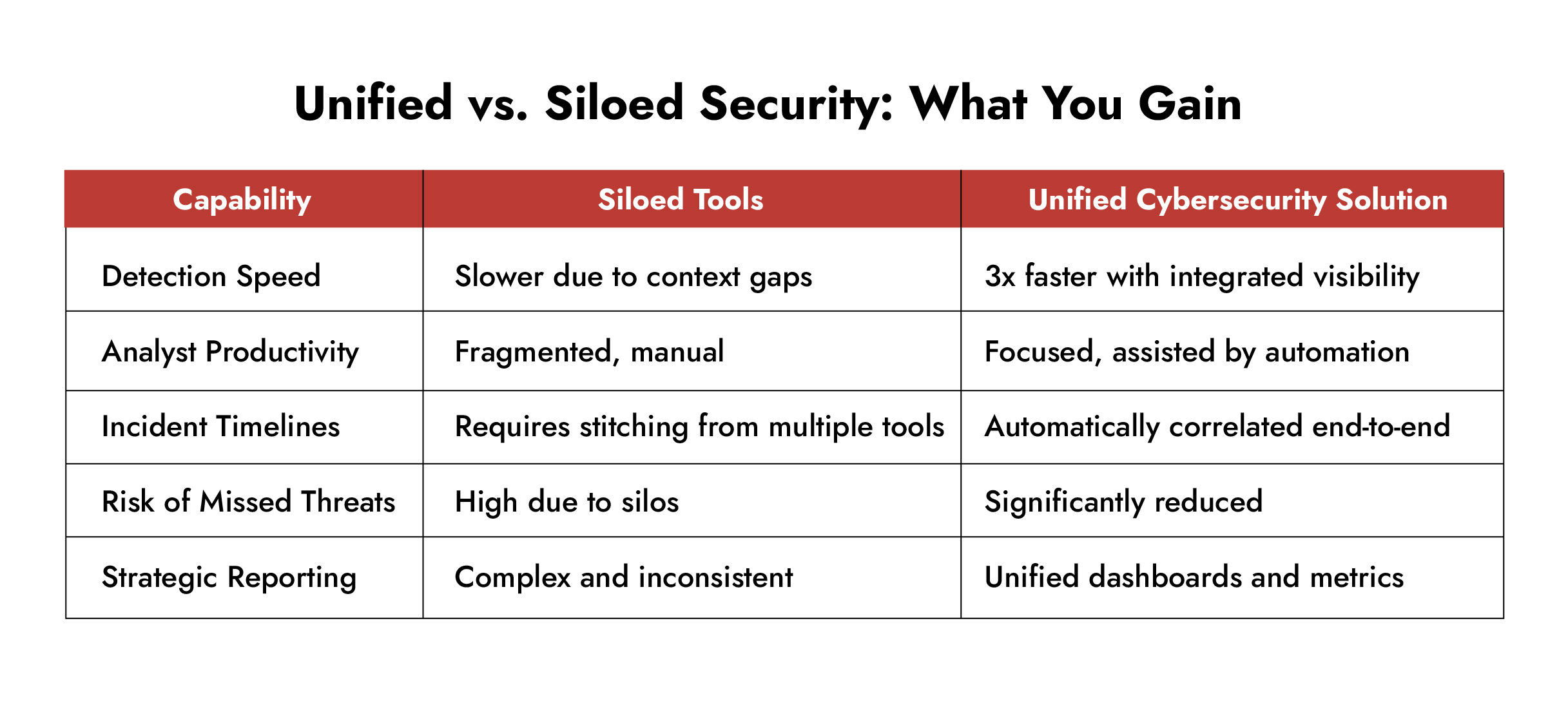
Area | Traditional Point Solutions | Unified Security Platform |
Visibility | Security data remains separated across individual tools. | Brings network, endpoint, log, user, and cloud data together. |
Threat Detection | Each tool detects threats within its own area. | Correlates signals across security layers to identify broader attack activity. |
Investigation | Analysts move between consoles to piece together an incident. | Related evidence is available through a connected investigation workflow. |
Alert Management | Multiple tools can generate separate alerts for the same activity. | Correlates related alerts and adds context around potential threats. |
Response | Response often depends on manual actions across different products. | Integrated workflows can automate investigation and response actions. |
Operations | Teams manage multiple consoles, integrations, and workflows. | Security operations are consolidated around a common platform. |
The key difference is context. Point solutions provide visibility into individual security layers, while a unified platform connects those signals to give analysts a broader view of an attack.
How Does a Unified Cybersecurity Platform Work?
A unified cybersecurity platform typically works through a connected detection and response workflow:
- Collects security telemetry
Network traffic, endpoint activity, logs, user activity, cloud data, and other relevant signals are brought into the platform. - Normalises the data
Data from different sources is structured so activity across security layers can be analysed together. - Analyses activity
Detection engines, behavioural analytics, rules, and threat intelligence examine the incoming data for suspicious activity. - Correlates related signals
Events that appear unrelated in isolation can be connected based on factors such as users, hosts, timestamps, IP addresses, processes, or attack behaviour. - Builds investigation context
Instead of presenting analysts with disconnected alerts, the platform provides a broader view of what happened and how different events relate. - Prioritises threats
Correlated activity can be assessed and prioritised so analysts can focus on incidents that present greater risk. - Supports investigation and threat hunting
Analysts can move from the initial detection into related network, endpoint, and log data without rebuilding the investigation across separate tools. - Feeds the response back into operations
Investigation findings and response actions become part of the same operational workflow, helping teams maintain a clearer incident record.
This connected workflow is what separates a unified platform from a dashboard that simply displays data from multiple products. The underlying value comes from correlation and shared context, not just having multiple security capabilities in one interface.
The Core Components of a Unified Cybersecurity Solution
Each component serves a specific purpose, but their real power emerges when they work together.
Network Detection and Response (NDR): Analyzes full-packet capture to identify protocol anomalies, command-and-control traffic, and data exfiltration. This is where encrypted traffic analysis becomes critical you detect threats by behavioral patterns, not content inspection.
Endpoint Detection and Response (EDR): Monitors process execution, file activity, registry changes, and network connections at the endpoint level. When combined with network data, EDR gives you process-to-network correlation, revealing lateral movement attacks.
SIEM + Behavioral Analytics: Normalizes logs from hundreds of sources firewalls, proxies, cloud services, identity systems. Behavioral models spot account compromise and privilege abuse that traditional log rules miss.
Threat Intelligence Integration: Enriches detections with context. When your platform flags traffic to an IP address, threat intelligence immediately answers: Is this a known C2 server? Have other organizations seen this IP in attack campaigns?
Security Orchestration (SOAR): Automates response workflows. Rather than manual ticket creation and escalation, the platform can execute playbooks gather evidence, contain threats, notify stakeholders in minutes.
Key Benefits of a Unified Cybersecurity Platform
A unified cybersecurity platform can deliver several practical benefits across security operations:
- Broader visibility: Connects network, endpoint, log, user, and cloud telemetry to reduce gaps between security layers.
- Faster investigations: Gives analysts related evidence in one place instead of requiring manual searches across multiple consoles.
- Better detection context: Correlates seemingly unrelated events to help distinguish an isolated anomaly from part of an attack chain.
- Less alert fatigue: Groups related alerts and provides additional context, helping analysts focus on incidents that require attention.
- Faster response: Integrated workflows and automation can accelerate actions such as investigation, enrichment, and endpoint containment.
- Better support for threat hunting: Analysts can search across connected telemetry rather than hunting within individual data silos.
The real value is not consolidation for its own sake. It is what happens when security data, detection, investigation, and response work together instead of sitting in separate systems.
Key Capabilities of a Unified Cybersecurity Platform
What actually distinguishes a unified solution from a collection of tools? Capability, not feature count.
Integrated Network Visibility: Your platform sees all traffic encrypted or not and extracts behavioral intelligence without decryption. This is critical for detecting threats hidden in encrypted channels, where attackers operate undetected.
Behavioral Analytics at Scale: Machine learning models ingest network flows, endpoint telemetry, and user activity simultaneously. Anomalies across different data types get flagged faster because the system understands context.
Automated Correlation: Rather than dumping raw alerts into a SIEM, the platform correlates data automatically. It connects endpoint behavior to network activity, then matches against threat intelligence. Analysts see validated threats, not noise.
Response Orchestration: Once a threat is identified, the system can trigger containment across your environment isolate endpoints, block IPs, revoke credentials through a single workflow. No manual handoffs between tools.
SOC Modernization Support: Security operations teams get built-in workflows designed for modern threats: ransomware, lateral movement, supply chain attacks. The platform handles triage. Analysts handle validation and escalation.
Why a Unified Cybersecurity Platform is a Strategic Imperative in 2026
1. Faster Threats Demand Unified Detection & Response
According to a 2024 report, 83% of breaches involved external actors, and over 60% of attacks moved from initial access to lateral movement within hours. Speed matters.
A unified cybersecurity solution gives cross-layer visibility. It helps your team avoid wasting time switching dashboards. It also reduces time spent reconciling conflicting alerts. You see the story of the attack, not isolated signals.
This shift from fragmented monitoring to unified detection & response speeds up investigations. It also strengthens containment efforts.
2. Unified Security Platform vs Traditional Endpoint Security Solutions
Traditional endpoint security solutions focus primarily on device-level threats. While valuable, they often lack deep network telemetry, behavioral correlation, or orchestration capabilities.
In a unified security platform vs traditional endpoint security solutions comparison, the difference becomes clear:
Traditional Endpoint Security:
- Device-centric visibility
- Limited cross-network context
- Manual alert correlation
Unified Security Platform:
- Integrated network + endpoint telemetry
- Automated data correlation
- Context-driven investigation
- Cross-layer response orchestration
Multiple point solutions often result in:
- Duplicate alerts
- Inconsistent data correlation
- Analyst fatigue
- Missed contextual indicators
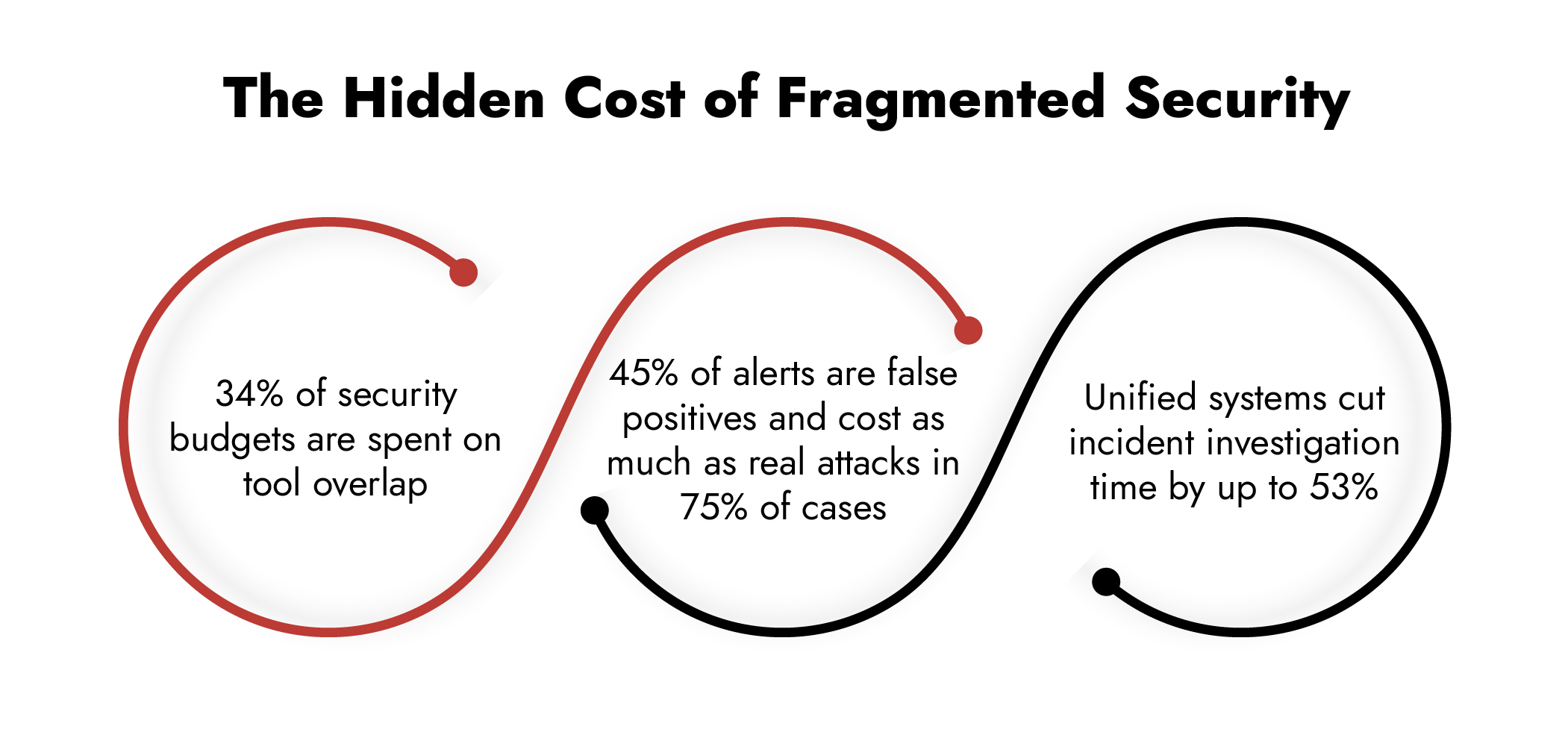
A study found that 71% of organizations believe their security operations are hampered by too many tools.
A structured unified security solution reduces noise, connects data automatically, and allows analysts to focus on validated threats instead of operational overhead.
3. AI and Behavioral Analytics Require a Unified Cybersecurity Foundation
AI models and UEBA tools need deep and broad data. Detection gets better only when models see user activity, endpoint behavior, and network traffic.
A unified cybersecurity platform gives AI engines a complete dataset. This improves anomaly detection and reduces blind spots. It works across the unified security and network environment.
Without unified telemetry, AI is limited. With unified telemetry, it becomes strategic.
The Role of Managed Threat Detection Within a Unified Security Strategy
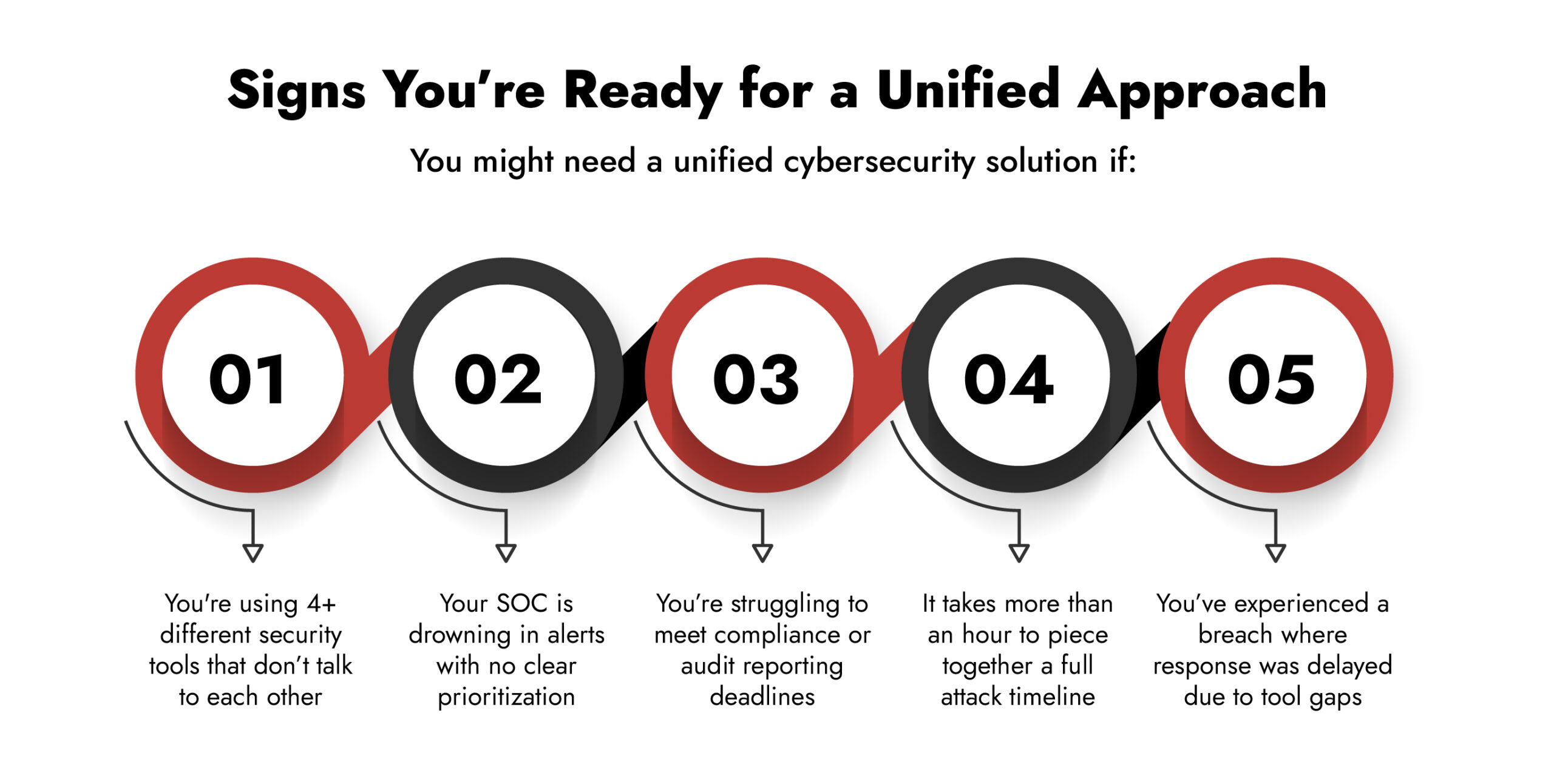
Not all organizations possess the internal capacity to oversee a complete unified cybersecurity solution stack continuously.
Managed Threat Detection and Response (MTDR) services enhance the effectiveness of a cohesive security strategy by integrating platform knowledge with proactive threat hunting, oversight, and mitigation.
These services are particularly valuable for:
- Mid-size enterprises without a full SOC team
- Large organizations operating hybrid cloud environments
- Security teams facing triage bottlenecks
In this model, technology and expertise operate together – reinforcing broader enterprise cybersecurity objectives.
Where NetWitness Fits into a Unified Cybersecurity Platform
NetWitness is geared toward organizations that need high levels of visibility, rapid response, and well-defined integration with a unified cybersecurity solution.
Rather than taking a position as a broad all-in-one product, NetWitness is actually organized into a practical unified security platform architecture that includes:
- Full-Packet Capture NDR: Visibility down to the session level
- Next Gen EDR: Monitoring and isolation of endpoint behavior
- SIEM + Behavioral Analytics: Log intelligence and anomaly detection
- SOAR Capabilities: Triage and response automation
- Global Threat Intelligence: Contextual awareness for faster decision-making
NetWitness offers flexible deployment options, including cloud, hybrid, and on-premises. This enables gradual adoption without replacing the underlying infrastructure. It is unifying in addition to your overarching unified cybersecurity approach.
Final Thoughts: From Tool Sprawl to Unified Enterprise Cybersecurity
Cybersecurity in 2026 requires more than standalone solutions. It demands operational unity. A single cybersecurity solution is not merely about integration. It signifies a tactical advancement toward a quantifiable cohesive security approach that aligns with enduring organizational cybersecurity objectives.
As dangers increase in speed and coordination, defenses need to keep pace. If your existing environment seems disjointed, transitioning to a cohesive security solution might not just be necessary, but could be essential.