The Practical Workflow for Detecting Intrusions in Network Traffic
Build Visibility First (You Can’t Detect What You Don’t See)
True visibility goes beyond flow logs. It includes:
- East-west (internal) and north-south (internet) flows
- Hybrid cloud segments
- Encrypted sessions
- IoT and microservices traffic
Most enterprises overlook lateral flows until it’s too late. That’s where threat actors often propagate.
Example: In a mid-size enterprise, segmented VLANs meant internal traffic wasn’t logged centrally. A lateral movement using internal SMB calls went unnoticed for weeks because visibility only existed at perimeter firewalls.
Visibility should capture session metadata, endpoints, timing, and protocol context, not just packet counts.
Establish Baselines and Network Behavior
A baseline is your map of normal. Without it, you chase noise instead of threats.
A practical baseline should capture multiple behavioral dimensions, including:
- Typical communication paths between critical assets
- Expected protocol distribution within each subnet
- Normal session duration ranges
- Average and peak connection sizes
- Time-of-day activity patterns
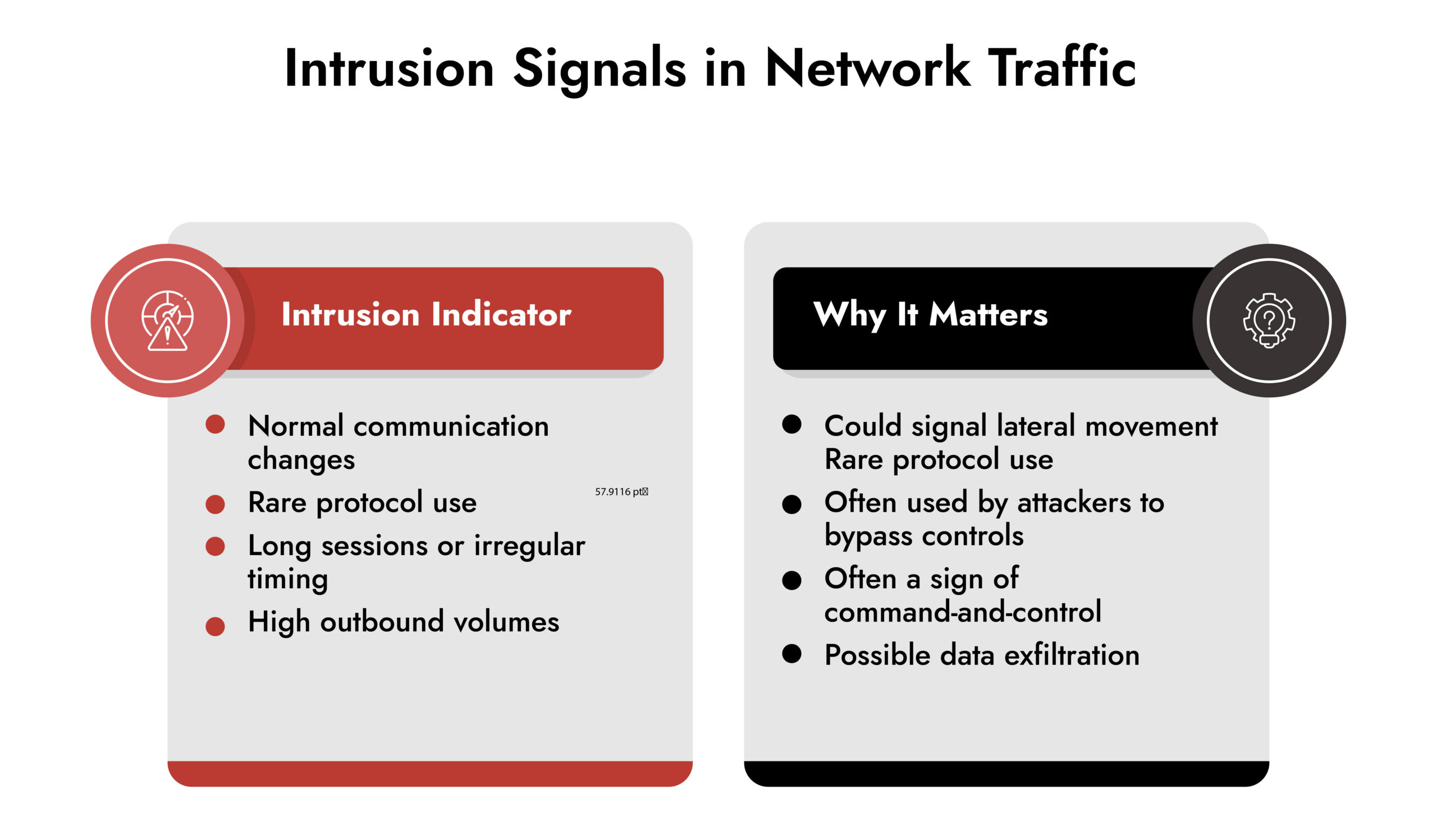
A behavioral analysis system does not label activity as malicious on its own. It highlights deviations. The distinction between benign and malicious behavior becomes clearer when multiple baselines across different entities are evaluated together within a unified analytical framework.
A deviation in a single baseline often produces false positives. Operations teams patch systems at odd hours. Admins use uncommon ports during maintenance. But when deviations occur simultaneously across multiple baselines – protocol, timing, session length, data volume, peer relationship – confidence increases and false positive rates drop. That layered signal gives analysts something actionable.
To build effective baselines, the system must extract rich metadata from network traffic, not just a minimal flow record. Port and IP alone are insufficient. Session duration, byte counts, directionality, protocol metadata, encryption attributes, and response behavior all matter. Shallow telemetry produces shallow detection.
Example: Asset A normally communicates with Asset B over HTTPS on port 443 during business hours. Sessions average under 2 MB and last less than three minutes.
Now consider this shift:
- An SSH connection appears between the same assets
- It occurs late at night
- The session runs significantly longer than historical norms
- The connection transfers a much larger volume of data than typical interactions
A port change alone could reflect legitimate maintenance. A time deviation alone might be an approved job. A large transfer could be a backup activity. But when port, time, duration, and connection size all diverge from established baselines simultaneously, the probability of malicious lateral movement or staging activity increases materially.
This is where mature network behavior analysis becomes operationally valuable. Not because it flags anomalies. Because it correlates behavioral deviations across entities and elevates the ones that matter.
Packet-Level Inspection Where it Counts
Once you identify an anomaly, packet-level inspection confirms intent.
Packet analysis isn’t always about full capture. It’s about targeted validation, such as:
- Confirming a suspicious C2 channel
- Identifying protocol misuse
- Inspecting malformed headers
Packet analyzers help decode content and context within sessions. They let you see header flags, handshake anomalies, and other fine-grained signals that flows alone don’t reveal.
Example: A server responding to DNS over HTTPS traffic from an unexpected source might look normal at the flow level. Only packet inspection tools that record all network traffic can fully reconstruct what was exfiltrated and accurately assess incident criticality. Partial metadata or selective capture leaves gaps that undermine confidence and response.
Correlate Signals Across Time and Systems
Anomaly detection in isolation produces noise. Correlation makes sense out of context.
Combine insights like:
- Authentication logs
- Network anomalies
- Endpoint telemetry
- Threat intelligence
This multi-signal correlation amplifies true positives and suppresses incidental noise.
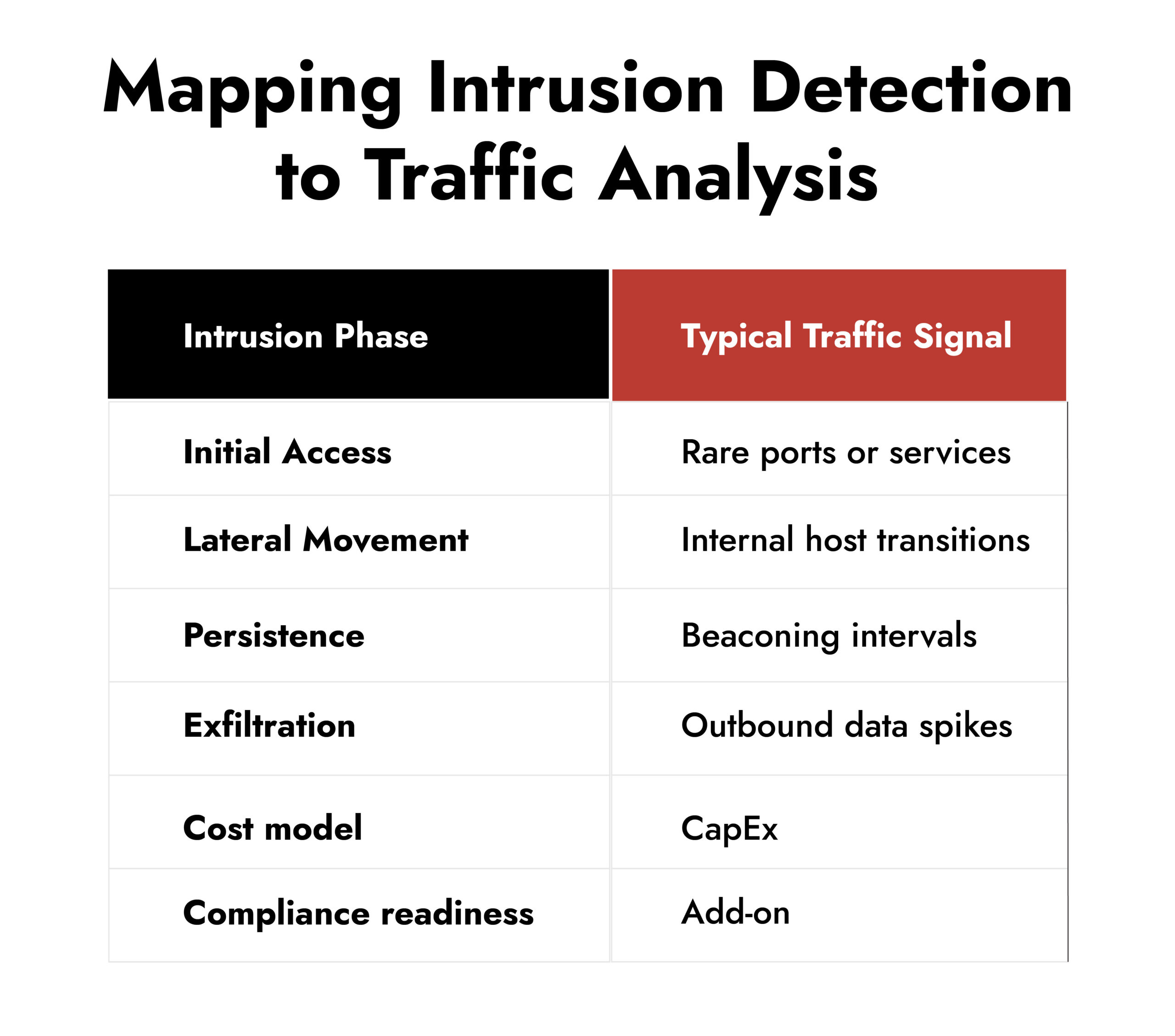
Example: A spike in outbound encrypted connections alone isn’t enough. If that spike follows an abnormal login and unusual lateral flows, it’s highly suspicious.
What matters is not rule-based correlation, but the ability to aggregate data from multiple sensors within a single platform. That unified view enables accurate forensic reconstruction and accelerates incident response.
Using a Network Traffic Monitor to Investigate and Respond to Intrusions
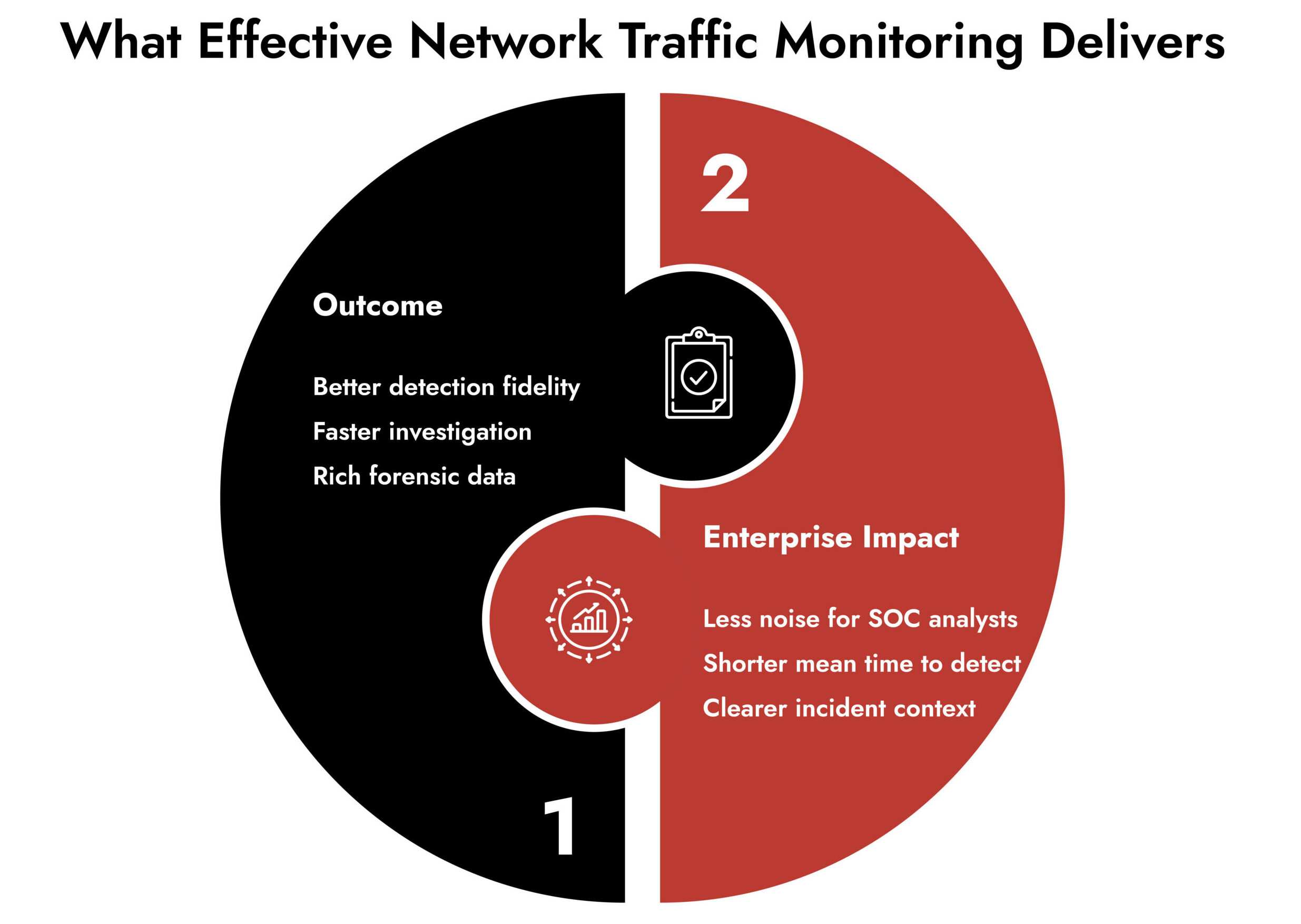
Detection without actionable context still slows response. Your goal is to turn signals into decisions.
Good network traffic analysis should:
- Support rapid investigation
- Provide evidence for containment
- Tie directly into response workflows
Detection should not end at an alert. It should trigger context-rich analysis that teases apart attacker behavior from benign anomalies.
In enterprise environments, teams prioritize not just finding issues but understanding them quickly. That means structured metadata, timelines, session views, and clear relationships between events.
Where Advanced Traffic Monitoring Makes the Difference
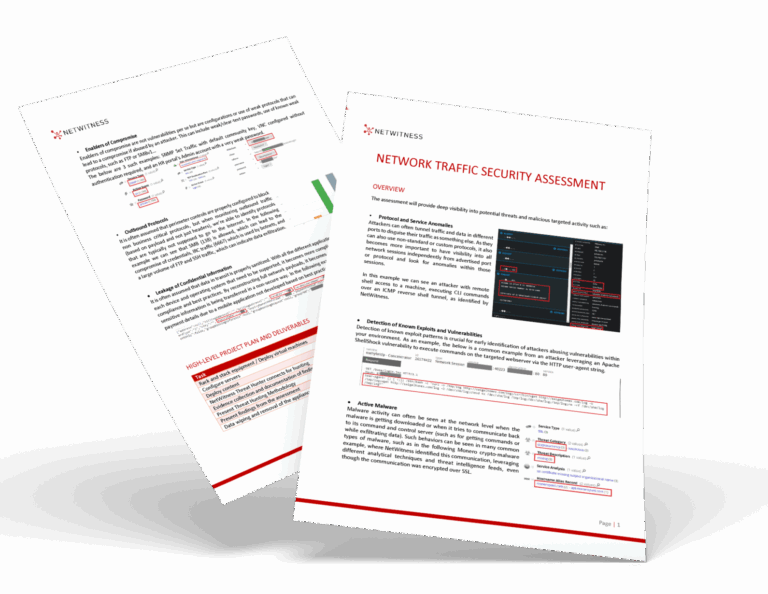
Comprehensive traffic analysis bridges gaps left by isolated tools. It provides the evidence and clarity teams need to act confidently under pressure.
One effective model combines behavioral baselines with selective deep packet inspection and correlation across telemetry sources. This isn’t about replacing existing tools, it’s about enriching them with reliable network context.
Look for capabilities that include:
- Session and Content reconstruction
- Protocol awareness
- Hybrid environment support
- Metadata and payload-aware analysis
Real teams win when they see the full story in motion, not just alerts in isolation.
Common Pitfalls That Undermine Detection
Even sophisticated setups fail when practices lag. Watch out for:
- Gaps in visibility (e.g., east-west traffic blind spots)
- Overreliance on perimeter data
- Treating individual alerts as conclusive
- Ignoring temporal and correlation context
Fix practices before adding tools – good data practices enable effective intrusion detection.
Conclusion
Network traffic is the richest source of truth on what happens inside your infrastructure. Done right, network traffic monitoring reveals attack paths before damage escalates. It exposes subtle patterns, validates suspicions, and empowers decisive action.
Don’t rely on alerts alone. Make network traffic analysis a central part of your network detection and response strategy.
If you want to elevate your detection capability, start by refining visibility, establishing behavioral baselines, and correlating signals with context-rich data.