- Network security management fails when visibility, detection, and response operate in silos rather than as a single operational system.
- Continuous network security monitoring consistently outperforms periodic assessments in detecting real-world threats.
- Zero trust network security only works when network-level evidence validates identity and access decisions.
- Enterprise network security management maturity depends more on operational discipline than on the number of tools deployed.
- Organizations with deep network visibility and historical traffic context investigate faster and recover with less disruption.
Introduction
Most enterprise security breakdowns don’t happen because teams ignore threats. They happen because network security management never keeps pace with how the network actually behaves. Cloud workloads spin up and down in minutes. Encrypted traffic hides intent. Remote access dissolves old boundaries. Yet many programs still rely on static controls and fragmented monitoring.
Strong network security management treats the network as a living system. One that must be observed continuously, validated with evidence, and defended with context. This isn’t about buying more technology. It’s about operating with clarity when pressure is highest and decisions matter most.
The following ten best practices reflect how high-performing organizations manage risk across complex enterprise environments today.
Proven Practices for Effective Network Security Management
1. Establish Deep, Continuous Network Visibility
Every effective network security management program begins with visibility that goes beyond surface-level metrics. Teams need to understand how data actually moves across the network, not just whether systems are reachable.
When visibility gaps exist, attackers gain freedom to explore internal paths, blend into encrypted traffic, and extend dwell time unnoticed. Enterprise network security management depends on the ability to observe north-south and east-west traffic across on-prem, cloud, and remote environments.
Organizations that prioritize network visibility capture meaningful telemetry, preserve high-value traffic data, and maintain historical context for investigation. This foundation enables every other security control to function as intended.
2. Align Network Security Management to Business Risk
Security controls lose effectiveness when they protect everything equally. Mature network security management aligns effort to business impact, not theoretical exposure.
Enterprise environments host systems with very different risk profiles. Customer data platforms, operational technology, and identity infrastructure demand stricter controls than low-impact workloads. Network security & management strategies that ignore this reality waste analyst time and dilute focus.
Risk-based alignment allows teams to enforce stronger segmentation, monitoring, and response where it matters most. NIST guidance continues to reinforce that control selection must reflect operational and regulatory risk, not convenience.
3. Design Zero Trust Network Security with Network Evidence
Zero trust network security has reshaped how enterprises think about access. But zero trust collapses without continuous validation at the network layer.
Identity checks and device posture establish intent, not behavior. Network security management fills that gap by validating trust decisions against real traffic patterns. When access assumptions conflict with observed activity, teams gain early warning of misuse or compromise.
Enterprises that succeed with zero trust integrate network monitoring into enforcement workflows, ensuring trust remains conditional and evidence driven.

4. Operationalize Continuous Network Security Monitoring
Static reviews and quarterly assessments cannot keep up with active adversaries. Effective network security monitoring operates continuously, adapting as behavior shifts.
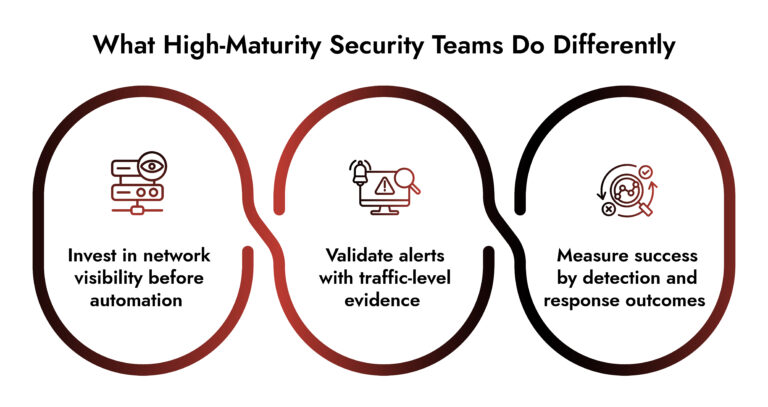
High-performing teams build baselines across users, devices, and workloads. They monitor deviations in real time and focus on alert quality rather than volume. This approach reduces noise while surfacing meaningful indicators of compromise.
According to multiple 2024 government advisories, organizations relying on continuous network monitoring consistently reduce mean time to detect compared to log-only strategies.
5. Integrate Network Security Tools into a Single Workflow
Tool sprawl remains one of the biggest operational challenges in enterprise network security management. When an investigation jumps between consoles, context disappears.
Network security tools should operate as part of a unified workflow. Telemetry must correlate across network, endpoint, and identity layers. Evidence should persist throughout detection, investigation, and response.
Integration does more than improve efficiency. It preserves decision confidence during high-stakes incidents when speed and accuracy determine impact.
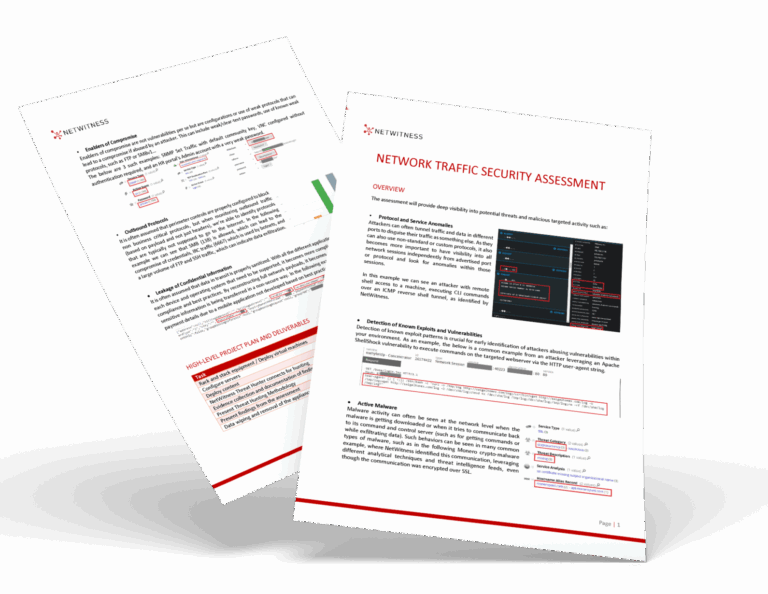
Strengthen Network Visibility with NetWitness® Network Traffic Security Assessment
-Uncover hidden threats through deep packet inspection and analytics.
-Identify vulnerabilities and blind spots before they’re exploited.
-Enhance detection and response with NDR-driven intelligence.
6. Validate Threats with Network Detection and Response
Alert-driven security fails when alerts lack proof. Network Detection and Response strengthens network security management by grounding decisions in observable behavior.
By reconstructing sessions and analyzing traffic patterns, teams confirm whether suspicious activity reflects real compromise or a benign anomaly. This validation prevents premature escalation and missed threats alike.
NDR also plays a critical role in encrypted environments, where payloads remain hidden, but behavior still reveals intent. Enterprise network security depends on this level of evidence.
7. Apply Network Segmentation That Reflects Reality
Flat networks magnify damage. Poorly designed segmentation breaks operations. Effective enterprise network security management balances both.
Segmentation should follow how systems interact, not just how diagrams look during audits. When segmentation aligns with workflows, lateral movement opportunities shrink without disrupting business processes.
Ongoing network monitoring ensures segmentation remains enforced as environments evolve. Without validation, segmentation policies degrade silently.
8. Preserve Historical Network Data for Investigation
Attackers rarely announce themselves. Many incidents surface months after initial access, making historical context essential.
Network security management must account for this reality by retaining traffic data that supports forensic reconstruction. Without it, teams rely on assumptions rather than evidence.
Retention strategies should focus on high-risk segments, regulatory requirements, and investigation needs. Historical visibility transforms incident response from guesswork into confirmation.
9. Select Network Security Solutions That Scale Operationally
Throughput and feature depth matter, but operational usability matters more. Network security solutions should reduce analyst burden, not add complexity.
Enterprise network security management benefits from platforms that allow customization without fragility, scale without excessive tuning, and natural integration with existing workflows.
This principle applies equally to large enterprises and to network security providers for small businesses supporting limited teams with broad responsibility.
10. Treat Network Security Management as an Ongoing Discipline
Networks change constantly. Security programs that stand still fall behind.
Enterprise network security management requires continuous testing, refinement, and validation. Controls must adapt as infrastructure, users, and threats evolve.
Organizations that treat network security as a living discipline detect earlier, respond faster, and recover with less disruption. Consistency, not novelty, defines long-term resilience.
How NetWitness Supports Network Security Management
NetWitness strengthens network security management through deep network visibility, advanced network security monitoring, and session-level reconstruction. Its Network Detection and Response capabilities allow teams to validate threats using real traffic evidence, preserve historical context, and investigate incidents with confidence.
This evidence-driven approach supports enterprise network security and aligns naturally with zero trust network security models by grounding decisions in observable behavior.
Conclusion
Effective network security management doesn’t depend on chasing trends or stacking tools. It depends on visibility, evidence, and operational clarity under pressure.
Organizations that invest in how security actually operates across the network gain more than protection. They gain confidence in every decision that follows.
Strengthening network security management starts with understanding the network as it truly exists and defending it accordingly.
Frequently Asked Questions
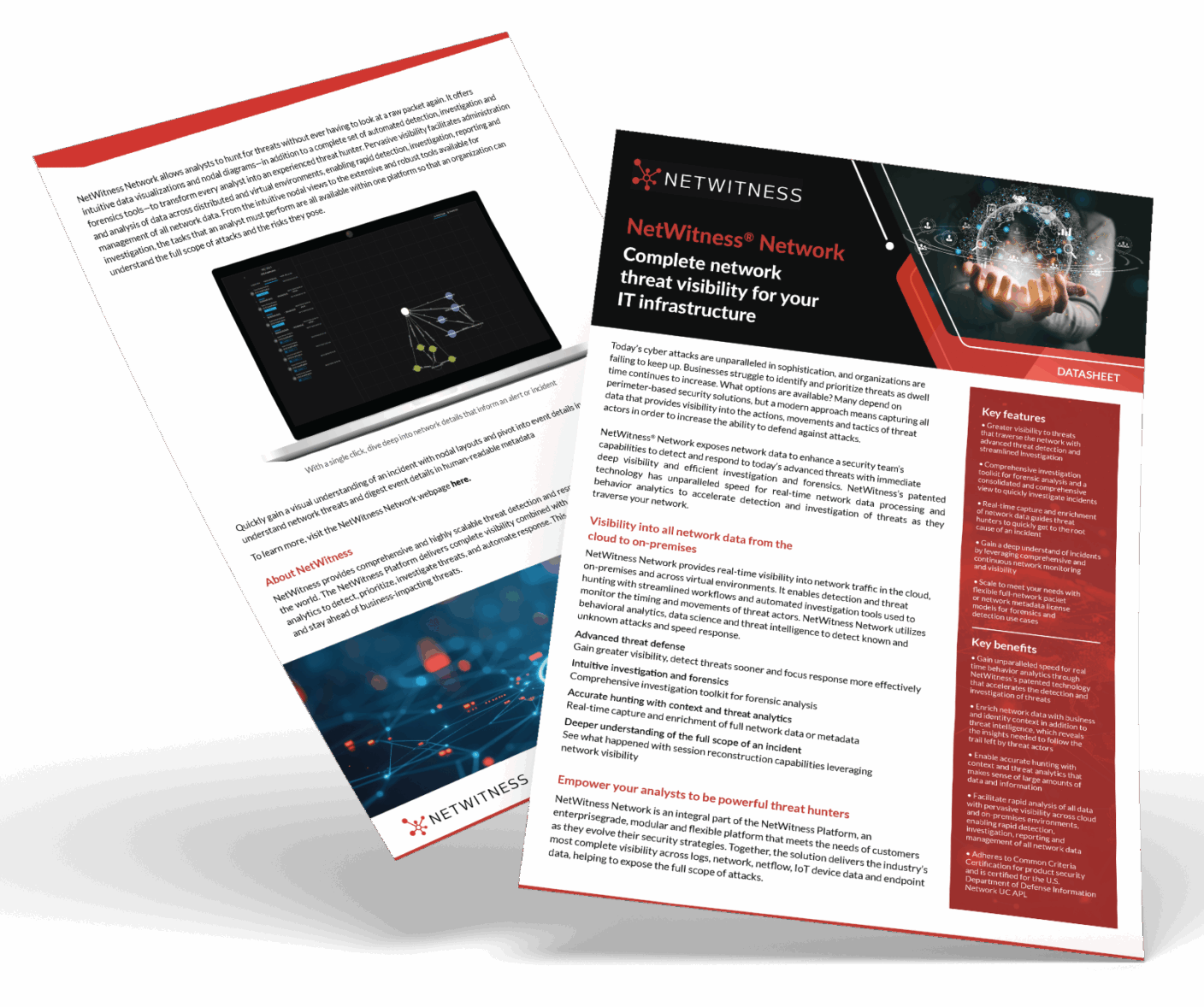
Proactive Network Threat Detection with NetWitness® NDR
-Spot threats fast with AI-driven analytics.
-See everything across your network and cloud traffic.
-Investigate efficiently with built-in forensic tools.
-Adapt and scale to meet growing security needs.