What is AI in network security?
AI in network security uses machine learning and behavioral analytics to monitor network activity, detect anomalies in real time, and respond to threats automatically. Unlike traditional rule-based systems, AI identifies unknown and evolving threats by understanding normal behavior and flagging deviations instantly.
Introduction
Cybersecurity is no longer about keeping attackers out. That model broke the moment networks stopped having clear boundaries. Today’s environments are distributed across cloud, SaaS, remote users, APIs, and unmanaged devices. Threats don’t just “enter” networks anymore, they move inside them, quietly.
This is where AI changes the game. AI doesn’t just detect threats faster. It changes how networks are understood, monitored, and defended at a fundamental level.
What AI for Network Security and Monitoring Actually Means
When we talk about AI in network security and monitoring, we’re not talking about a single tool or feature. We’re talking about systems that continuously learn from network behavior and make decisions without waiting for human input.
Traditional tools rely on predefined rules:
If X happens → trigger alert.
AI systems work differently:
They first learn what “normal” looks like, then flag anything that deviates from it, even if that behavior has never been seen before.
This shift matters because modern attacks rarely follow known patterns. They mimic legitimate activity, move laterally, and stay hidden. AI allows security teams to detect intent, not just signatures.
Why Traditional Network Security Can’t Keep Up Anymore
Here’s the core problem: legacy security tools were built for static environments. They assume:
- Known threats
- Predictable traffic patterns
- Clearly defined perimeters
None of these assumptions hold true in 2026. Encrypted traffic hides payloads. Cloud workloads spin up and disappear in minutes. Attackers use legitimate credentials instead of malware.
This creates two major issues:
First, security teams are flooded with alerts. Most of them are irrelevant, but analysts still have to review them.
Second, real threats blend into normal activity, making them harder to detect using rule-based systems.
AI addresses both problems by reducing noise and focusing on behavioral anomalies that actually matter.
How AI Is Transforming Network Security in 2026
1. Real-Time, Continuous Network Monitoring
Traditional monitoring is periodic. Logs are analyzed after events occur. AI-powered systems monitor traffic continuously and in real time. They don’t wait for logs to be reviewed or alerts to be triggered manually.
They ingest data from:
- Network packets
- Logs
- Endpoints
- Cloud workloads
Then they correlate everything instantly. What this really means is that suspicious activity is identified while it’s happening, not hours later. For example, if data starts moving unusually between internal systems, AI can detect it as lateral movement immediately. This is the backbone of AI-powered network monitoring.
2. Behavioral Analytics Instead of Static Rules
Rule-based systems fail when attackers behave like legitimate users. AI solves this by building behavioral baselines.
It learns:
- How users normally log in
- What data they access
- When and where activity typically happens
Once this baseline is established, even subtle deviations become visible. For instance, if an employee account suddenly accesses large volumes of sensitive data at an unusual time, AI flags it not because it’s “known malicious,” but because it’s abnormal.
This is where machine learning in cybersecurity becomes critical. It turns everyday behavior into a detection model.
3. Automated Threat Detection and Response
Detection without response is just noise. AI doesn’t stop at identifying threats. It can trigger actions automatically based on severity and context.
This includes:
- Isolating infected devices
- Blocking suspicious IPs
- Revoking compromised credentials
- Initiating incident response workflows
The key advantage here is speed. Manual response takes time. Analysts need to verify alerts, investigate, and then act. AI removes that delay by executing predefined response logic instantly. That’s the essence of automated threat detection combined with response.
4. Transforming the Security Operations Center (SOC)
The modern security operations center (SOC) is overwhelmed, not because of lack of tools, but because of too much data. AI changes how SOC teams operate by acting as a force multiplier.
Instead of analysts reviewing thousands of alerts, AI:
- Filters out false positives
- Groups related alerts into incidents
- Prioritizes threats based on risk
More importantly, it provides context. Instead of saying “this event looks suspicious,” AI explains why it matters, how it connects to other events, and what the likely impact is. This shifts SOC teams from reactive investigation to proactive threat management.
5. Predictive Threat Detection and Intelligence
One of the biggest advantages of AI is its ability to move beyond detection into prediction. By analyzing historical data and attack patterns, AI can identify weak points before they are exploited.
For example:
- Recognizing systems that are likely targets based on past attack paths
- Identifying unusual configurations that increase risk
- Predicting how an attacker might move across the network
This transforms network threat detection AI from a defensive tool into a strategic one.
6. Deep Network Visibility Across Hybrid Environments
Modern networks are fragmented.
You have:
- On-prem infrastructure
- Multi-cloud environments
- Remote endpoints
- IoT devices
Traditional tools struggle to provide a unified view across all of these. AI enhances network visibility by stitching together data from different environments and presenting it as a single, coherent picture. Even encrypted traffic can be analyzed using metadata and behavioral patterns. This level of visibility is what allows organizations to detect threats that would otherwise go unnoticed.
Key Use Cases of AI in Network Security
Let’s bring this into real-world scenarios.
AI-Powered Intrusion Detection – Instead of relying on known attack signatures, AI detects anomalies that indicate intrusion attempts, even if the attack method is new.
AI-Driven SIEM – AI enhances SIEM platforms by correlating massive amounts of log data and identifying meaningful patterns across systems.
User and Entity Behavior Analytics (UEBA) – AI tracks how users and devices behave over time, making insider threats and compromised accounts easier to detect.
Automated Incident Response (SOAR) – AI integrates with SOAR platforms to execute response actions automatically, reducing response time significantly.
Phishing and Fraud Detection – AI analyzes communication patterns and content to identify phishing attacks attempts and fraudulent behavior.

Benefits of AI in Cybersecurity and Monitoring
AI doesn’t just improve security. It changes how efficiently teams operate.
Faster Detection – Threats are identified in real time instead of after damage occurs.
Reduced False Positives – AI filters noise, allowing teams to focus on real threats.
Scalability – AI handles growing data volumes without requiring proportional increases in staff.
Zero-Day Detection – Unknown threats can be identified through behavior rather than signatures.
Operational Efficiency – Security teams spend less time on manual analysis and more on strategic decisions.
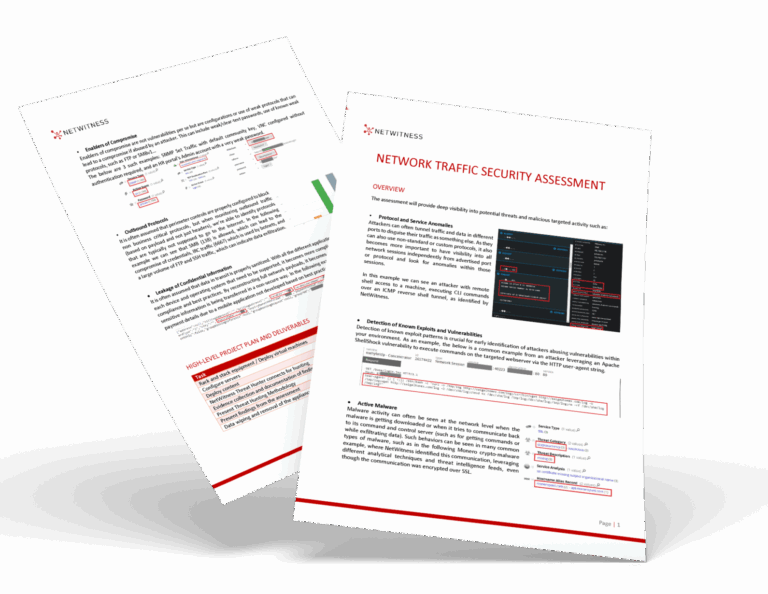
Strengthen Network Visibility with NetWitness® Network Traffic Security Assessment
-Uncover hidden threats through deep packet inspection and analytics.
-Identify vulnerabilities and blind spots before they’re exploited.
-Enhance detection and response with NDR-driven intelligence.
Challenges You Need to Plan For
AI is powerful, but it’s not plug-and-play. It requires:
- High-quality data to train models
- Integration with existing tools
- Ongoing tuning and oversight
There’s also the risk of adversarial AI, where attackers attempt to manipulate or evade AI models. Organizations need governance, not blind trust.
AI in Cybersecurity: Key Trends in 2026
The evolution is moving toward:
- Autonomous SOCs that act with minimal human input
- AI-driven threat hunting
- Integration with Zero Trust architectures
- Self-healing networks that automatically remediate issues
AI is becoming the central layer across all security functions, not just an add-on.
How to Choose AI-Based Network Security Solutions for Small Businesses
Small businesses don’t need complex platforms. They need effective ones. Focus on:
- Cloud-native deployment to reduce infrastructure costs
- Built-in automation to minimize manual effort
- Simple interfaces for faster adoption
- Strong vendor support
The goal is to reduce complexity, not add to it.
How AI Enhances Real-Time Network Monitoring
AI continuously analyzes network activity and correlates events across systems in real time. This eliminates delays between detection and response.
Instead of reacting to alerts, teams gain continuous awareness of what’s happening across the network at any given moment.
Compare AI Network Security Products with Integrated Incident Response
AI-based solutions differ from traditional tools in one key way: they don’t stop at detection. They combine:
- Detection
- Analysis
- Response
In a single workflow. This integration reduces response time, improves accuracy, and ensures that threats are handled before they escalate.
What Are the Benefits of Machine Learning in Network Anomaly Detection?
Machine learning enables systems to identify patterns that humans or rule-based systems would miss. It detects:
- Subtle deviations in behavior
- Long-term trends
- Complex attack patterns
This makes it especially effective against insider threats and advanced persistent threats.
How NetWitness Uses AI to Transform Network Security
NetWitness applies AI across detection, monitoring, and response to give security teams full control over modern, distributed environments.
- Real-Time Threat Detection: Continuously analyzes network traffic, logs, and endpoints to identify threats as they happen
- Behavioral Analytics (UEBA): Builds baselines of user and entity behavior to detect anomalies, insider threats, and compromised accounts
- Deep Network Visibility: Provides visibility across on-prem, cloud, and hybrid environments, even within encrypted traffic
- Automated Response (SOAR): Executes response actions such as isolating devices or blocking threats without delay
- Unified Security Platform: Combines detection, investigation, and response in a single workflow, reducing tool sprawl
Conclusion
Network security is no longer about reacting to threats. It’s about understanding behavior, predicting risks, and responding instantly. AI makes that possible. In 2026, organizations that rely on manual processes and static rules will always be one step behind. Those that adopt AI-driven security models gain something far more valuable than speed. They gain control.
Frequently Asked Questions
1. How to choose AI-based network security solutions for small businesses?
Choose cloud-based tools with automation, easy deployment, and minimal management overhead.
2. How does AI enhance real-time network monitoring?
AI continuously analyzes network activity, detects anomalies instantly, and correlates events across systems in real time.
3. Compare AI network security products with integrated incident response
AI-based solutions combine detection and response, reducing delays and improving overall security effectiveness.
4. What are the benefits of machine learning in network anomaly detection?
Machine learning detects subtle behavioral changes, identifies unknown threats, and improves detection accuracy.
5. Which companies offer AI cybersecurity services for enterprise networks?
Netwitness, Palo Alto Networks, Darktrace, Fortinet, CrowdStrike, and IBM Security are leading providers.
Make Smarter Security Investments—Faster
- Standardize vendor evaluation with a comprehensive RFI checklist.
- Compare platforms based on real-world detection, visibility, and response capabilities.
- Reduce risk by identifying gaps before deployment.
- Empower security leaders with actionable insights from NetWitness.