Introduction
If you’ve ever managed an incident, you know the first few minutes are critical. You’re piecing together logs, alerts and user activity – half of it is late, missing, or buried under noise. That’s exactly why cyber security situational awareness matters. It keeps you from walking into threats blind.
At its core, situational awareness in cybersecurity means knowing what is happening across your network, endpoints, cloud, and identities in real time. Strong cyber threat visibility, supported by modern cybersecurity monitoring tools, allows analysts to detect anomalies faster and improve overall cybersecurity awareness.
Without situational awareness, incident response becomes reactive. With it, teams can detect, investigate, and contain threats before they escalate.
So let’s break this into five things that actually move the needle.

Top 5 Ways to Strengthen Cybersecurity Situational Awareness
1. Start with Better Data Points, not More Tools
Most teams collect ridiculous amounts of data but still miss the early signs of trouble. Why? Because the data is scattered across ten places, none telling the full story.
Situational awareness starts with a simple rule: If you can’t see it, you can’t secure it.
The things that make the biggest difference aren’t surprises:
- Network visibility that actually shows movement, not just firewall logs.
- Endpoint data points that tell you what processes are doing, not just that they exist.
- Identity data so you know who is behind the activity.
- Cloud logs that don’t sit in a forgotten bucket for two months.
It’s not glamorous, but this is the foundation every other strategy relies on.
2. Treat Threat Intelligence as Context
A lot of organizations buy threat intel feeds, plug them in, and then never use them properly. Good intelligence isn’t a list of scary IP addresses. It explains why something matters.
You’ll notice the difference immediately once you connect intel to your internal activity:
- A weird login makes sense when paired with known attacker techniques.
- A new process stands out when similar behavior popped up in a recent advisory.
- A “low” alert turns into a high-priority incident because the malware family is active in your sector this quarter.
Threat intelligence is the thing that stops analysts from chasing random noise and starts them focusing on what actually matters.
3. Add Context about Assets and Identities
Here’s where teams slip: they collect data but don’t tie it to the right context.
A single alert means nothing until you know:
- Which system it hit
- How critical that system is
- Which identity triggered it
- Whether that identity normally behaves this way
A strange login on a domain controller is not the same as the same login on a test VM. One is a negligible concern. The other is a 3-minute-to-containment situation.
Once you map alerts to real asset importance and user behavior, your cybersecurity situational awareness becomes sharper and far more realistic.
4. Automate the Repetitive Work so your Team can Think
Let’s be honest: no analyst wants to triage the same alert pattern for the 50th time this month. And they definitely don’t want to manually pull context every time they investigate something basic.
This is where automation makes a noticeable impact, especially inside SIEM, NDR, and SOAR workflows.
The best places to automate:
- Pulling enrichment – intel, user history, asset info
- Handling basic containment steps
- Routing alerts based on severity
- Running predictable investigation sequences
None of these replace humans. They simply make analysts more efficient and speed up the process, allowing them to focus on calls that actually require judgment, especially during incident response.
5. Practice Until It Feels Routine
Situational awareness isn’t a dashboard. It’s a habit.
You build it through repetition:
- Tabletop exercises where people speak up, make mistakes, and learn
- Quick simulations that test whether your alerts fire when they should
- Honest reviews after incidents – not blame sessions, actual lessons
- Small adjustments that get pushed into playbooks, detection rules, and response workflows
If you don’t practice, you forget. If you do practice, the next real incident feels strangely familiar, because you’ve already walked through it before. 
How NetWitness Strengthens Real Situational Awareness
NetWitness strengthens cyber security situational awareness by providing unified visibility across network traffic, endpoints, logs, and cloud environments. This level of cyber threat visibility allows security teams to detect abnormal behavior earlier and accelerate incident response.
At the technical level that looks like:
- Full packet visibility, for deep cyber threat visibility and forensic analysis which not only exposes entire network sessions but also does not just look at the high-level metadata. Analysts will have visibility into lateral movement, command-and-control behavior, protocol misuse and encrypted traffic patterns at a level that is required for high-fidelity threat reconstruction.
- Unified telemetry ingestion means that endpoint events, logs from cloud activity, identity signals and network data get organized into a single analytical workflow. No more churn needed from SIEMs, EDR consoles and cloud-native logging tools.
- Advanced analytics that enhance cybersecurity awareness by detecting behavioral anomalies. Behavioral analytics and correlation engines that continuously evaluate anomalies and event relationships as well as sequences of a multi-stage attack. By surfacing only interesting events, NetWitness reduces alert noise and accelerates triage.
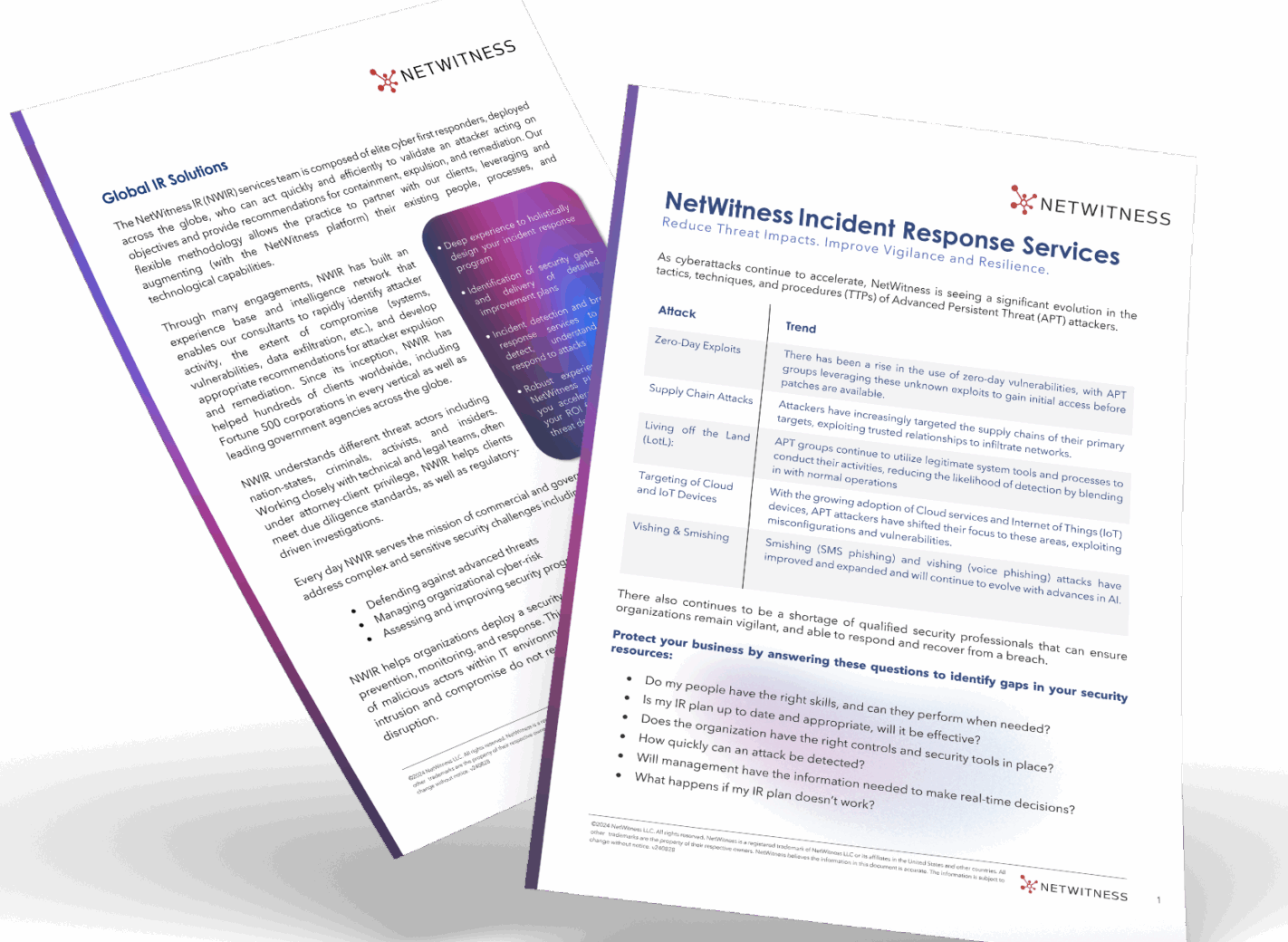
- Integrated incident response support helps NetWitness Incident Response teams step in when events escalate beyond capacity with great detail, packet-level forensics, and timeline reconstruction, as well as guidance for containment. Integrated workflows that support faster and more effective incident response
- Centralized dashboards powered by advanced cybersecurity monitoring tools.
The net effect: earlier detection of a threat, faster investigation, and more confidence when remediating, because every action taken is supported by full-spectrum visibility and validated evidence.
Conclusion
Strong cyber security situational awareness is the foundation of modern threat detection and incident response. When organizations improve cyber threat visibility, apply intelligence context, and use effective cybersecurity monitoring tools, they gain the ability to detect threats earlier and respond faster.
Situational awareness transforms cybersecurity from reactive defense into proactive protection. It gives teams the clarity, speed, and confidence needed to protect modern digital environments in 2026 and beyond.
If you want to achieve faster detection and a calmer, more predictable incident response process, this is where you start.