Why “Detection” is the Wrong Word to Obsess Over
Most teams say they want better detection. What they actually need is better outcomes.
NDR security sits at the center of that gap. When it works, it exposes attacker behavior that endpoint tools miss, cloud controls can’t see, and logs fail to explain. When it fails, it floods analysts with alerts that look impressive and deliver nothing.
Here’s the uncomfortable truth: many organizations evaluate NDR security performance using the wrong metrics. Alert volume. Model accuracy. Feature checklists. None of those answer the only question that matters: Did the platform help you understand, contain, and eradicate a real threat faster?
Let’s break down what good detection actually looks like, how to measure it, and where most NDR deployments go off the rails.
What “Good Detection” Really Means in NDR
Good detection reveals attacker behavior with context, precision, and speed, without relying on guesswork or blind trust in automation.
Strong Network Detection and Response platforms focus on behavior over signatures, evidence over assumptions, and visibility over labels. They show you what happened, how it happened, and where to act next.
Good detection delivers three things consistently:
- High-confidence signals rooted in real network activity
- Explainable evidence analysts can validate
- Operational relevance that drives response, not noise
If your NDR security platform cannot reconstruct sessions, extract artifacts, and correlate activity across time, it is detecting symptoms, not threats.
The Core Metrics That Actually Measure NDR Security Performance
Measure NDR security performance by how well it reduces uncertainty, investigation time, and attacker dwell time. Forget vanity metrics. Focus on outcomes.
Key indicators that matter:
- Time to clarity: How quickly analysts understand what actually happened
- Detection fidelity: Ratio of actionable detections to false positives
- Visibility coverage: Percentage of network segments, protocols, and environments observed
- Investigation depth: Ability to pivot from alert to packet, session, and payload
- Response acceleration: Reduction in time to containment
According to the 2024 Verizon DBIR, organizations with strong network visibility reduced investigation time by over 30 percent in advanced intrusion cases. That is NDR security performance that changes outcomes.
Visibility is the Foundation of Network Threat Detection
Without full network visibility, NDR security performance collapses, no matter how advanced the analytics look. Many tools claim visibility. Few deliver it.
True NDR visibility includes:
- Full packet capture where it matters
- Protocol-agnostic inspection
- North-south and east-west coverage
- On-prem, cloud, and hybrid environments
This is where network performance monitoring and network performance management intersect with security.
Network performance monitoring tools already collect telemetry. High-performing NDR security platforms extend that telemetry into deep behavioral analysis, not just health metrics.
Common Technical Challenges in Implementing NDR Security
Most NDR deployments struggle due to visibility gaps, data overload, and operational complexity, not weak analytics.
The most common challenges include:
- Encrypted traffic blind spots without proper inspection strategies
- Overreliance on machine learning without analyst context
- Tuning fatigue caused by noisy detections
- Storage and scale constraints for packet-level data
These challenges directly degrade NDR security performance, even when the platform itself is capable.
Improving Data Integration During NDR Implementation
Integration succeeds when NDR feeds evidence, not just alerts, into the broader security stack.
To improve integration:
- Normalize NDR outputs before SIEM ingestion
- Pass session context, not just detection labels
- Align NDR detections with SOAR playbooks early
- Treat NDR as a source of truth, not a secondary signal
Strong network performance tools already integrate operational data. High-performing NDR security platforms apply the same discipline to threat data.
Managed Services and Deployment Support Matter More Than Features
NDR security performance improves dramatically when deployment, tuning, and ongoing management receive expert oversight. Many organizations underestimate this.
Services that improve outcomes include:
- Sensor placement strategy
- Detection tuning aligned to business risk
- Ongoing validation against real attacker techniques
- Analyst training focused on investigation workflows
For regulated industries, managed services also help address compliance challenges around data retention, inspection policies, and audit readiness. 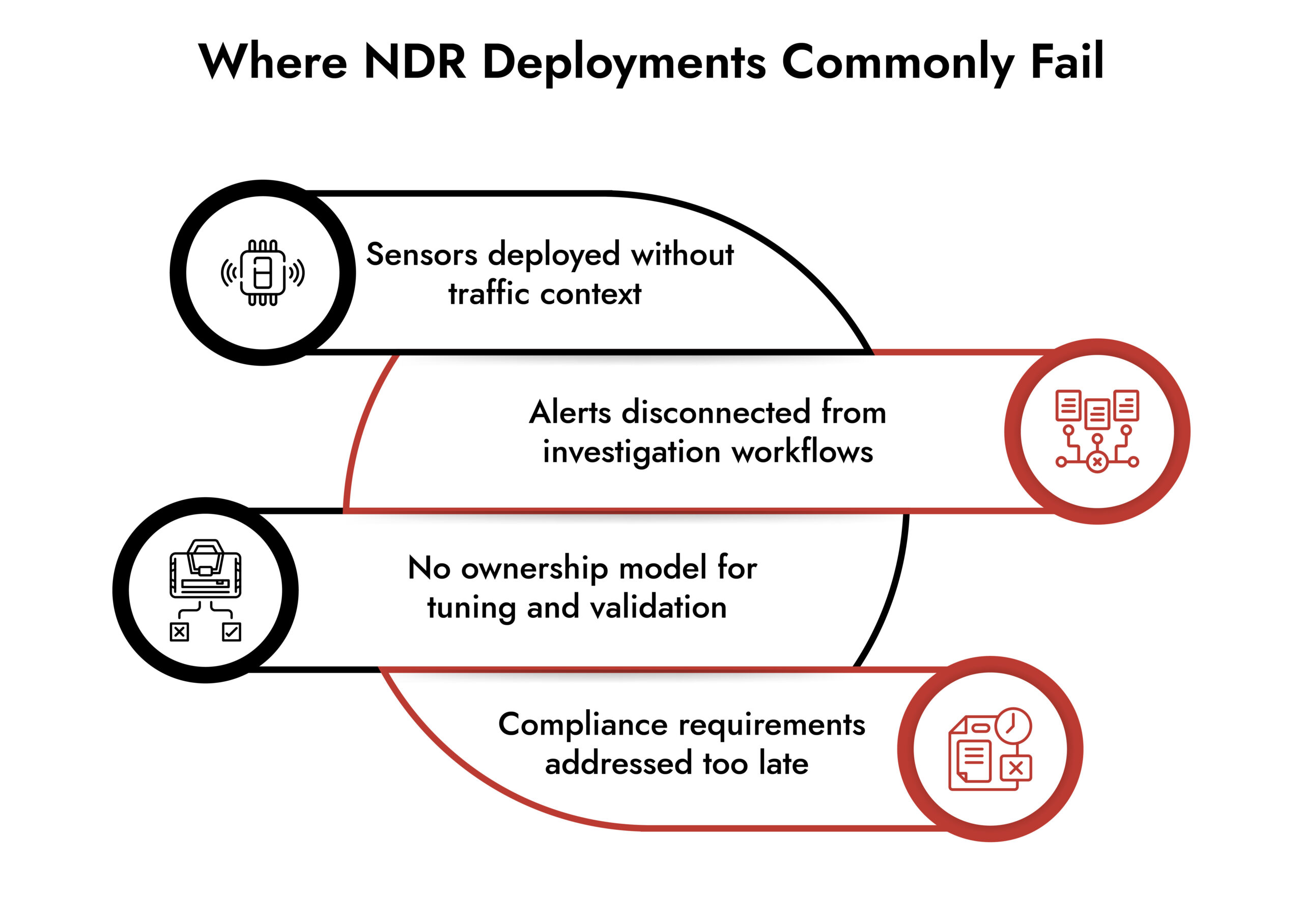
Compliance and Encrypted Traffic: The Hard Problems
Effective NDR security balances visibility with compliance and privacy without sacrificing detection quality.
In regulated environments, key challenges include:
- Inspecting encrypted traffic without violating policy
- Retaining packet data within regulatory limits
- Proving detection decisions during audits
Modern network threat detection approaches rely on selective decryption, metadata enrichment, and behavioral correlation to maintain compliance while preserving insight.
Where NetWitness Fits in High-Performance NDR Security
NetWitness approaches NDR security from an evidence-first perspective.
Instead of abstract detections, it focuses on:
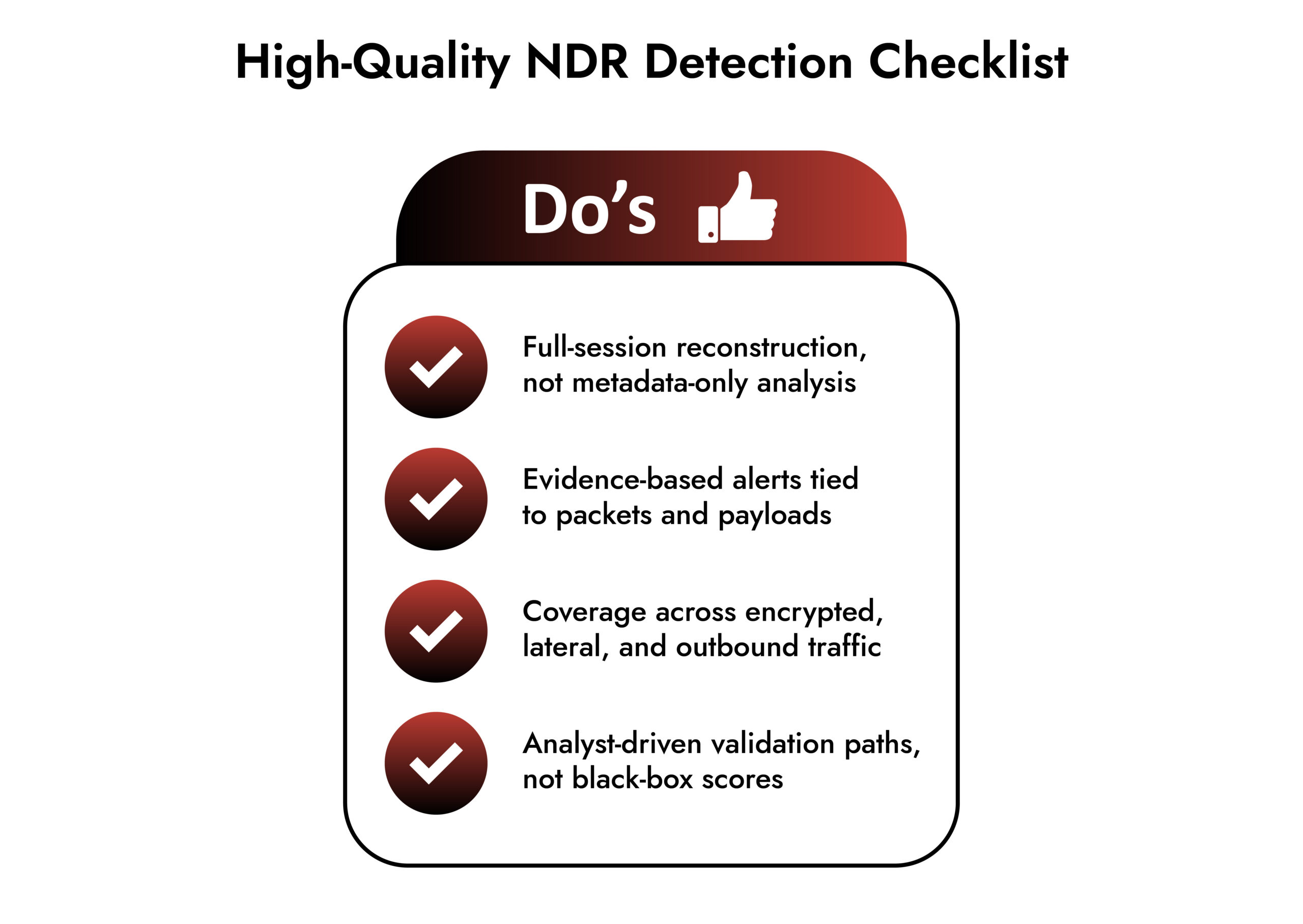
- Full-session reconstruction across protocols
- Artifact extraction for direct validation
- Visibility across hybrid and complex networks
- Analyst-driven investigation paths
This approach aligns detection with investigation and response, improving NDR security performance without increasing operational burden. The result is fewer assumptions and faster certainty. 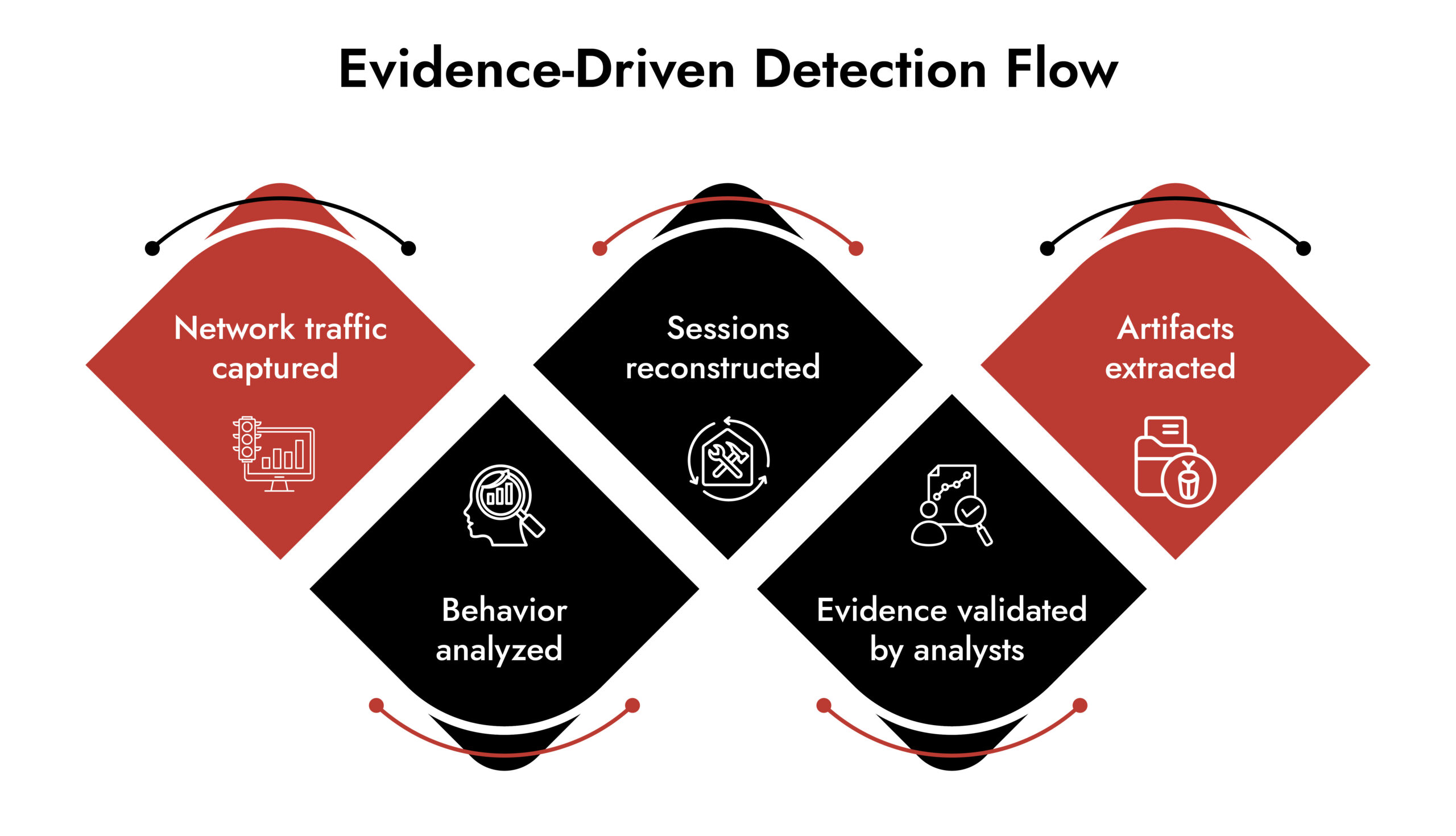
Conclusion
Good detection does not impress dashboards. It empowers people.
High-performing NDR security reduces uncertainty, accelerates response, and gives defenders confidence in their decisions. It replaces guesswork with evidence and noise with clarity.
If your NDR platform does not help you understand the story behind the traffic, it is time to reassess what you define as “good detection.”