What is Advanced Threat Detection?
Advanced threat detection (ATD) is the process of identifying complex cyberattacks that traditional tools miss. It uses automation, analytics, and context to verify threats and trigger faster responses.
What Makes Threat Detection Advanced?
Advanced threat detection relies on three steps:
- Intelligence Gathering: Collect data from logs, endpoints, and network traffic.
- Threat Verification: Validate activity against threat intelligence and risk scoring.
- Response: Automate actions like isolating devices or enforcing MFA.
This reduces false positives and ensures analysts only see confirmed threats.
Synonyms
- Advanced Threat Protection (ATP)
- Threat Detection and Response (TDR)
- Extended Detection and Response (XDR)
- Intrusion Detection/Prevention Systems (IDS/IPS)
Why is Advanced Threat Detection Important for Modern Cyber Threats?
Threat detection has a lot to contend with advanced threats like:
- Ransomware
- Malware
- Distributed denial-of-service (DDoS) attacks
- Phishing
Plus, while these attacks often originate outside a company, they can also be leveraged by insider threats – typically current or former employees with privileged knowledge of the business. Attackers may sometimes gain access months or even years before deploying a full-scale attack.
Because of this, proactive threat detection has to continuously monitor every corner of every network. Achieving this now often demands a full suite of threat detection software and threat detection tools.
What Are the Key Advanced Threat Detection Tools?
Since threat detection and response is such a large field, it’s useful to break it into bitesize components. This is done by using multiple cyber threat protection tools, which collectively make up the majority of organizations’ threat detection tech stacks.
1. SIEM for Log Analysis
SIEM tools enhance threat detection by collecting, aggregating, and analyzing log data from servers, endpoints, firewalls, and applications. They normalize this data into a consistent structure, making it easier to identify patterns and correlations.
SIEM tools monitor log data in real-time, leveraging threat intelligence feeds to compare activity against known Indicators of Compromise (IoCs). When anomalies or predefined thresholds are detected, SIEMs generate alerts to notify security teams of potential threats.
They also retain log data for historical analysis, letting organizations:
- Identify trends.
- Perform forensic investigations.
- Comply with regulatory requirements.
By combining real-time monitoring, anomaly detection, and actionable alerts, SIEM log analysis provides a powerful framework for proactive threat detection and incident detection and response.
2. NDR for Network Analysis
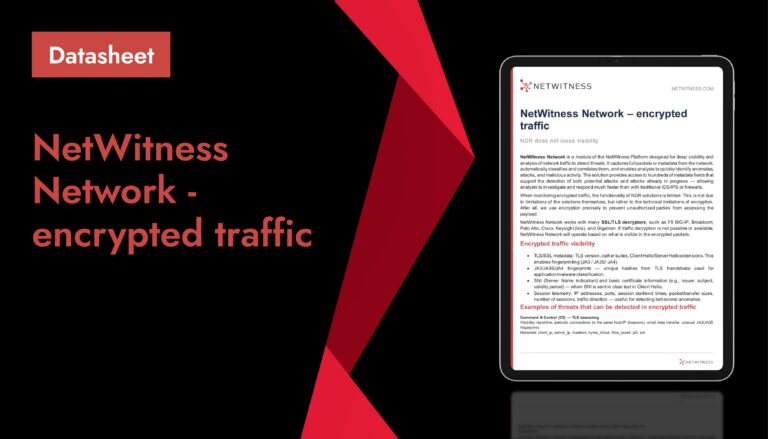
Network Detection and Response (NDR) solutions continuously monitor east-west and north-south network traffic, providing deep visibility into internal communications and external connections. By correlating data across network segments, NDR tools can identify malicious activity that might otherwise go unnoticed, such as:
- Lateral movement.
- Data exfiltration.
- Command-and-control (C2) communications.
Unlike traditional security tools that rely on signatures or predefined rules, NDR identifies suspicious files and activity by recognizing patterns, anomalies, and behaviors that deviate from the norm. This allows NDR systems to detect both known and unknown threats.
3. Third-Party Threat Intelligence
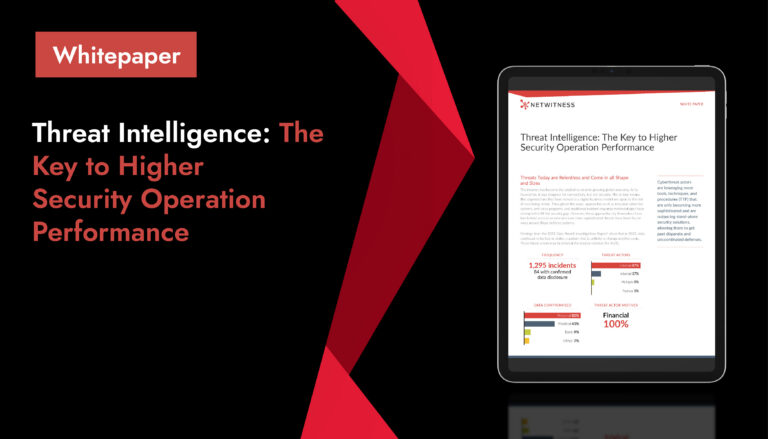
Understanding the attacks being leveraged against your industry peers can help refine your own defenses. Many threat detection tools come with inbuilt threat intelligence – the more wide-ranging and up-to-the-minute this intelligence, the higher fidelity you get into your own risk.
4. XDR for Endpoint Analysis
Extended Detection and Response (XDR) offers continuous monitoring of endpoints for suspicious behaviors, like:
- Unauthorized access attempts.
- Unusual file modifications.
- Unexpected process executions.
By combining this data with network traffic, it can uncover threats that exploit endpoint vulnerabilities as part of broader attack campaigns. For instance, XDR can link an endpoint anomaly to network-based lateral movement or a phishing email that delivered malware.
How Does Advanced Threat Detection Work?
Advance Threat Detection or Advance Threat Protection works by:
- Monitoring systems in real time.
- Comparing activity against baselines and threat intel.
- Scoring events to prioritize risk.
- Triggering automated responses before escalation.
Advanced Threat Detection with NetWitness®
NetWitness® combines SIEM, NDR, SOAR, UEBA, and endpoint visibility in one platform. It captures full packets, logs, and endpoint data, applying threat intelligence and machine learning to detect advanced attacks. With automated workflows, NetWitness® helps teams:
- Detect known and unknown threats.
- Reduce noise and alert fatigue.
- Accelerate response across hybrid environments.
Related Terms & Synonyms
- Advanced Threat Protection.
- Proactive Threat Detection.
- Cyber Threat Prevention.
- Threat Detection Tools.
- Incident Detection and Response.
People Also Ask
1. What is threat detection?
Threat Detection is the process of spotting malicious activity in IT systems.
2. What is threat detection and response?
Threat detection and response combines detection with the ability to contain and remediate threats.
3. What are 4 methods of threat detection?
Four methods of threat detection are:
- Signature based
- Anomaly based
- Behavioral
- Machine learning