Introduction
What practical steps can be taken to manage insider threats? In our first blog post, we provided a baseline for understanding insider threat mitigation, how they’ve evolved and why they persist. Next, let’s review strategies for risk reduction and successful technology implementation to help reduce the risk created by an insider.
Insider Threat Mitigation Strategies That Actually Work
Insider threats are hard because the activity often looks legitimate. Valid credentials. Approved tools. Normal access paths. That is why insider threat mitigation depends on visibility, context, and smart detection rather than perimeter controls.
Effective insider threat mitigation strategies combine data visibility, analytics, human expertise, and threat detection and response working together as one system.
Start with an Insider Threat Strategy, Not a Tool
A layered plan is essential. Organizations often take months to contain insider-driven incidents because detection happens too late and response is fragmented.
Strong insider threat mitigation strategies bring together:
- Broad data visibility across logs, network, endpoints, and cloud
- Context from identity, asset, and business relevance
- Continuous insider threat hunting
- Automation through threat mitigation services and SOAR
- Skilled analysts trained to investigate behavioral signals
This is the foundation of practical threat mitigation.
Insider Threat Strategy
Combatting insider threats is not a trivial task. Organizations are taking longer than two months on average to contain threats, and are expending more resources then in previous years to address the challenge. A layered insider threat mitigation approach is needed, combining the right tools, processes and human expertise.
The foundation begins with broad visibility into data is required for effective insider threat mitigation. This means:
- Collecting and parsing information from data sources into useful and descriptive human-readable text – this is metadata. Metadata also needs to be catalogued and indexed for detections, advanced analytics and fast, flexible searching.
- Enriching metadata with global threat intelligence and useful business context to effectively make sense of threats and contextualize them within the business environment.
Data then needs insight, especially within the context of insider threats and insider threat mitigation. That is achieved with three major components:
- Signature-based detections identify known threats that have a particular data pattern.
- Example: Detecting known credential dumping malware on endpoints, command and control communication leaving the network, or a known exploit attempt on a production server.
- Behavior-based detections identify unknown or suspected attacks that do not have a particular data pattern but represent abnormal or suspicious behavior.
- Example: An excessive number of files being transferred or a user logging into an abnormal system.
- Threat hunting identify sophisticated attacks based on targeted use cases which are not identified by signature or behavior-based advanced threat detection.
- Example: A phishing email successfully delivered to a cloud-based email service which directs a user to a malicious website. The user unknowingly downloads and installs a small encrypted executable file. The executable runs in-memory and traverses file systems to find relevant financial data that is exfiltrated as encrypted PDF’s through SFTP, which is allowed under the organization’s policies.
The right human expertise is also critical to detect and respond to insider threats. This includes the right education for the SOC team, like threat hunting best practices and a sound strategy for incident response that includes automation. It also means the right technical implementations of products and security awareness training for the workforce.
Data Visibility
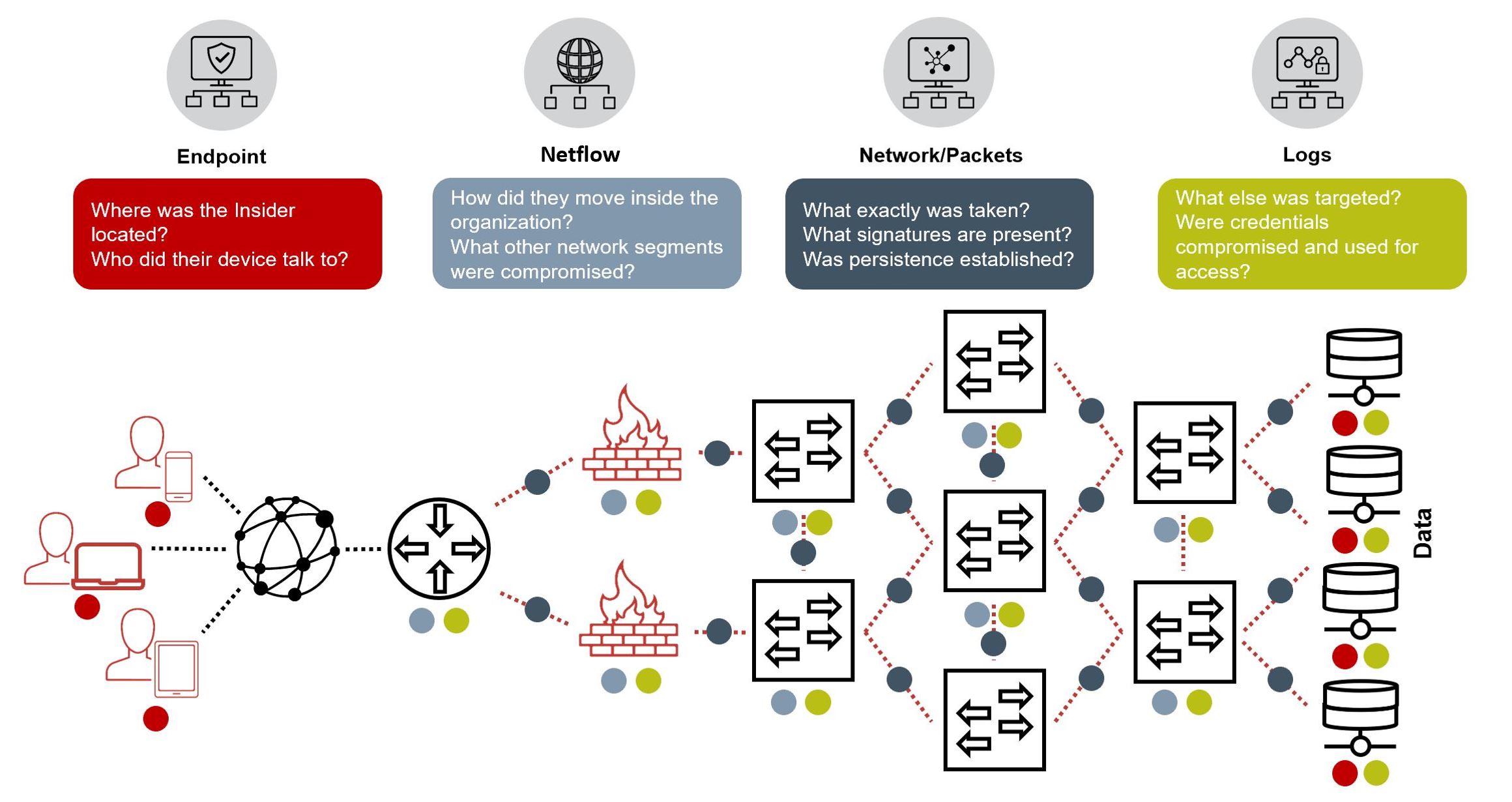
Data visibility is a crucial foundation to insider threat mitigation strategy, but without the necessary context from the business and layered threat intelligence, there is little additional value. Business and threat context enables prioritization, asset and identity enrichment, and signal reduction from known-bad threats. This is the power that SOC analysts need to exercise to inform decisions when analyzing risk operations.
After establishing capacity to see the data you care about and enrich it with context, you need to unpack useful insights into data patterns, anomalies and trends to help drive decisions by an analyst.
Driving Insight with Advanced Analytics
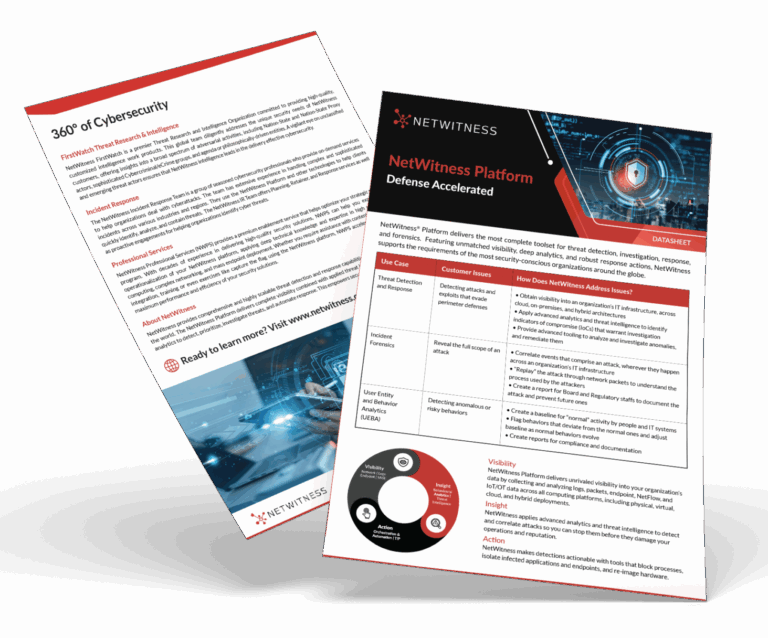
Advanced analytics and machine learning (ML) are an evolution of traditional detection that layers deeper computer science and mathematical principles alongside traditional detection. In the context of insider threats, this drives critical insight into behavior-based detection. This is quickly becoming one of the best ways to predict insider threats. In fact, more than 50% of businesses address insider threats with some type of ML or User and Entity Behavior Analytics (UEBA) system.
Why Context Matters More Than Volume
Raw data creates noise. Context creates clarity.
When telemetry is enriched with identity roles, asset sensitivity, and business relevance, analysts can quickly answer:
- Is this user supposed to access this system?
- Is this asset sensitive?
- Is this behavior normal for this role?
This context is critical for effective threat mitigation services.
Response and Automation Close the Loop
Detection without response still leaves risk. This is where SOAR security and automation step in.
Automated workflows can:
- Disable compromised accounts
- Isolate endpoints
- Trigger investigation playbooks
- Notify stakeholders instantly
This reduces mean-time-to-detection and mean-time-to-response, which is central to real insider threat mitigation.
Threat Actors Exploiting Compromised Employee Accounts
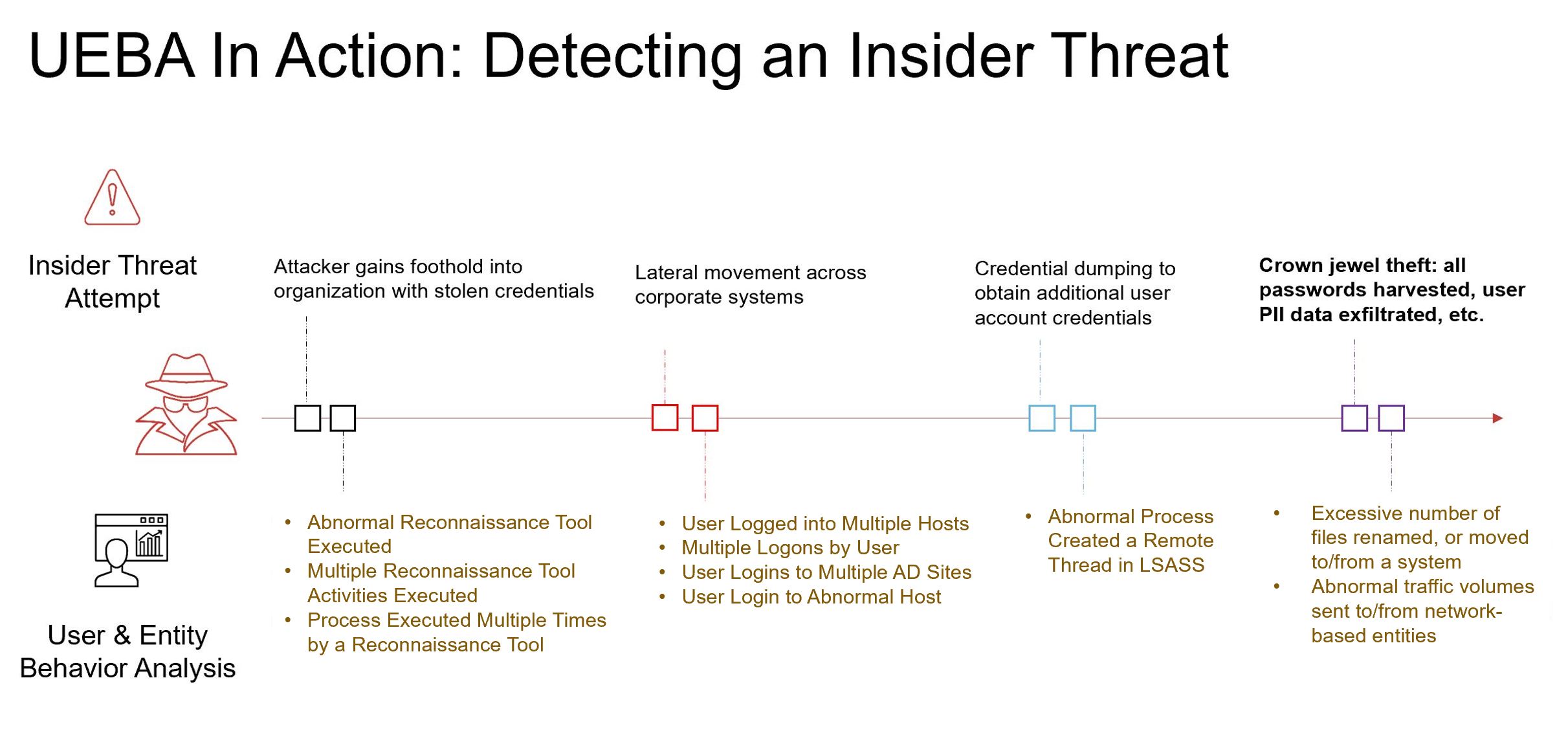
When attackers gain access to a new system, they must orient themselves to the system, surroundings and determine the goals of their intrusion. The operating system provides many native tools that aid in this post-compromise information-gathering phase. By monitoring and modeling the use of these tools, we can detect the intrusion before it causes further damage to the business to carry out efficient insider threat mitigation.
If an attacker continues their attack, they would likely attempt to connect to multiple systems with the same stolen credentials and attempt to dump additional credentials with tools on any system they were able to access. These attacks usually have an end goal of data theft, so the attackers would be searching for, and collecting, as many files and as much data as possible.
Next Steps
Response is the crucial component after detection. Aligning tools, processes and expertise provides the ability to stop insider threats before they impact the business. Security orchestration, automation, and response (SOAR) is a critical component to the security fabric. In our next and final blog, we’ll explore response and seamless orchestration within the SOC in the context of an insider threat mitigation. We can achieve maximum insider threat mitigation with the proper automation, tying each component together to reach optimal reduction in mean-time-to-detection and response.