Why is centralized log management essential for distributed workforces?
Distributed workforces generate activity across endpoints, cloud platforms, SaaS applications, and networks. Without centralized log management, this data remains fragmented, making log analysis slow and threat detection incomplete. A centralized log management system with effective log aggregation gives security teams unified visibility, faster investigations, and stronger SIEM log management across remote and hybrid environments.
Distributed workforces didn’t just change where people work. They quietly broke the way most organizations see what’s happening inside their environments.
When employees, contractors, cloud workloads, SaaS platforms, and third-party tools are all generating activity outside a traditional perimeter, visibility becomes fragmented fast. Logs are scattered across endpoints, cloud services, VPNs, identity providers, and network devices. Security teams end up reacting to pieces of the story instead of the full picture.
That’s why centralized log management has moved from “nice to have” to critical infrastructure. Without it, detection slows, investigations stall, and attackers gain time they don’t deserve.
Let’s break down why centralized log management matters so much for distributed workforces, what it actually enables, and how organizations can do it right.
The Reality of Distributed Workforces
Distributed workforces create a fundamentally different operating environment.
You’re no longer dealing with a handful of data centers and corporate offices. You’re dealing with:
- Remote endpoints connecting from home networks
- Cloud-native applications generating high-volume event data
- SaaS platforms handling authentication and data access
- Hybrid networks with users constantly shifting locations
Every interaction leaves behind log data. Authentication attempts. File access. Network connections. API calls. Configuration changes.
The problem is not the lack of data. It’s the lack of cohesion.
Without centralized log aggregation, logs live in silos. Endpoint logs stay on devices. Cloud logs sit in provider consoles. Application logs stay buried in platforms security teams rarely check unless something breaks.
That fragmentation is exactly what attackers rely on.
What Centralized Log Management Really Means
Centralized log management is the practice of collecting, normalizing, storing, and analyzing log data from across the entire environment in a single system.
A proper log management system pulls in logs from:
- Endpoints and servers
- Cloud infrastructure and workloads
- Identity and access management systems
- Network devices and VPNs
- SaaS and business-critical applications
Once ingested, logs are normalized into a consistent format. That’s what allows meaningful log analysis instead of manual parsing and guesswork.
This is where modern log management tools and log management software differ from basic log storage. They’re built to support:
- High-volume log ingestion
- Real-time and historical log analysis
- Correlation across data sources
- Alerting based on behavioral patterns
Centralization is not just about storage. It’s about turning distributed activity into usable security intelligence.
Why Fragmented Logs Are a Security Risk
In distributed environments, most attacks don’t announce themselves with a single obvious alert. They unfold across systems.
An attacker might start with a stolen credential, authenticate through a cloud identity provider, pivot to a SaaS app, download data, then move laterally using a VPN connection.
If those logs are scattered, no single team sees the full chain.
Without centralized log management, organizations face:
- Missed correlations between related events
- Delayed detection of suspicious behavior
- Manual investigations that take days instead of minutes
- Higher dwell time for attackers
Security teams end up chasing alerts without context. They know something happened, but not how, where, or why.
That’s the gap centralized logging closes.

How Centralized Log Management Improves Threat Detection
Centralized logging fundamentally changes how threats are detected.
Instead of reacting to isolated alerts, security teams can perform cross-source log analysis. That’s how patterns emerge.
For example:
- Multiple failed login attempts followed by a successful one from a new location
- A user accessing cloud resources they’ve never touched before
- A VPN session followed by unusual SaaS data downloads
- Endpoint activity that aligns with suspicious network behavior
Individually, these events might look benign. Together, they tell a very different story.
Centralized log management enables:
- Event correlation across systems
- Behavioral baselining for users and devices
- Faster identification of lateral movement
- Detection of low-and-slow attacks that evade single-point tools
This is especially important in remote environments where attackers blend in with legitimate traffic.
The Role of SIEM in Centralized Log Management
Centralized logging becomes significantly more powerful when paired with SIEM management.
SIEM log management builds on basic log aggregation by adding analytics, correlation rules, and threat intelligence context. Instead of just storing logs, SIEM platforms actively interpret them.
With SIEM log management, organizations gain:
- Automated correlation across thousands of log sources
- Real-time alerts tied to known attack techniques
- Enrichment with threat intelligence and asset context
- Dashboards tailored for SOC workflows
For distributed workforces, this matters because manual review simply doesn’t scale. The volume of logs generated by cloud services, endpoints, and SaaS platforms can overwhelm teams without automation.
SIEM management allows security teams to prioritize what matters, not just what’s noisy.
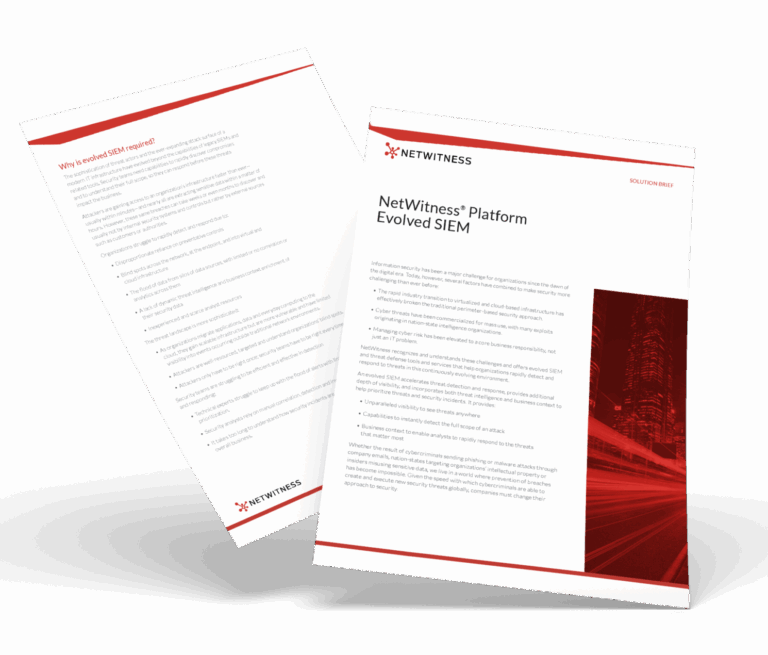
Elevate Threat Detection and Response with NetWitness® SIEM
-Correlate data across users, logs, and network for unified visibility.
-Detect advanced threats with AI-driven analytics and behavioral insights.
-Accelerate investigations using automated enrichment and guided workflows.
Centralized Log Management and Incident Response
Detection is only half the story. The real test is what happens after an alert fires.
Without centralized logs, incident response turns into a scavenger hunt. Analysts waste time requesting access to systems, pulling logs manually, and stitching timelines together by hand.
A centralized log management system changes that workflow completely.
During an investigation, analysts can:
- Trace an incident from initial access to impact
- Pivot between users, IPs, devices, and applications
- Validate scope quickly and confidently
- Contain threats before they spread further
In distributed environments, speed matters. Every hour of delay increases damage, data exposure, and recovery costs.
Centralization shortens that window.
Supporting Compliance and Audits in Distributed Environments
Distributed workforces don’t reduce compliance obligations. They usually increase them.
Organizations still need to demonstrate:
- Who accessed sensitive systems
- When changes occurred
- Whether security controls were enforced
- How incidents were detected and handled
Centralized log management simplifies this by providing a single source of truth.
Instead of scrambling across platforms, compliance teams can rely on consistent log retention, searchable audit trails, and standardized reporting. Modern log management software supports retention policies aligned with regulatory requirements while still enabling fast access when auditors come knocking.
This is especially important for industries dealing with data protection, financial reporting, and privacy regulations.
How to Set Up Centralized Log Management in the Cloud
For distributed workforces, cloud-based log management is often the most practical approach.
A typical setup involves:
- Deploying lightweight collectors or agents on endpoints and servers
- Integrating cloud-native logging APIs
- Ingesting SaaS application logs via connectors
- Forwarding network and VPN logs in real time
The key is designing for scale from day one. Log volumes grow fast in distributed environments, especially as cloud usage expands.
Best practices include:
- Normalizing logs early to avoid downstream complexity
- Prioritizing high-value logs for security use cases
- Implementing role-based access for log data
- Tuning retention policies to balance cost and compliance
Centralized log management in the cloud gives teams flexibility without sacrificing visibility.
Common Challenges Without Centralized Logging
Organizations that delay centralized log management usually experience the same problems over and over.
Some of the most common challenges include:
- Blind spots created by unmanaged or remote endpoints
- Inability to correlate identity, network, and application activity
- Alert fatigue caused by isolated security tools
- Slow investigations due to manual log collection
- Increased dwell time for attackers
In distributed environments, these challenges compound quickly. The more systems involved, the harder it becomes to understand what’s actually happening.
Centralized logging doesn’t eliminate risk, but it dramatically reduces uncertainty.
Centralized Log Management as a Foundation, Not a Feature
Here’s what this really means.
Centralized log management is not just another security tool. It’s foundational infrastructure for modern operations.
Without it, advanced detection strategies fall apart. Incident response slows. Compliance becomes reactive. Security teams operate in the dark.
With it, organizations gain shared visibility across distributed environments. They see how users, systems, and data interact. They detect threats earlier. They respond faster. They make better decisions.
For distributed workforces, that visibility is not optional anymore.
Frequently Asked Questions
1. What is centralized log management?
Centralized log management is the process of collecting, normalizing, storing, and analyzing logs from across an organization’s systems in a single platform. It provides unified visibility into activity across endpoints, networks, cloud services, and applications.
2. How does centralized log management improve threat detection?
By aggregating logs from multiple sources, centralized logging enables correlation and behavioral analysis. This helps security teams identify suspicious patterns that would be missed when logs are reviewed in isolation.
3. How does SIEM enhance centralized log management?
SIEM log management adds analytics, correlation rules, and threat intelligence to centralized logs. This allows automated detection, faster triage, and more effective investigations across distributed environments.
4. How to set up centralized log management in the cloud?
Organizations typically deploy log collectors or agents, integrate cloud and SaaS logging APIs, normalize data at ingestion, and store logs in a scalable cloud-based log management system designed for high-volume analysis.
5. What challenges do organizations face without centralized logging?
Without centralized logging, organizations struggle with visibility gaps, slow investigations, missed attack patterns, alert fatigue, and higher attacker dwell time, especially in distributed workforce environments.
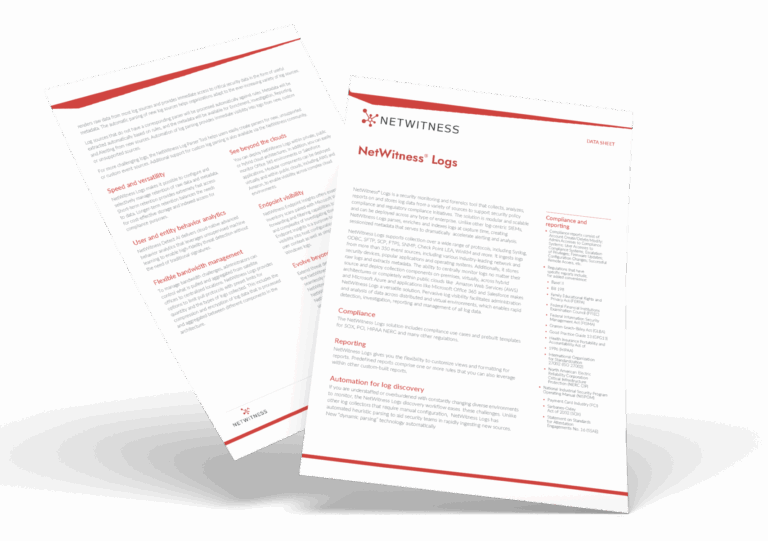
Simplify Log Management and Threat Detection with NetWitness® Logs
-Centralize and analyze logs from across your environment in one platform.
-Detect threats faster with real-time visibility and automated correlation.
-Reduce noise through advanced filtering and context-driven analytics.